

Table of Contents
- Why Off-Road Apparel Needs Special Care
- Your Off-Road Gear Maintenance Checklist
- How to Wash Mud Off Clothes the Right Way
- Do Premium Shirts Shrink Easily? Fabric Truths
- Repairing Tears and Reapplying DWR Coating
- Off-Road Gear Storage Tips for the Off-Season
- When to Retire Your Off-Road Apparel
- Conclusion: Build a Routine That Extends Gear Life
- Frequently Asked Questions
Last Updated: September 7, 2026
Why Off-Road Apparel Needs Special Care
Off-road apparel is technical equipment, not just casual clothing. The mud, dust, UV rays, and brush you push through on a trail attack synthetic fibers and DWR coatings in ways a standard wash cycle won't fix. At The Trail Explorer, we design premium heavyweight tees for rock crawling and trail exploration. When gear is treated like a regular t-shirt, fabric breaks down, colors fade, and water repellency dies.

Proper off-road apparel maintenance protects your gear investment. A quality garment with abrasion-resistant panels and reinforced seams costs more than a basic shirt, so it deserves a routine that targets dirt, moisture, and corrosion before they set in. This guide covers washing, drying, repairs, waterproofing, and storage so your favorite trail gear lasts for seasons, not just one ride.
Your Off-Road Gear Maintenance Checklist
Build a simple routine around these five tasks to keep your off-road apparel trail-ready:
- After every ride: Shake out loose dirt, check for tears, and hang gear to air dry.
- Weekly or after muddy rides: Wash with mild detergent and spot-treat stains.
- Monthly: Inspect seams, zippers, and DWR coating; reapply water-repellent treatment as needed.
- Seasonally: Deep-clean everything, repair minor damage, and store off-season gear properly.
- Before big trips: Do a safety inspection for fabric integrity and impact protection on protective gear.
How to Wash Mud Off Clothes the Right Way
The biggest mistake with off-road apparel is treating every fabric the same in the wash. A mud-caked polyester mesh jersey and a Gore-Tex jacket have opposite care needs, and using a one-size-fits-all approach will shorten the life of both. The key is to identify the fabric's construction and its coatings before you start.
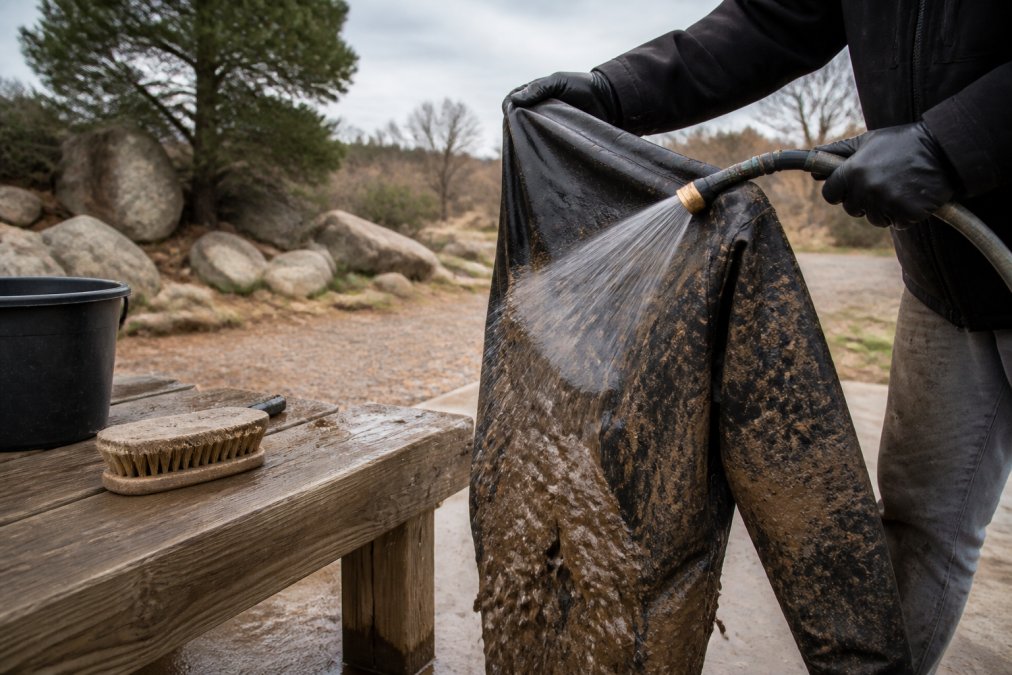
Start by letting mud dry completely, then brush off the bulk with a stiff brush or your hands. For caked-on trail mud, rinse with a hose before washing. This initial step prevents grit from grinding into fibers during the wash cycle.
Fabric-Specific Wash Protocols
For waterproof/breathable laminates (Gore-Tex, eVent, Futurelight):
- Use a dedicated technical wash like Nikwax Tech Wash or Grangers Performance Wash. These are pH-neutral and free of detergents that can clog the membrane's micropores.
- Wash in cold water (below 104°F) on a gentle cycle (gore-tex.com). Hot water can delaminate the membrane from the face fabric.
- Never use fabric softeners, bleach, or standard detergents with optical brighteners; they leave a residue that destroys breathability and causes DWR to fail faster.
- Run an extra rinse cycle to ensure all soap is removed.
For abrasion-resistant synthetics (nylon ripstop, Cordura, polyester mesh):
- These are more forgiving. Use a mild, liquid detergent free of dyes and fragrances. Powdered detergents don't fully dissolve in cold water and can leave abrasive residue in the weave.
- Wash at or below 86°F (the American Academy of Dermatology). Warmer water can set protein-based stains from bug splatter or animal blood.
- Turn garments inside out. This protects the outer face from friction against other items in the drum and preserves any durable water-repellent (DWR) finish.
For cotton or cotton-blend garments:
- Cotton absorbs mud and oils deeply. Pre-treat with a small amount of detergent directly on the stain and let it sit for 15 minutes before washing.
- Wash in cold water to prevent shrinkage. Hot water causes cotton fibers to constrict and can set stains permanently.
The Drying Step That Most People Skip
Air drying is always the safest option, but the method matters. Hang heavyweight garments on a thick, padded hanger to prevent shoulder stretching. Lay flat items with internal padding or insulation (like some motocross jerseys with built-in protectors) to prevent the padding from clumping.
If you must use a dryer, run it on the lowest heat setting (below 122°F) and pull garments out while still slightly damp. High heat melts synthetic fibers, shrinks cotton, and accelerates DWR degradation. Hanging them to finish drying prevents most shrinkage and keeps the fit true.
Do Premium Shirts Shrink Easily? Fabric Truths
Premium shirts shrink when they're made with cotton and then exposed to high heat. The question of whether premium shirts shrink easily comes down to fabric composition and drying method, not the price tag.
Most off-road apparel uses blends like the 60% cotton and 40% polyester mix found in performance tees, which balances comfort with durability. Cotton shrinks in hot water and high-heat dryers; polyester resists shrinkage. To protect your gear, wash in cold water and always air dry. This applies to the heavyweight tees from The Trail Explorer and any other technical apparel you own. A relaxed fit with a fuller cut, like the unisex sizing we use, also gives you room to account for minimal natural shrinkage over time.
Repairing Tears and Reapplying DWR Coating
Trail brush and rock contact will eventually put small tears in your off-road apparel. Ignoring them lets the damage spread, turning a fixable snag into a ruined garment. But the right repair depends on where you are: on the trail with limited gear, or at home with a full kit.
Trail-Side Emergency Field Repairs
When you're miles from the truck, a small tear can become a big problem if dirt and debris get inside the fabric layers. Carry a minimal repair kit in your pack or hydration vest:
- Tenacious Tape or Gear Aid Repair Patches: These are self-adhesive, fabric-backed patches that bond to nylon, polyester, and even Gore-Tex. Clean the area with a wet wipe, dry it with your shirt, and press the patch firmly for 60 seconds. The adhesive is strong enough to last through the rest of the ride.
- Zip ties and safety pins: For a blown zipper on a jacket, use a zip tie through the zipper pull hole to create a temporary pull tab. For a torn seam, safety pins can hold the fabric together until you get home.
- Seam Grip + a small piece of fabric: For a tear in a waterproof layer, apply a dab of Seam Grip adhesive to the inside of the tear and press a small patch of fabric over it. This creates a waterproof seal that holds until a permanent repair is possible.
Field repairs are temporary. They keep dirt out and prevent the tear from growing, but they are not a substitute for a proper home repair.
Home Repair for Permanent Fixes
For small tears, use a fabric repair patch on the inside of the garment and reinforce the area with a few stitches on the outside. For a stronger bond on high-stress areas like knees or elbows, use a patch on both the inside and outside of the tear, then stitch around the patch perimeter with a heavy-duty thread like Gutterman's Upholstery Thread.
Seam sealing tape, applied with a warm iron, works well for damaged seams on jackets and waterproof layers (rei.com). Clean the seam area with isopropyl alcohol, let it dry, then apply the tape and press with the iron at the temperature specified on the tape package (usually around 250°F for 15-20 seconds). For larger rips, a professional repair can be a good option compared to replacing technical gear.
DWR Reapplication: The Full Process
DWR coating, the water-repellent finish on jackets and pants, wears off with washing and abrasion. You'll know it's gone when water soaks into the fabric instead of beading up. Reapply using a spray-on or wash-in DWR treatment from an outdoor gear store. Nikwax TX.Direct Spray-On and Grangers Performance Repel Plus are two widely available options.
The process matters more than the product:
- Clean the garment thoroughly with a technical wash to remove dirt and detergent residue. A dirty garment won't accept a new DWR coating evenly.
- Apply the treatment while the fabric is damp, not soaking wet, but not bone dry. For spray-on products, hold the bottle 6-8 inches from the fabric and apply an even, overlapping mist. For wash-in products, follow the bottle's dilution instructions exactly.
- Heat-set the treatment. Most DWR products require heat to bond to the fabric fibers. Use a low-temperature iron (no steam) with a pressing cloth, or run the garment through a dryer on low heat for 20-30 minutes if the product instructions allow. This step is critical, skipping it leaves the DWR uneven and short-lived.
- Test the result. Drip water on the treated surface. It should bead up and roll off. If it soaks in, repeat the process.
For garments with both a membrane and a DWR finish, remember that the DWR keeps the outer face from wetting out, which allows the membrane to breathe. A failed DWR doesn't make the jacket leak, but it makes it feel clammy and heavy because the outer fabric saturates with water, blocking moisture vapor from escaping.
Off-Road Gear Storage Tips for the Off-Season
How you store off-road apparel during the off-season matters as much as how you wash it. Poor storage leads to mildew, fabric degradation, and corrosion on zippers and snaps.
Store everything clean and completely dry. Any residual moisture or dirt invites mold growth, which is nearly impossible to remove from technical fabric. Fold heavy garments like fleece jackets to avoid stretching the shoulders, and hang lighter items in a cool, dark, dry closet. Sunlight breaks down synthetic fibers and fades colors, so keep gear out of direct light.

For small spaces, use vacuum-seal bags for bulky winter layers, but avoid compressing items with insulation or padding for long periods. Add silica gel packets to storage bins to control humidity and prevent corrosion on metal hardware. Never store off-road apparel in a damp garage or basement where temperature swings create condensation.
When to Retire Your Off-Road Apparel
Even the best-maintained off-road apparel eventually reaches the end of its life. Knowing when to retire gear keeps you safe and comfortable on the trail.
Replace a garment when you notice any of these signs:
- Fabric thinning or visible wear-through in high-friction areas like knees, elbows, and seat
- Loss of water repellency that doesn't return after a DWR reapplication
- Permanent stretching or loss of shape that affects fit and protection
- Fading or discoloration that indicates UV damage has weakened the fibers
- Damaged zippers, snaps, or seams that can't be repaired
For protective gear like vests and jackets with impact protection, follow the manufacturer's replacement schedule. Safety inspection is critical here, because compromised protective equipment offers less debris protection in a crash. When you do retire gear, The Trail Explorer offers premium heavyweight tees and headwear that capture the trail lifestyle, so you can replace worn items with durable, expressive apparel built for the next season of adventure.
Conclusion: Build a Routine That Extends Gear Life
Maintaining off-road apparel is about consistency, not complexity. Wash mud off clothes properly, air dry everything, repair damage early, reapply DWR coating, and store gear in a dry, dark space. These habits protect your gear investment and keep your favorite trail shirts and jackets performing ride after ride.
At The Trail Explorer, we build premium heavyweight tees and headwear for off-road enthusiasts who demand durability and comfort. Our custom designs celebrate rock crawling and trail exploration, and our relaxed-fit, fuller-cut garments are made to handle real trail abuse. Subscribe to our emails for more gear care tips and new releases, and get ready for your next adventure in apparel that's built to last.
Frequently Asked Questions
Does washing off-road apparel frequently ruin the fabric?
Washing too often with harsh detergent can break down DWR coating and synthetic fibers. But letting mud and sweat sit causes more damage. Wash your gear only when visibly dirty or after heavy rides, and always use a mild detergent. Air drying is gentler than a machine dryer. For The Trail Explorer's heavyweight tees, turning them inside out and washing in cold water preserves the fabric and print, so they hold up ride after ride.
Can you use standard laundry detergent on technical off-road fabrics?
Standard detergents often contain bleach, dyes, and fabric softeners that clog the pores of moisture-wicking fabric and strip DWR coating. Use a tech-wash detergent designed for outdoor gear instead. It cleans dirt and grime without leaving residue. For cotton-blend items like the Under Armour Cliffhanger tee, a mild standard detergent is fine, but skip the fabric softener to keep the fabric breathable and prevent odor buildup.
What is the best way to wash mud-caked off-road gear?
Start by letting the mud dry completely, then knock off the big chunks. Rinse the garment with a hose to remove loose dirt. Treat any remaining stains with a spot cleaner. Wash on a gentle cycle with cold water and a mild detergent made for technical fabric. Never use hot water, which can set stains and shrink fibers. Air dry your gear away from direct sunlight to protect the fabric and any graphics.
What are the signs that off-road apparel needs to be replaced?
Replace your gear when you see permanent fabric pilling, tears that can't be repaired, or a DWR coating that stops beading water no matter how often you reapply it. If a safety item like a protective vest has cracked armor or broken seams, retire it immediately because impact protection is compromised. For everyday shirts, check for thinning fabric or fading that makes them unfit for trail use. When the material loses its integrity, it's time for new gear.