

Table of Contents
- Why Heavyweight T-Shirts Hold Up Where Lighter Shirts Fail
- Best Fabric for Off-Road Apparel: Cotton, Blends, and Beyond
- Heavyweight Cotton vs Performance Blends for Trails
- Fit, Comfort, and Layering for Long Off-Road Expeditions
- UV Protection, Sustainability, and What Most Brands Skip
- How to Wash and Care for Rugged T-Shirts After Trail Days
- What Makes a Heavyweight T-Shirt Worth the Price for Off-Roading
- Conclusion
Last Updated: August 29, 2026
Why Heavyweight T-Shirts Hold Up Where Lighter Shirts Fail
Durable heavyweight t-shirts for off-roading are not a style preference, they're a functional decision. At The Trail Explorer, we build apparel specifically for the abuse that rock crawling and trail riding dish out. The difference between a 4.5 oz shirt and a 6.5 oz shirt becomes obvious the first time you brush against a granite ledge or catch a branch at speed.
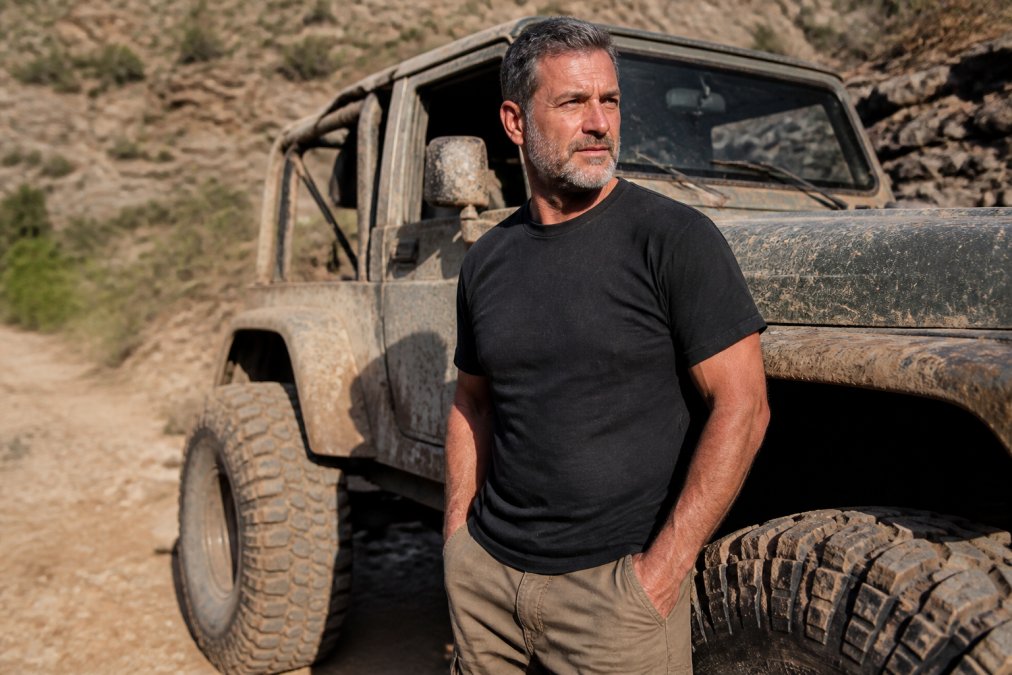
Lighter shirts fail in the field because they're engineered for comfort in controlled environments, not for repeated contact with rock faces, roll cage tubing, and abrasive terrain. A standard 4.3 oz tee will pill, stretch, and thin out after a season of serious use. A proper heavyweight shirt, built from dense ring-spun cotton or a reinforced blend, holds its structure across hundreds of washes and miles of trail.
GSM Explained: What the Numbers Actually Mean for Trail Wear
GSM is grams per square meter, the standard measurement for fabric weight and density. For off-road apparel, GSM tells you more about durability than any marketing claim.
| GSM Range | Weight Class | Trail Suitability |
|---|---|---|
| 130-160 GSM | Lightweight | Poor, thins quickly on abrasive terrain |
| 160-200 GSM | Mid-weight | Acceptable for casual trail use |
| 200-250 GSM | Heavyweight | Good for regular off-road activity |
| 250+ GSM | Ultra-heavy | Best for rugged terrain, maximum durability |
Most off-road enthusiasts find the 200-250 GSM range hits the right balance between durability and breathability. Below 180 GSM, expect visible wear after a single season of serious overlanding. Above 280 GSM, you're trading thermal comfort in desert climates for marginal gains in abrasion resistance.
Abrasion Resistance and Why It Matters on Rock Terrain
Evaluating a trail shirt purely by feel in a store tells you nothing about how fabric holds up when it drags across sandstone or catches on a recovery strap hook.
Abrasion resistance is typically measured using the Martindale or Wyzenbeek test methods, which simulate repeated rubbing cycles against a standard surface. According to ASTM International's textile testing standards, fabrics rated for higher abrasion cycles maintain integrity significantly longer under mechanical stress. Ring-spun cotton and cotton-polyester blends consistently outperform open-end spun fabrics because tighter fiber alignment resists pilling and tearing under directional friction.
For rock crawling, you want reinforced seams at the shoulders and sides, the contact points when pulling through a window or bracing against a door frame.
Best Fabric for Off-Road Apparel: Cotton, Blends, and Beyond
The best fabric depends on your primary terrain, climate, and how hard you push your gear. Heavyweight cotton dominates for most trail riders, but technical blends have earned a legitimate place in the overlanding kit.
Cotton remains the default for good reason. It breathes well, stays comfortable during long days, and doesn't melt when contacting hot metal surfaces, a real concern around exhaust components or running engines. The trade-off is moisture retention: cotton holds sweat, which becomes problematic in cold mountain climates where wet fabric accelerates heat loss.
Ring-Spun vs. Open-End Cotton
Ring-spun cotton is produced by continuously twisting and thinning fibers into tight, smooth yarn. The result is denser, softer, and more durable fabric compared to open-end (rotor-spun) cotton, which uses a faster process that leaves fibers loosely aligned.
For trail wear, ring-spun construction matters because it resists pilling after repeated washing, reduces friction against skin, retains dye better after trail washing and sun exposure, and offers higher tensile strength across the fabric face.
Open-end cotton shirts are cheaper to produce and fine for casual wear. On rugged terrain, you'll feel the difference within a season.
Garment-Dyed and Soft-Washed Finishes
Garment-dyed construction means the shirt is assembled first, then dyed as a complete garment. This creates subtle color variation and a lived-in look while pre-stressing the fabric, which means less unexpected shrinkage after your first few washes.
Soft-washed finishes tumble the finished garment to break down surface fibers, creating a shirt that feels broken-in from day one, valuable for 10-hour trail days.
Both finishes are markers of quality construction. Brands that skip these processes to cut costs usually show it in fit consistency and color fastness after washing.
Heavyweight Cotton vs Performance Blends for Trails
The answer isn't "cotton is better" or "synthetics win", it's a question of what you're actually doing on the trail.
Heavyweight cotton excels in desert heat where breathability matters, situations involving hot surfaces or exhaust contact, all-day overlanding comfort, and for riders who prefer natural fibers against skin.
Performance blends (typically cotton-polyester or cotton-modal) excel in high-output activities like hiking to a recovery point, variable weather where moisture-wicking matters, environments where the shirt gets wet repeatedly, and for riders who run hot.
The practical middle ground many experienced trail riders land on is a 60/40 or 50/50 cotton-polyester blend in the 220-240 GSM range. You get most of cotton's breathability and comfort with improved moisture management and slightly better abrasion resistance.
Pure synthetic shirts marketed for hiking are not trail shirts. They snag, melt, and don't hold up to the mechanical abuse of serious off-roading.
Fit, Comfort, and Layering for Long Off-Road Expeditions
Fit is where most off-road apparel brands get it wrong. A shirt engineered for a slim athletic cut doesn't work for the person who spends weekends under a lifted truck.
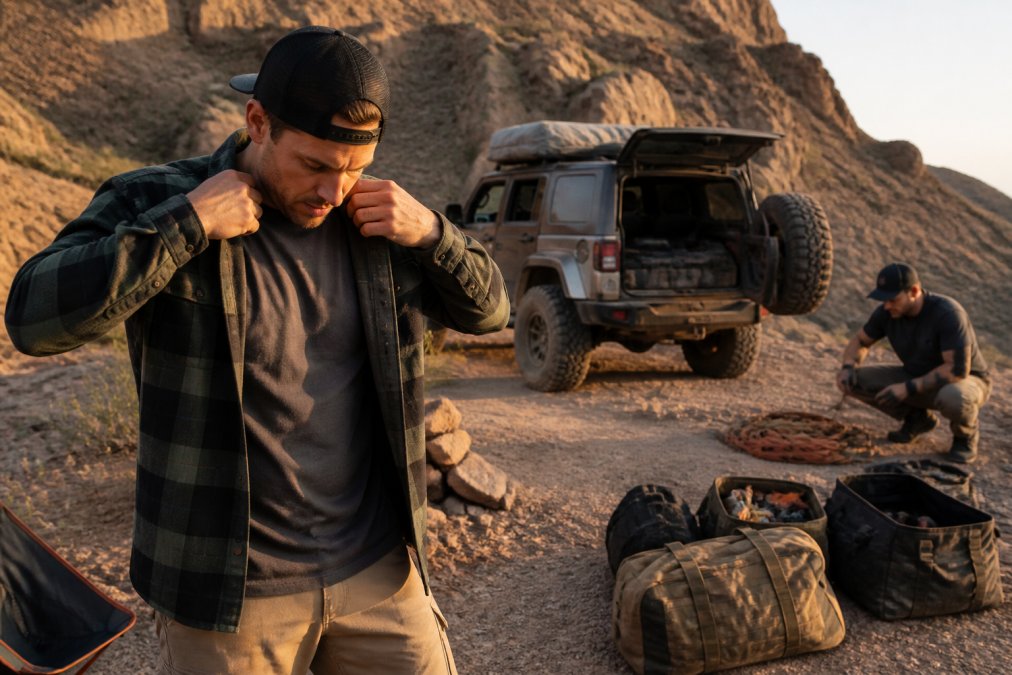
For long expeditions, comfort comes down to range of motion, fabric weight distribution, and how the shirt handles body temperature changes across a full day. A properly fitted heavyweight tee should allow full arm extension without the hem pulling out of your waistband, and shoulder seams should sit at the actual shoulder point.
Sizing for Bigger Builds and Longer Torsos
Standard sizing assumes proportional builds that don't match the actual body types of many off-road enthusiasts. A size XL cut for a 6-foot athlete fits differently on a 6-foot rider with a longer torso and broader shoulders.
Look for chest width measured across the widest point, body length that accounts for longer torsos, sleeve length that doesn't restrict overhead arm movement, and armhole depth that allows full shoulder rotation. A unisex fit with extended body length and relaxed chest is the practical standard for most off-road riders.
Layering Strategies for Desert Heat and Mountain Cold
Off-road expeditions rarely happen in a single climate. A trail starting at 6,000 feet in the morning can drop 30 degrees by the summit, and desert runs can hit extreme heat by midday.
The layering system that works for most overlanders: a moisture-wicking lightweight shirt if you run hot (or the heavyweight tee itself as base in cooler conditions), the heavyweight cotton tee as mid-layer in desert climates for breathability without trapping radiant heat, and a flannel or light softshell that can be tied around the waist when temperatures rise.
A heavyweight cotton tee is a better mid-layer than synthetic fleece in dry desert heat because it breathes without trapping radiant heat against your body.
UV Protection, Sustainability, and What Most Brands Skip
UV protection in fabric is measured by the Ultraviolet Protection Factor (UPF) rating. According to the Skin Cancer Foundation's guide to sun-protective clothing, a standard white cotton t-shirt offers roughly UPF 5-7. A 240 GSM dark-colored cotton shirt can reach UPF 25-40, which matters on exposed desert trails where you're in direct sun for hours. This is particularly relevant for riders aged 40 and above at high elevation.
Sustainability is a growing concern in outdoor apparel. The Outdoor Industry Association's sustainability resources tracks material sourcing and manufacturing practices. Ring-spun cotton from certified sources, low-impact dyeing, and construction designed for longevity are markers of brands thinking beyond the first sale. A shirt lasting five seasons is inherently more sustainable than one needing annual replacement.
Durable construction is sustainable construction, shirts that hold up reduce total material consumption over time.
How to Wash and Care for Rugged T-Shirts After Trail Days
Knowing how to wash and care for rugged t-shirts extends gear life significantly. Heat is the enemy: hot water and high dryer heat cause most shrinkage and color fading that riders blame on "cheap fabric."
Practical care checklist for trail shirts:
- Turn shirts inside out before washing to protect surface dye
- Wash in cold water on a gentle or normal cycle
- Avoid fabric softener, which coats fibers and reduces breathability
- Remove promptly from the washer to prevent color transfer
- Tumble dry on low heat or hang dry when possible
- Pre-soak mud-covered shirts in cold water before washing
- Store folded, not hung, to prevent shoulder seam stretching
For garment-dyed or soft-washed finishes, minor color variation in the first few washes is normal and stabilizes after three to four cycles.
According to the American Cleaning Institute's fabric care guidelines, cold water washing preserves fiber integrity and dye stability significantly better than warm or hot cycles.
What Makes a Heavyweight T-Shirt Worth the Price for Off-Roading
A shirt that costs more upfront and lasts four seasons beats a cheap shirt needing annual replacement, on price alone, not counting performance differences on the trail.
The value calculation comes down to construction details: double-needle stitching at hems and cuffs prevents unraveling under stress, seamless or reinforced collars hold shape after repeated stretching, pre-shrunk ring-spun cotton maintains consistent fit, and colorfast dyes resist fading after a season of washing.
A shirt built for off-road culture is an expression of what you do on weekends. Trail Explorer designs are built around rock crawling culture and the specific visual language of the off-road community.
For riders burned by "premium" brands that fell apart after a season, the differentiator is construction transparency. Look for brands that specify GSM, fiber type, and construction method rather than vague quality claims.
| Feature | What to Look For | Why It Matters on Trail |
|---|---|---|
| Fabric weight | 200-250+ GSM | Resists abrasion and maintains shape |
| Fiber type | Ring-spun cotton | Stronger, softer, better dye retention |
| Stitching | Double-needle at hems and cuffs | Prevents seam failure under stress |
| Finish | Garment-dyed or soft-washed | Reduces shrinkage, improves comfort |
| Collar | Seamless or reinforced | Holds shape after repeated wear |
| Fit | Extended body length, relaxed chest | Covers longer torsos, allows full movement |
Frequently Asked Questions
What fabric weight is considered a heavyweight t-shirt?
A heavyweight t-shirt typically starts at 200 GSM (grams per square meter) and goes up to 280 GSM or higher. Mid-weight shirts run between 150-180 GSM and feel noticeably thinner. For off-roading and trail use, shirts in the 220-280 GSM range offer the thickness needed to resist abrasion, hold their shape after repeated washes, and provide better coverage against brush and debris on rugged terrain.
Are heavyweight t-shirts breathable enough for summer trail riding?
Yes, when made from ring-spun or garment-dyed cotton, heavyweight t-shirts breathe better than many synthetic alternatives at the same weight. The key is fabric construction: tightly spun cotton fibers allow air circulation while blocking UV and resisting abrasion. For hot desert climates, look for pre-shrunk, soft-washed finishes that feel broken in from day one and don't trap heat the way stiff, dense blends can.
How do you maintain the durability of off-road apparel after heavy use?
Turn heavyweight tees inside out before washing to protect printed graphics and garment-dyed finishes. Wash in cold water on a gentle cycle and skip the dryer when possible, high heat is the fastest way to shrink pre-shrunk cotton and crack screen-printed designs. For trail mud and grease, pre-treat stains before washing rather than running multiple hot cycles. Store folded, not hung, to prevent shoulder stretching on heavier fabric.
What features should I look for in off-road clothing?
Prioritize GSM weight (220+ for durability), double-needle stitching at seams and hems, reinforced collar construction, and pre-shrunk fabric. For off-roading specifically, abrasion resistance matters more than it does for casual wear, look for ring-spun cotton or cotton-polyester blends with tight weave construction. UV protection ratings and a fit that allows full arm movement are worth checking, especially for long days behind the wheel or on foot across exposed terrain.
Off-road riding demands gear that keeps up with the terrain, and the shirt you wear matters more than most riders realize until a cheap one fails them mid-trail. The Trail Explorer builds heavyweight tees specifically for this community, ring-spun cotton construction, trail-focused designs, and garment finishing that holds up across real seasons of use. Subscribe to our emails to get first access to new designs and gear updates built for the off-road life.
This article was written using GrandRanker