

Table of Contents
- What Off-Road Apparel Durability Actually Means on the Trail
- Best Materials for Off-Road Apparel: Fabrics That Survive
- How Heavyweight Off-Road Shirts Compare to Standard Tees
- Protective Layering: Balancing Armor, Mobility, and Ventilation
- Signs of Wear: When Your Off-Road Gear Needs Replacement
- Off-Road Riding Gear Maintenance That Extends Durability
- Build a Trail-Ready Kit That Lasts Multiple Seasons
- Conclusion
- Frequently Asked Questions
Last Updated: September 4, 2026
What Off-Road Apparel Durability Actually Means on the Trail
Off-road apparel durability is the measure of how well riding gear withstands abrasion, tearing, and repeated stress without failing when you need it most. It is not just about fabric thickness; it is about how materials, stitching, and construction work together to survive contact with branches, rocks, and your machine. Most riders learn this lesson the hard way: they buy a standard cotton tee, snag it on a handlebar or a limb, and watch it shred before lunch. The real difference comes down to material science and construction details you cannot see in a product photo. Before you spend another dollar on gear, you need to understand what you are actually buying, because off-road apparel durability is the single biggest factor separating a smart purchase from a wasted one.
Below, we will break down the fabrics that survive technical trails, how heavyweight shirts compare to everyday tees, and exactly how to maintain your kit so it lasts multiple seasons. We will also cover the signs of wear that mean your gear has reached the end of its life, something most guides gloss over.
Best Materials for Off-Road Apparel: Fabrics That Survive
The best materials for off-road apparel are heavyweight synthetic blends and high-density cotton constructions that prioritize tear strength and abrasion resistance over softness. Many riders assume any thick shirt will work, but the fiber content and weave determine whether a fabric snags, pills, or holds up to trail debris. To move beyond anecdote, you need to understand the objective metrics that define durability.
Denier, Tear Strength, and Abrasion Resistance Explained
Denier fabric weight measures the thickness of individual fibers, with higher numbers indicating tougher material. Tear strength describes how well a fabric resists ripping once punctured, while abrasion resistance is its ability to survive friction against rough surfaces. These three properties work together: a shirt with high tear strength but low abrasion resistance will abrade thin over time, while one with strong abrasion resistance but weak tear strength will fail catastrophically on the first snag.
Reading the Numbers: What Abrasion Test Data Tells You
Most riders never see the lab results behind their gear, but understanding the standard test methods helps you read between the lines of a product description. The most common benchmark is the Martindale abrasion test, which rubs a fabric sample in a figure-eight pattern against a standard abrasive surface until a thread breaks. Results are reported in cycles; a heavy-duty denim might survive 25,000 cycles, while a lightweight nylon shirt could fail at 5,000 (peer-reviewed research). For trail riding, look for fabrics that withstand at least 20,000 Martindale cycles in the main body and significantly more in reinforced zones like the elbows and shoulders.
Tear strength is typically measured by the Elmendorf tear test, which uses a pendulum to rip a fabric sample with a pre-cut slit. The force required to propagate the tear is reported in pounds or newtons. A fabric with high tear strength resists the kind of snag-and-rip failures you get from catching a branch or a footpeg. A common pattern in quality off-road gear is a tear strength of 8 pounds or higher in the shell fabric, paired with a ripstop weave that prevents a small puncture from turning into a long gash (peer-reviewed research).
Synthetic Fibers vs. Cotton Blends for Riding
Synthetic fibers like polyester and nylon excel at moisture-wicking and ventilation, making them ideal for hot, technical trails where heat dissipation matters. Nylon, in particular, offers a superior strength-to-weight ratio and is often blended with spandex for stretch. However, low-melt-point synthetics like standard polyester can melt against hot engine parts or during a high-speed slide on pavement, fusing to your skin. Cotton blends, particularly heavyweight ring-spun cotton, offer superior comfort and rugged construction for cooler weather and casual riding, and they do not melt on contact with heat.
The trade-off is real: synthetics dry fast but can degrade under UV exposure over multiple seasons, while cotton is more forgiving but holds moisture and abrades faster on rough surfaces. For most riders, a layering approach works best, using synthetics against the skin and heavier cotton or reinforced outer layers for protection. When you are evaluating a specific garment, ask the manufacturer for the fabric's denier and abrasion test results. If they cannot provide them, assume the material is not engineered for serious abuse.
How Heavyweight Off-Road Shirts Compare to Standard Tees
Heavyweight off-road shirts outperform standard tees because they use denser fabric, reinforced stitching, and more durable construction in high-stress zones. A typical standard tee weighs around 4.5 to 5 ounces per square yard, while premium heavyweight options start at 6.5 ounces. That extra density translates directly into abrasion resistance and gear longevity.
The Trail Explorer builds its premium heavyweight tees with 100% combed ring-spun cotton at 6.5 oz/yd², a fabric weight that resists the snags and tears common on technical trails. The tightly knit surface also delivers crisp, vibrant prints that survive repeated washing without fading.

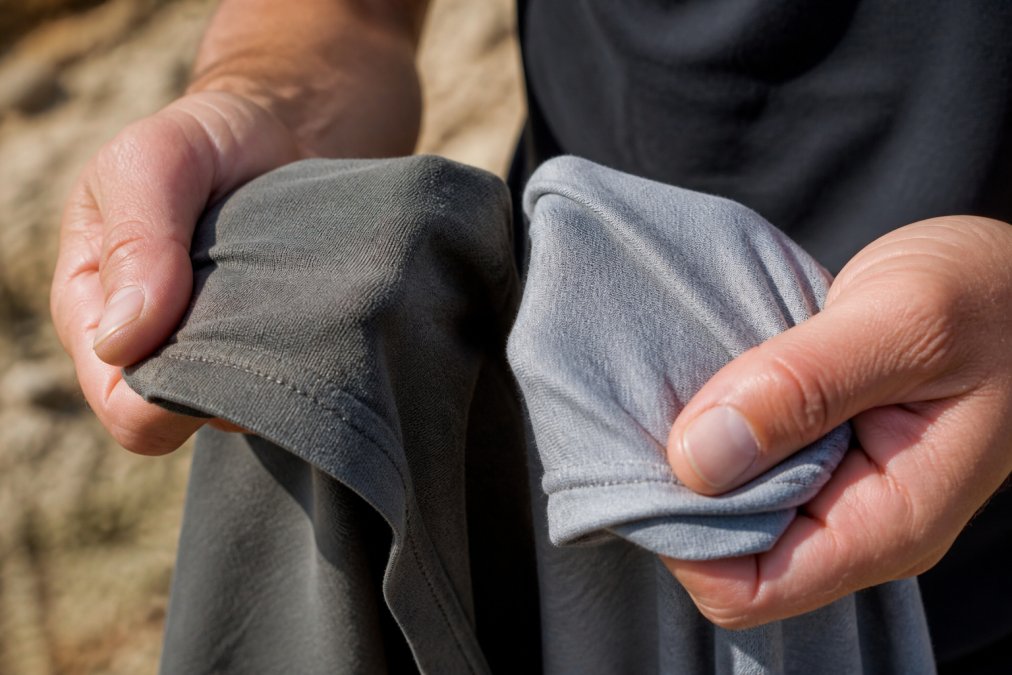
For riders who want maximum durability in a long-sleeve option, The Trail Explorer's heavyweight long sleeve tee uses the same 6.5 oz/yd² combed ring-spun cotton with a classic fit that layers well under protective armor. The one drawback of heavyweight cotton is breathability in extreme heat, which is why many riders pair it with a moisture-wicking base layer on summer rides.
Protective Layering: Balancing Armor, Mobility, and Ventilation
Protective layering is the system of combining base layers, mid layers, and outer shells to manage impact protection, ergonomic mobility, and temperature control across changing conditions. Off-road apparel durability matters little if the gear is so stiff you cannot move or so hot you ditch it halfway through the ride.
CE-Rated Armor and Impact Absorption Basics
CE-rated armor refers to protective padding that meets European safety standards for impact absorption, and it is the benchmark for serious trail riding (europa.eu). Armor works by spreading impact energy across a wider surface, reducing the force transferred to your body. The trade-off is always mobility: bulkier armor offers more protection but restricts movement, so look for articulated fit designs that bend with your joints rather than against them.
Weatherproofing and Thermal Regulation for Multi-Climate Rides
Multi-climate riding demands gear that adapts. Water-repellent outer layers shed light rain and morning dew, while moisture-wicking base layers pull sweat away from your skin to prevent chilling. Thermal regulation is about trapping warm air when temperatures drop and releasing heat when they climb. A durable system uses breathable fabrics with ventilation panels in high-heat zones like the armpits and back, allowing you to regulate temperature without removing layers.
Signs of Wear: When Your Off-Road Gear Needs Replacement
Off-road riding gear needs replacement when you spot frayed stitching, thinning fabric, or compromised impact protection, regardless of how new the gear looks. The most common failure point is reinforced stitching coming undone in high-stress zones like the shoulders and elbows. Once stitching fails, the fabric tears rapidly along the seam.
Check your gear after every major ride, not just when it looks dirty. Hold the fabric up to the light and look for thin spots where abrasion has worn down the weave. Examine armor pockets for tears that could let padding shift during a crash. A shirt that has lost its protective integrity is worse than no shirt at all, because it gives you a false sense of security.
Off-Road Riding Gear Maintenance That Extends Durability
Off-road riding gear maintenance is straightforward: wash with mild detergent, avoid fabric softeners, and air dry to preserve moisture-wicking treatments and fabric integrity. Fabric softeners coat synthetic fibers and destroy their ability to wick moisture, while high heat from dryers breaks down elastic fibers and accelerates shrinkage. But washing is only half the equation. The most durable gear is the gear you repair before a small issue becomes a catastrophic failure.
The Repairability Mindset: Fix It Before You Replace It
Most riders toss a shirt or jacket the first time it snags on a branch or a seam starts to pull. That is a waste of money and a missed opportunity to extend the life of quality gear. The kit does not need to be elaborate: a heavy-duty needle, waxed polyester thread, a few adhesive-backed nylon patches, and a tube of seam sealer weigh less than a pound and fit in a hydration pack.
Patching Tears and Snags
For a clean tear in a cotton or synthetic shell, an adhesive-backed ripstop patch applied to the inside of the fabric is the fastest fix. Clean the area with isopropyl alcohol, let it dry, and press the patch firmly into place. For a more permanent repair on a seam or a larger tear, use a needle and waxed thread to stitch a zig-zag pattern across the damage, then cover the stitching with a patch on both sides. This distributes stress away from the damaged area and prevents the tear from propagating.
Restoring Water Repellency
A durable water-repellent (DWR) finish on an outer shell wears off after a few washes or after prolonged exposure to mud and dust. When water stops beading on the surface and starts soaking into the fabric, it is time to reapply. Wash the garment with a technical cleaner to remove dirt and oils, then apply a spray-on DWR treatment while the fabric is damp. Heat-activate the treatment with a low-heat iron or a dryer cycle if the manufacturer permits it. This restores the shell's ability to shed water and keeps the breathable membrane from wetting out.
Seam and Zipper Maintenance
Seams are the first place off-road gear fails. Check the stitching on your gloves, jacket cuffs, and pant knees after every ride. If you see a loose thread, do not pull it, that will unravel the entire seam. Instead, use a seam ripper to remove the loose section and re-stitch it with a heavy-duty polyester thread. For zippers, a silicone-based lubricant applied to the teeth prevents dirt from grinding them down. A stuck zipper is often caused by a misaligned track, which you can fix by gently realigning the slider with pliers.
Build a Trail-Ready Kit That Lasts Multiple Seasons
Building a trail-ready kit means investing in a few high-quality pieces that layer together, rather than buying cheap replacements every season. Start with a moisture-wicking synthetic base layer, add a heavyweight cotton mid layer like The Trail Explorer's premium heavyweight tee, and finish with a water-repellent shell for protection against the elements.

Here is a practical framework for evaluating gear before you buy:
| Gear Check | What to Look For | Why It Matters |
|---|---|---|
| Fabric weight | 6.5 oz/yd² or higher | Denser fabric resists abrasion and tears |
| Stitching | Reinforced seams in high-stress zones | Prevents failure at stress points |
| Fit | Articulated design for mobility | Allows full range of motion on the bike |
| Care requirements | Machine washable, air dry | Extends gear longevity through proper maintenance |
The Trail Explorer's collection is built around this philosophy. The men's premium heavyweight tee at 6.5 oz/yd² offers the durability you need for rock crawling, while the Under Armour athletic t-shirt provides a lightweight, quick-drying option for hotter days. Each piece is designed to work within a layering system, so you can adapt to changing conditions without sacrificing protection.
Conclusion
Building a durable off-road wardrobe is not about buying the most expensive gear, it is about understanding what you are buying and caring for it properly. Focus on heavyweight fabrics, reinforced construction, and a layering system that balances protection with mobility.
At The Trail Explorer, we build premium heavyweight apparel specifically for riders who demand gear that survives real abuse. Our combed ring-spun cotton tees and long sleeves are designed for rock crawling, trail exploration, and everything in between. Get started with The Trail Explorer and outfit yourself for the trails ahead.
Frequently Asked Questions
What clothes are best for trail riding?
The best trail riding clothes combine abrasion resistance with breathability. Look for heavyweight shirts in the 6.5 oz/yd² range made from combed ring-spun cotton or synthetic blends that wick moisture. Pair them with CE-rated armor at the elbows, shoulders, and knees. Avoid loose cotton hoodies that snag on branches and trap heat. A relaxed fit with articulated sleeves allows full range of motion while keeping protective layers close to your body.
How do I maintain off-road apparel for longevity?
Wash off-road gear in cold water on a gentle cycle, then hang it to dry. Heat from dryers breaks down elastic fibers and shrinks cotton, which accelerates wear. For shirts with heavy dirt and mud, rinse them before washing to prevent grit from grinding into the fabric. Store armor and jackets away from direct sunlight, since UV exposure degrades synthetic fibers and weakens protective shells over time.
What fabric features indicate high durability for off-road gear?
Look for three specific markers: fabric weight, denier rating, and reinforced stitching. Fabric weight of 6.5 oz/yd² or higher signals a heavyweight shirt that resists tears. A denier rating of 200 or above on pants and jackets means tighter weave density and better abrasion resistance. Double-stitched seams in high-stress zones like shoulders and elbows prevent blowouts where gear fails first. Water-repellent coatings add weatherproofing without sacrificing breathability.
How many seasons should off-road apparel last?
A quality heavyweight off-road shirt typically lasts 2 to 3 seasons of regular trail riding before fabric thins noticeably. Jackets and pants with CE-rated armor can last 5 years or more if you replace the armor inserts every 3 to 4 years. Impact protection degrades with repeated hits, even if the outer shell looks fine. Inspect gear before each season and replace anything with torn stitching, frayed fabric, or cracked armor.
This article was written using GrandRanker