

Table of Contents
- What Makes Heavyweight Cotton Different
- Durable Heavyweight T-Shirts for Off-Roading
- Fiber Quality and Weave Density
- How to Care for Heavyweight Cotton Shirts
- Does Heavyweight Cotton Shrink
- Durability vs. Lightweight Alternatives
- The Break-In Period and Long-Term Performance
- Frequently Asked Questions
Last Updated: September 20, 2026
What Makes Heavyweight Cotton Different
Understanding why heavyweight cotton lasts longer requires looking at how it's constructed differently from lightweight counterparts and what that construction means for longevity. The difference isn't just about weight, it's about fiber density, weave tightness, and structural integrity that determine whether a garment survives years of hard use or falls apart after a season.
When you compare a standard 5.3 oz/yd² t-shirt to a heavyweight option at 6.5 oz/yd², you're looking at roughly 20% more fiber packed into the same space. That density matters. Tighter weaves mean fewer gaps where fibers can break, fray, or pull loose. The fabric resists pilling, maintains its shape longer, and withstands the friction that destroys lighter garments.
The Trail Explorer's premium heavyweight tees use this principle to build apparel that handles serious trail work. A shirt that starts at 220 g/m² (6.5 oz/yd²) gives you a foundation that won't thin out after repeated washing or wear. Lightweight fabrics degrade visibly, you can feel them getting thinner, softer in the wrong way, losing structure. Heavyweight cotton doesn't do that. It breaks in instead of breaking down.
Durable Heavyweight T-Shirts for Off-Roading
Off-roading demands apparel that handles abuse. You're dealing with sweat, dust, UV exposure, friction from gear and harnesses, and repeated washing. Most t-shirts fail because they're engineered for comfort in controlled environments, not durability in harsh conditions.
Durable heavyweight t-shirts for off-roading start with the right fiber choice. Ring-spun cotton, the method used in The Trail Explorer's premium heavyweight tees, creates longer, stronger fibers that interlock more effectively. This matters when your shirt is rubbing against a harness for eight hours straight or getting thrown in a washing machine weekly.
The construction details matter just as much. Side-seamed construction (rather than tubular) distributes stress more evenly, preventing the blowouts you see in cheap tees where seams split under load. Single-needle edge stitching on the collar means the neckline won't curl or fray after repeated wear and washing. These aren't luxury touches, they're the difference between a shirt lasting two seasons and lasting five.
The Trail Explorer's designs focus on this durability foundation. The Men's Premium Heavyweight Tee comes in multiple styles, each built with the same structural integrity: 100% combed ring-spun cotton, 6.5 oz/yd² weight, and construction methods designed for abuse. Whether you're choosing the Trail Soda, Skip, or Old Man design, you're getting the same proven durability underneath the graphics.

Fiber Quality and Weave Density
The reason heavyweight cotton lasts longer comes down to two technical factors: what the fibers are and how tightly they're woven together.
Combed cotton removes short fibers and impurities before spinning. This creates a yarn with longer staple fibers that interlock more effectively. Long-staple cotton naturally resists breakage because the fibers themselves are stronger and grip each other better in the weave. When you wash a combed cotton garment, fewer fibers shed because they're not being pulled loose by the spinning process.
Ring-spun cotton takes this further. Instead of twisting fibers into yarn (which creates weak points), ring-spinning wraps fibers around a core, creating a yarn with superior tensile strength. A ring-spun yarn can handle more stress before breaking. That translates directly to fabric that resists tearing, pilling, and degradation.
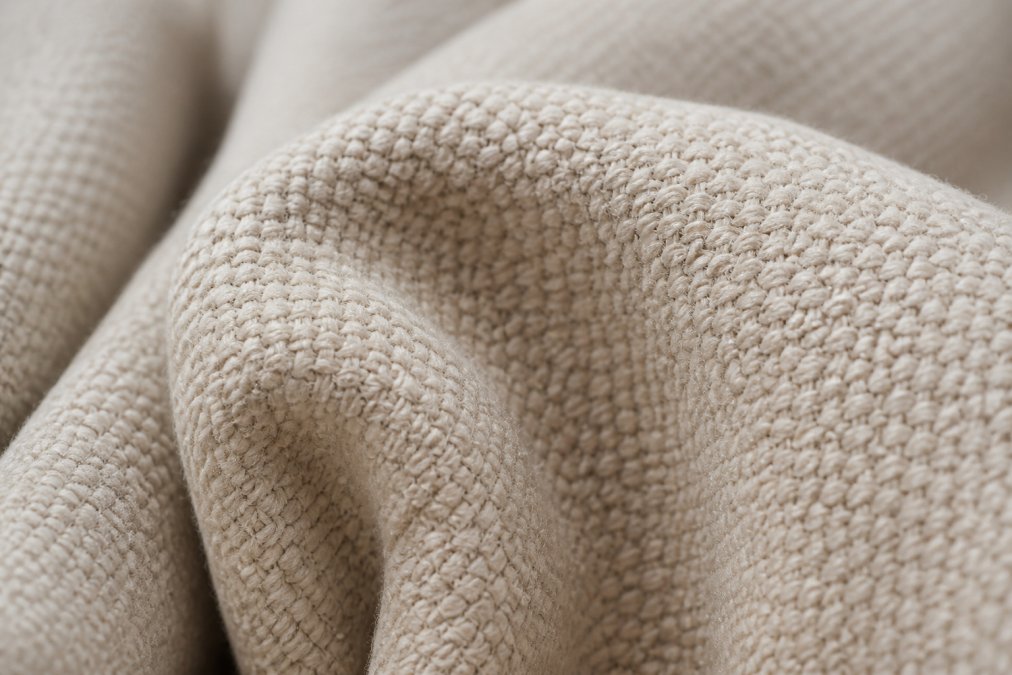
Weave density, measured in GSM (grams per square meter), tells you how much fiber is packed into a given area. A 220 g/m² fabric has roughly 20% more fiber than a 180 g/m² fabric. That density creates structural integrity. Tighter weaves have fewer gaps where fibers can migrate or break. When you wash the garment, the fibers don't shift as much because they're compressed tightly together.
Ring-Spun Cotton vs. Carded Cotton
Ring-spun cotton and carded cotton represent two different approaches to fiber preparation, and the difference directly impacts durability.
Carded cotton removes large debris and tangles fibers, but doesn't remove short fibers. The resulting yarn has inconsistent fiber length, which creates weak points in the fabric. Short fibers don't interlock as effectively with longer ones, so the yarn has lower tensile strength. Garments made from carded cotton pill more easily, fade faster, and show wear more visibly.
Ring-spun cotton uses long-staple fibers that are twisted together in a way that creates superior strength. The spinning process wraps fibers around a core, creating a yarn with better grip and cohesion. Garments made from ring-spun cotton resist pilling, maintain color longer, and show less visible wear over time.
The Trail Explorer uses combed ring-spun cotton in its premium heavyweight tees. This choice alone accounts for much of the durability advantage. You're getting the strongest possible yarn foundation, which means fewer fibers shed during washing and the fabric resists the mechanical stress of daily use.
GSM and Structural Integrity
GSM (grams per square meter) is the standard measurement for fabric weight. A 220 g/m² heavyweight fabric has significantly more structural integrity than a 150 g/m² lightweight fabric because the fibers are more densely packed.
Higher GSM means several practical advantages for durability. First, the fabric resists thinning. Lightweight fabrics visibly thin out after 20-30 washes because fibers are continuously being removed by mechanical action. Heavyweight fabrics maintain consistent thickness because there's more fiber to lose before any visual change occurs.
Men’s premium heavyweight tee Trail Soda →
Second, higher GSM improves shape retention. A dense weave resists stretching and distortion. Lightweight fabrics develop neck holes and shoulder sag because the fibers separate under stress. Heavyweight fabrics hold their shape because the weave is too tight for fibers to migrate significantly.
Third, GSM correlates with pilling resistance. Pilling happens when short fibers break loose and ball up on the surface. In a dense weave, fewer fibers break loose to begin with. The ones that do are surrounded by so many intact fibers that they can't form visible pills.
The 220 g/m² specification in The Trail Explorer's premium tees puts them in the heavyweight category where these benefits become measurable. You're not just getting a heavier shirt, you're getting a fundamentally more durable fabric structure.
How to Care for Heavyweight Cotton Shirts
Heavyweight cotton lasts longer only if you care for it properly. Poor washing and drying practices can negate the durability advantages of quality construction.
Wash in cold water. Hot water weakens cotton fibers and causes more aggressive dye loss. Cold water washing removes dirt and sweat without the thermal stress that accelerates fiber degradation. Turn shirts inside out before washing to reduce surface friction and fading.
Use mild detergent and avoid bleach or optical brighteners. Harsh chemicals break down fiber integrity and fade colors. A standard detergent at normal concentration is sufficient. Heavy-duty detergents designed for work clothes often contain additives that are too aggressive for long-term garment health.
Wash with similar colors to avoid dye transfer. Heavyweight cotton holds dyes well, but new garments release more dye in the first few washes. Washing with whites can result in dye transfer that dulls both the shirt and lighter garments.
Dry on low heat or air dry. High heat damages cotton fibers and accelerates shrinkage. Low-heat drying preserves fiber integrity and reduces shrinkage to minimal levels. Air drying is the gentlest option and extends garment life significantly. If you must use a dryer, remove the shirt while slightly damp, this reduces wrinkles and heat exposure.
Avoid over-drying. Cotton that sits in a hot dryer for 60+ minutes experiences unnecessary thermal stress. The fibers become brittle and the fabric loses softness. A 30-40 minute low-heat cycle is sufficient for most loads.
Does Heavyweight Cotton Shrink
Yes, heavyweight cotton shrinks, but less than lightweight cotton, and the amount is predictable and manageable.
Cotton fibers relax when exposed to heat and moisture. This relaxation appears as shrinkage.
Durability vs. Lightweight Alternatives
The durability difference between heavyweight and lightweight cotton becomes obvious after three months of regular wear.
| Characteristic | Lightweight Cotton | Heavyweight Cotton |
|---|---|---|
| Typical GSM | 150-180 g/m² | 200-230 g/m² |
| Typical Lifespan | 12-18 months | 3-5 years |
| Pilling Resistance | Low | High |
| Shape Retention | Fair | Excellent |
| Color Fastness | Moderate | High |
| Initial Softness | Very high | Moderate (improves with wear) |
| Breathability | High | Moderate-high |
| Cost per wear | Higher | Lower |
The Break-In Period and Long-Term Performance
Heavyweight cotton doesn't feel soft when new. This is normal and expected. The fibers are densely packed, creating a structured hand feel that many people interpret as stiff. This is where many buyers make a mistake, they return the shirt thinking something is wrong.
Frequently Asked Questions
Does heavyweight cotton shrink more than lightweight fabrics?
Heavyweight cotton can shrink, but proper care minimizes it. Washing in cold water and air-drying prevents most shrinkage. Ring-spun cotton, used in premium heavyweight shirts, has better shape retention than carded alternatives. A quality 6.5 oz/yd² heavyweight tee will shrink less than lightweight options because the denser weave provides structural stability during washing cycles.
Is 100% heavyweight cotton more durable than synthetic blends?
Pure ring-spun cotton resists pilling and maintains fiber integrity through repeated wash cycles. Some blends (like 60% cotton and 40% polyester) add synthetic strength, and 100% combed ring-spun cotton provides better breathability and hand feel. The key is the cotton quality and construction method, not the blend.
What makes heavyweight cotton good for off-road activities?
Heavyweight cotton's tight weave density and higher GSM (typically 6.5 oz/yd² or above) provide superior wear and tear resistance. The thicker fabric resists tears and abrasion from rock crawling and trail riding. Ring-spun construction creates stronger fibers that maintain shape retention and structural integrity through mud, sweat, and repeated washing, making it ideal for adventurous activities.
How long do heavyweight cotton shirts typically last with proper care?
Well-maintained heavyweight cotton shirts can last 3-5 years or longer with regular wear. The break-in period (first 3-5 washes) allows the fabric to settle into its final dimensions. Using cold water, gentle detergent, and air-drying extends garment longevity significantly. Premium ring-spun construction and side-seamed stitching reduce wear at stress points, maximizing the lifespan of your investment.