

Table of Contents
- Step 1: Scrape Off Excess Mud Before It Sets
- Step 2: Rinse with Cold Water to Loosen Soil Particles
- Step 3: Pre-Treat Stains with Liquid Detergent or a Vinegar Paste
- Step 4: Wash on a Gentle Cycle with the Best Laundry Detergent for Outdoor Gear
- Step 5: Air Dry to Avoid Heat-Setting Stains
- How to Remove Dried Mud Stains from Clothes That Sat for Days
- How to Wash Heavyweight Cotton Shirts Without Shrinking or Fading
- Common Mistakes That Make Mud Stains Permanent
- Frequently Asked Questions
Last Updated: September 12, 2026
Step 1: Scrape Off Excess Mud Before It Sets
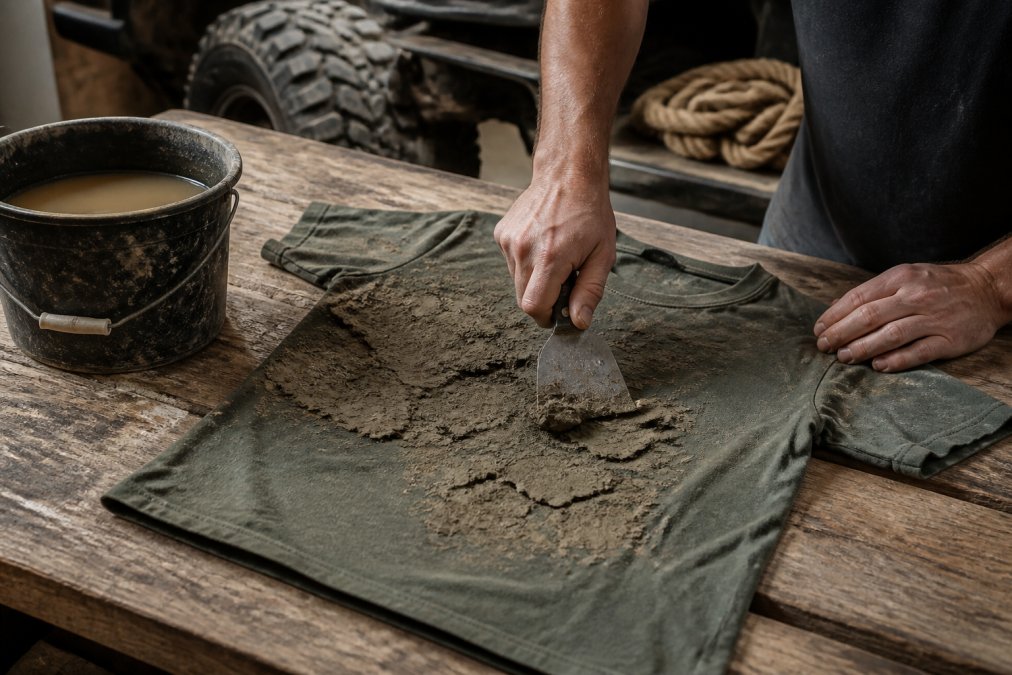
The first move in how to wash mud off shirts is to scrape, not soak. Mud is mostly soil particles held together by organic matter, and the more of it you lift off dry, the less your fabric fibers have to fight later.
Let the shirt dry completely if the mud is still wet. Wet mud smears deeper into the weave; dried mud flakes off the surface.
Use a dull knife, a plastic scraper, or the back of a spoon. Work over a trash can or outdoors.
- Hold the fabric taut with one hand
- Scrape with the grain, not against it
- Never scrub with a brush at this stage
A common mistake is reaching for a stiff bristle brush immediately. That drives soil particles straight through the fabric and turns a surface stain into a set one.
Step 2: Rinse with Cold Water to Loosen Soil Particles
Cold water is the correct choice for the rinse stage, and hot water is the mistake that ruins shirts. Heat opens fabric fibers and locks organic matter in place, which is exactly what you do not want before a stain treatment.
Rinse from the back of the stain, pushing water through the fabric rather than into it. This forces soil particles out the way they came in.
Run cold water for 30 to 60 seconds. You should see the water turn from brown to mostly clear.
If the stain has already dried, soak the shirt in cold water for 15 to 30 minutes first. A soak loosens what a rinse alone cannot.
Step 3: Pre-Treat Stains with Liquid Detergent or a Vinegar Paste
Pre-treatment is where most people quit too early. A liquid detergent applied directly to the stain, worked in with fingertips, and left to sit for 10 to 15 minutes does more than any amount of extra agitation in the machine.
Start with the universal method, then adjust for fabric and color.
The base method (works on most shirts)
Apply a small amount of liquid detergent directly to the stain. Work it in with your fingertips or a soft-bristle brush, moving from the outside of the stain toward the center so you don't spread the ring. Let it sit 10 to 15 minutes. Rinse with cold water before washing.
For stubborn or older stains, mix white vinegar with baking soda into a paste. The paste should be thick enough to cling to the fabric without running. Apply with an old toothbrush, outside-in, and let it sit 15 minutes.
Fabric-specific adjustments
- Cotton and heavyweight cotton: Tolerates the vinegar-and-baking-soda paste well. You can work it in with a soft brush and let it sit the full 15 minutes.
- Cotton-poly blends: Use liquid detergent only. Skip abrasive pastes and brushes; the synthetic fibers can pill. Let the detergent sit 15 minutes and rinse.
- Polyester and nylon: These are oil-friendly fibers, so mud clings differently. Use a drop of grease-cutting dish liquid (a small amount, not a pour) worked in with fingertips, then rinse cold. Avoid hot water, which can set the stain and also shrink some synthetics.
- Wool and silk: Do not use baking soda paste or vinegar at full strength. Use a pH-neutral liquid detergent made for delicates, apply with fingertips only, and let it sit no more than 10 minutes. Never scrub. Wool and silk are protein fibers and can be damaged by alkaline treatments.
- Linen: Similar to cotton but more prone to abrasion. Use detergent, skip the brush, and let the paste sit only if the fabric is sturdy.
Color-safe stain removal
- White shirts: You have the most options. A vinegar-and-baking-soda paste is safe, and an oxygen-based bleach (not chlorine) can be added to the wash for stubborn stains. Chlorine bleach can yellow some white fabrics over time and is harsh on fibers, so use it only if the care label allows it.
- Colored shirts: Skip chlorine bleach entirely. Test any pre-treatment on an inside seam first. Vinegar is generally color-safe, but baking soda paste can leave a light residue on very dark colors, so rinse thoroughly.
- Dark colors: Turn the shirt inside out before pre-treating so any paste residue doesn't sit on the visible surface. Wash dark colors separately from light ones to prevent bleeding.
Always spot test first
Run a spot test on an inside seam before applying anything to a visible area. Colorfastness varies by dye lot, and a five-second test beats a ruined shirt. This is especially important on synthetic fabrics and darker colors.
Rinse thoroughly with cold water before moving to the wash. Any pre-treatment residue left on the fabric can attract more soil in the machine.
Federal Trade Commission guidance on care labeling
Step 4: Wash on a Gentle Cycle with the Best Laundry Detergent for Outdoor Gear
The best laundry detergent for outdoor gear is a liquid formula, not a powder. Liquid detergent dissolves fully in cold water, reaches the fabric fibers, and rinses out cleanly. Powder can leave residue that traps soil.
Set your machine to a gentle cycle with cold water. Add a normal dose of liquid detergent.
- Skip fabric softener entirely; it coats fibers and reduces stain lift
- Skip bleach unless the care label explicitly allows it
- Don't overload the drum; agitation needs room to work
For heavyweight cotton, a short soak cycle before the main wash helps. For lighter shirts, a standard gentle cycle is enough.
American Cleaning Institute guidance on stain removal
Step 5: Air Dry to Avoid Heat-Setting Stains
Air dry every mud-stained shirt. The dryer is where a mostly-clean shirt becomes a permanently stained one. Any stain residue left after washing will be bonded to the fabric by heat, and it will not come out on a second attempt.
Hang the shirt in shade or indoors with good airflow. Direct sun can fade darker colors over repeated washes.
Before drying, inspect the shirt under good light. If you see any remaining stain, repeat the pre-treatment and wash steps. Do not tumble dry "just to be sure."
How to Remove Dried Mud Stains from Clothes That Sat for Days
Dried mud that has sat for days needs a longer soak, not more scrubbing. Soak the shirt in cold water with a scoop of liquid detergent for at least an hour, or overnight for heavy stains.
After soaking, apply a vinegar and baking soda paste directly to the stain. Let it work for 20 minutes, then rinse and wash on a gentle cycle.
For dried stains on natural fibers like cotton, a gentle rub between your fingers while the shirt is soaking helps break up the crust. Never scrape dried mud off a shirt that has already been washed once; you'll damage the fibers without lifting the stain.
Repeat the cycle if needed. Dried stains often need two passes, and that is normal, not a sign the shirt is ruined.
How to Wash Heavyweight Cotton Shirts Without Shrinking or Fading
Heavyweight cotton shrinks because of heat and agitation, and it fades because of heat and detergent residue. Control both and the shirt holds its shape and color. But heavyweight cotton is only one fabric in your closet, and the same mud that comes out of a 6.5 oz tee behaves differently on a silk blouse or a polyester jersey. Here is how to handle each.
Heavyweight cotton (6 oz and up)
Wash in cold water on a gentle cycle. Turn the shirt inside out to protect any printed design. Use liquid detergent, never powder. Skip the dryer entirely and hang to air dry. Wash dark colors separately from light ones. Avoid overloading the machine.
A 6.5 oz heavyweight tee behaves differently from a 4.2 oz lightweight one. Heavier fabric holds more water and takes longer to dry, so plan for a full day of air drying. A short soak cycle before the main wash helps on heavyweight cotton because the thicker weave holds more soil.
Lightweight cotton and cotton-poly blends
These dry faster and shrink less than heavyweight cotton, but they still respond best to cold water and a gentle cycle. Cotton-poly blends can tolerate a short low-heat dryer cycle if you're in a hurry, but air drying is still safer for stain prevention. Check the shirt the moment the cycle ends if you do use the dryer.
Synthetics (polyester, nylon)
Synthetics are durable but oil-friendly, so mud and body oils cling to them. Wash in cold water on a gentle cycle with liquid detergent. Avoid fabric softener, which coats the fibers and can trap odor. Air dry or use low heat; high heat can shrink some synthetics and set stains. Do not use chlorine bleach on colored synthetics.
Wool and silk
These are protein fibers and need the gentlest handling. Hand wash in cool water with a pH-neutral detergent made for delicates, or use a machine's delicate cycle in a mesh bag. Do not wring or twist. Lay flat to dry away from direct sun. Never use chlorine bleach, baking soda paste, or hot water. If the stain is old, a longer soak in cool water with a small amount of delicate detergent is safer than scrubbing.
Linen
Linen is strong but abrades easily. Wash in cold water on a gentle cycle, skip the brush, and air dry. Linen wrinkles, so hang it promptly and smooth it by hand while damp.
| Fabric Type | Wash Temperature | Cycle | Dry Method |
|---|---|---|---|
| Heavyweight cotton | Cold | Gentle | Air dry |
| Lightweight cotton | Cold | Gentle | Air dry |
| Cotton-poly blend | Cold | Gentle | Low heat, short |
| Synthetic (polyester/nylon) | Cold | Gentle | Air dry or low heat |
| Wool/silk | Cool | Hand wash or delicate | Lay flat, air dry |
| Linen | Cold | Gentle | Air dry |
Post-wash inspection before drying
Before any shirt goes in the dryer, inspect it under good light. If you see any remaining stain, repeat the pre-treatment and wash steps. Do not tumble dry "just to be sure." Heat bonds any remaining residue permanently, and a second wash won't reverse it. This step is the single biggest difference between a shirt that comes clean and one that stays stained.
American Cleaning Institute guidance on stain removal
Common Mistakes That Make Mud Stains Permanent
Four mistakes turn a washable mud stain into a permanent one. Avoid all four and most mud comes out on the first pass.
- Using hot water. Heat sets organic matter into the fiber. Cold water throughout is the rule.
- Tumble drying before the stain is fully gone. The dryer bonds any remaining residue permanently.
- Scrubbing wet mud. This pushes soil deeper into the fabric instead of lifting it out.
- Skipping pre-treatment. Detergent alone in the machine rarely removes a set mud stain.
If you're coming from generic outdoor brands, expect the same rules to apply. Fabric care is fabric care, and a premium heavyweight tee deserves the same attention you'd give any quality garment.

Mud happens. What matters is how quickly you act and how carefully you treat the shirt afterward. The Trail Explorer builds apparel for people who actually get dirty, which is why our premium heavyweight tees and unisex classic tees are made from durable ring-spun cotton. Subscribe to our emails for more trail-tested care tips and early access to new designs.

Frequently Asked Questions
Should you let mud dry before washing it off a shirt?
Letting mud dry makes it easier to scrape off, but don't wait too long. Dried mud releases from fabric fibers more cleanly than wet mud, which can smear deeper into the weave. Scrape off the crust within 24 hours, then pre-treat any remaining stain. If the mud sits for days, it can bind to natural fibers and become harder to lift. For heavyweight cotton shirts, a gentle scrape while dry followed by a cold water soak works best.
What is the best stain remover for dried mud on cotton?
A paste of baking soda and white vinegar applied directly to the dried stain works well for cotton. Let it sit for 15 minutes, then gently rub the fabric together. For tougher stains, apply liquid detergent straight to the spot and let it soak for 30 minutes before washing. Avoid bleach on colored shirts because it can strip dye. Always spot test on an inside seam first to check colorfastness.
How do you get mud out of heavyweight fabric without damaging it?
Heavyweight cotton needs a gentler approach than thin fabrics. Scrape off excess mud, then soak the shirt in cold water for 30 minutes. Apply liquid detergent to the stain and let it sit for 15 to 20 minutes. Wash on a gentle cycle with cold water and skip the dryer. Air dry the shirt flat or hang it. High heat breaks down cotton fibers over time, so keeping temperatures low protects the fabric weight and shape.
Can I use bleach to remove mud stains from white shirts?
You can use oxygen-based bleach on white cotton shirts, but never use chlorine bleach on mud stains. Chlorine bleach can react with organic matter in mud and set a yellow or brown stain permanently. Instead, soak the shirt in a mixture of oxygen bleach and cold water for one hour, then wash normally. For colored shirts, skip bleach entirely and use a color-safe stain treatment with liquid detergent.