

Table of Contents
- Why Heavyweight Tees Dominate Outdoor Adventure
- Understanding Fabric Weight and Cotton Composition
- Best Fabric for Outdoor Shirts: Ring-Spun vs. Standard Cotton
- Fit, Sizing, and Movement for Trail Performance
- Breathable Hiking Shirts: Balancing Weight and Ventilation
- Hiking Shirt Layering for Variable Weather
- How to Wash Heavyweight Cotton Shirts and Prevent Shrinkage
- Durability, Care, and Long-Term Performance
- Frequently Asked Questions
Last Updated: October 16, 2026
Why Heavyweight Tees Dominate Outdoor Adventure
When you're heading into the backcountry for a full day of trail riding or rock crawling, your shirt choice matters. Heavyweight tees for outdoor adventure have become the standard for serious off-road enthusiasts because they strike a balance lighter fabrics cannot match: durability under abuse, structure that holds shape through a season of hard use, and comfort that doesn't sacrifice performance.
The difference shows up fast. A standard 4.5-ounce shirt tears, fades, and loses shape after a few trips. A heavyweight tee at 6 ounces or higher stays intact through brush, rocks, and repeated washing, because you're wearing it while navigating terrain that tests fabric limits.
At The Trail Explorer, we've built our entire apparel line around this principle. Our premium heavyweight tees are engineered for the specific demands of trail riding and outdoor adventure, not designed as generic basics. Construction, fabric weight, and fit all serve one purpose: keeping you comfortable and looking sharp on new trails or anywhere you showcase your adventurous lifestyle.

Understanding Fabric Weight and Cotton Composition
Fabric weight is measured in ounces per square yard (oz/yd²), and this single number tells you more about performance than almost any other specification. A standard lightweight tee runs 4.5 to 5.5 ounces.
The weight difference translates directly to durability. Heavier fabric contains more fiber density, meaning more material between you and whatever's trying to tear it. Brushing through dense vegetation or scrambling over rocky terrain, that extra material is your buffer. More fiber simply lasts longer under stress.
Cotton composition matters equally. Look for two indicators: combed cotton and ring-spun construction. Combing removes short fibers before spinning, leaving long-staple fibers that create a smoother, stronger yarn.
Our Men's Premium Heavyweight Tee Trail Soda uses 100% combed ring-spun cotton at 6.5 oz/yd², which puts it squarely in the sweet spot for outdoor use. That weight provides serious durability without becoming stiff or uncomfortable.

Some colorways use a cotton-polyester blend (60% cotton, 40% polyester) for enhanced color retention and faster drying.
Best Fabric for Outdoor Shirts: Ring-Spun vs. Standard Cotton
Most casual shoppers assume all cotton is equivalent. It isn't. The difference between ring-spun and standard cotton affects how your shirt performs across every metric that matters outdoors.
Standard cotton is cheaper to produce: fibers are carded and combed less rigorously, then twisted conventionally. Standard cotton shirts pill, lose shape faster, and don't age as well.
Ring-spun cotton requires more processing steps, which is why it costs more. Long-staple fibers are aligned and twisted in a spiral around a core, creating a yarn that's stronger, smoother, and more resistant to pilling.
The performance difference shows up in real conditions. A ring-spun cotton shirt maintains its shape through dozens of washing cycles; standard cotton begins losing shape around cycle five or six.
Our Men's Premium Heavyweight Tee Skip and the Trail Soda both use 100% combed ring-spun cotton specifically because we're building shirts meant to last through genuine outdoor abuse. The side-seamed construction and single-needle edge stitching reinforce this durability focus.
| Feature | Ring-Spun Cotton | Standard Cotton |
|---|---|---|
| Fiber alignment | Spiral twist around core | Parallel arrangement |
| Strength | High tensile strength | Moderate strength |
| Pilling resistance | Excellent | Fair to poor |
| Softness progression | Improves with washing | Deteriorates over time |
| Shape retention | Excellent across seasons | Loses shape quickly |
| Cost | Higher | Lower |
| Best for outdoor use | Yes | No |
Fit, Sizing, and Movement for Trail Performance
The best heavyweight tees for outdoor adventure need to fit your actual body, not some theoretical average. Many brands fail here, cutting shirts for one demographic and assuming everyone fits that mold.
Movement matters more than fashion fit. Climbing over rocks, scrambling up inclines, or reaching across to grab something, your shirt needs to move with you, not restrict you.
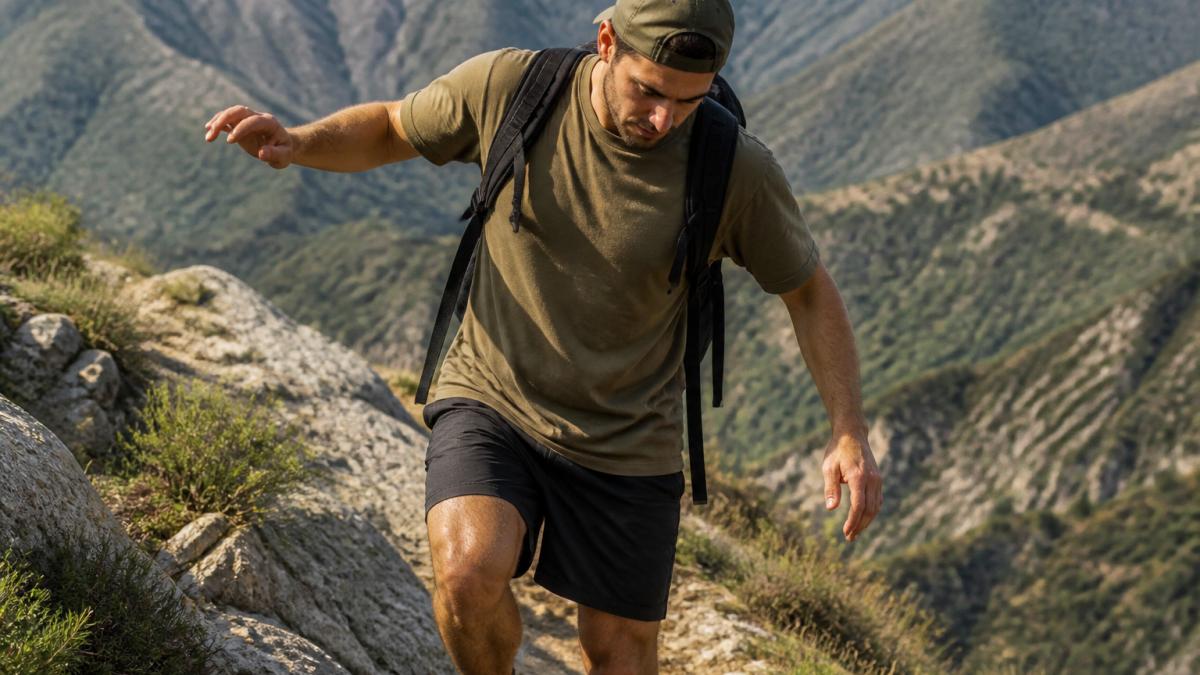
Our Men's Premium Heavyweight Tee Old Man and Trail Soda both use a regular fit cut, not slim, not oversized, but proportioned for actual outdoor movement.
Sizing matters because one-size-fits-most doesn't work for serious outdoor wear. Our size chart provides specific measurements: chest width and sleeve length for the Utah Desert Edition, width and length for the premium tees.

Bigger builds need proper accommodation. Our size range extends to 4XL with proportionally scaled measurements.
Breathable Hiking Shirts: Balancing Weight and Ventilation
A common misconception is that heavyweight automatically means hot. Fabric weight and breathability are separate properties, and a well-constructed heavyweight tee breathes better than a poorly made lightweight one.
Breathability depends on fiber type, weave tightness, and construction. Cotton fibers naturally wick moisture and allow air circulation, and ring-spun cotton's tighter twist creates a more stable structure that breathes consistently without losing shape. Weave density matters too: too loose and the fabric falls apart, too tight and it restricts airflow.
Our heavyweight options handle variable conditions better than lighter alternatives. The 6.0-6.5 oz/yd² range provides durability while maintaining adequate ventilation. Exerting yourself on the trail generates heat regardless of shirt weight; what matters is how efficiently moisture moves away from your skin and how quickly the fabric dries.
Cotton dries slower than technical synthetics.
The garment-dyed finish on our Utah Desert Edition (6.0 oz/yd²) creates a softer hand feel without sacrificing breathability. The process softens the fibers slightly, improving comfort against skin while maintaining the structural integrity you need for outdoor wear.
Hiking Shirt Layering for Variable Weather
This is where heavyweight tees for outdoor adventure show their real value: they layer effectively. A properly constructed tee becomes your base or mid-layer foundation for the system that keeps you comfortable across temperature swings.
Men’s premium heavyweight tee Trail Soda →
Layering strategy depends on conditions. In mild weather (50-70°F), a heavyweight tee alone often suffices, its insulation and breathability handling the load. When temperatures drop, add a lightweight jacket.
The fit of your base layer matters because tight layering prevents movement. A tee that fits properly gives you room to add insulation without creating bulk. Our regular fit cuts accommodate this layering strategy.
Weight progression works logically: start with a breathable heavyweight tee, add a fleece if temperatures drop, add an outer shell if precipitation threatens. This lets you adjust to changing conditions without carrying multiple complete outfits, making one heavyweight tee the foundation for three or four weather scenarios.
The side-seamed construction on our premium tees improves layering.
How to Wash Heavyweight Cotton Shirts and Prevent Shrinkage
Proper care extends the life of heavyweight tees significantly. Most shrinkage happens in the first wash, since cotton fibers naturally contract when exposed to heat and moisture.
Our Men's Premium Heavyweight Tee Old Man and similar styles are preshrunk during manufacturing, but residual shrinkage typically occurs in the first wash. This is why checking the size chart measurements before ordering matters.
Wash in cold water to minimize additional shrinkage. Hot water accelerates fiber contraction and fades colors faster, especially on graphic prints, while cold water maintains vibrancy and reduces shrinkage beyond the initial preshrink.
Dry on low heat or air-dry for maximum longevity. High heat accelerates shrinkage and can weaken fibers. Air-drying takes longer but preserves the shirt's structure and extends its usable life significantly.
The ring-spun cotton in our premium tees actually improves with washing. Each cycle softens the fibers while the tight twist maintains structural integrity, and after 10-15 washes the shirt reaches optimal softness while remaining durable.
Durability, Care, and Long-Term Performance
Heavyweight tees for outdoor adventure should last multiple seasons if constructed and cared for properly. Durability isn't just fabric weight; it's seam construction, fiber quality, and how the shirt handles repeated stress.
Look at seam construction first. Side-seamed construction distributes stress more evenly than seamless designs, and single-needle edge stitching on the collar and cuffs creates stronger seams that don't unravel. Our premium tees use both details specifically because they extend usable lifespan.
The 1×1 rib construction at the collar (one knit loop over one purl loop) creates a collar that stretches and recovers properly. A well-constructed collar maintains its shape through dozens of washes and regular wear.
Graphic durability depends on print method.
Our customers use these tees for trail riding, rock crawling, camping, and daily wear.
Storage matters too. Keep heavyweight tees cool, dry, and out of direct sunlight, since extended sun exposure fades colors faster than washing. For off-season storage, fold rather than hang to prevent stretching at the shoulders.
Choosing the right heavyweight tee for outdoor adventure means understanding fabric weight, construction quality, and fit requirements specific to your body and activities. Whether you're rock crawling, hiking, or simply expressing your passion for trail exploration, investing in properly constructed heavyweight apparel pays dividends through years of reliable performance. Get started with The Trail Explorer and discover how premium heavyweight tees transform your outdoor experience with comfort, durability, and designs that capture the spirit of adventure.
Frequently Asked Questions
Are heavyweight cotton T-shirts good for hiking?
Yes. Heavyweight tees (6.0-6.5 oz/yd²) offer durability and shape retention on trails, making them ideal for rough terrain and extended outdoor use. They resist tearing from brush and snags better than lightweight shirts. The trade-off is slightly slower drying, which matters less on cool hikes or when layered. Ring-spun cotton adds softness and reduces pilling, so you stay comfortable during all-day treks.
What fabric is best for a durable outdoor T-shirt?
Combed ring-spun cotton is the gold standard for outdoor tees. This process removes shorter fibers and aligns longer ones, creating stronger, softer fabric with better shape retention. A 6.0-6.5 oz/yd² weight balances durability with breathability. Look for side-seamed construction and single-needle edge stitching, which reinforce high-stress areas. The Trail Explorer's premium heavyweight tees use 100% combed ring-spun cotton at 6.5 oz/yd², designed specifically for rugged conditions.
How should you wash a heavyweight cotton T-shirt to prevent shrinking?
Wash in cold water using a gentle cycle to minimize shrinkage. Turn the shirt inside out to protect graphics and reduce fading. Use mild detergent and skip fabric softener, which breaks down cotton fibers. Dry on low heat or air-dry flat to preserve fabric integrity. Pre-shrunk, high-quality ring-spun cotton like The Trail Explorer's tees shrinks less than standard cotton, but cold water and low heat are still best practices for long-term durability.
Can heavyweight tees work as a base layer for cold-weather hiking?
Absolutely. Heavyweight tees excel as base or mid-layer pieces in cool conditions. Their density traps body heat without excess bulk, making them ideal for layering under jackets. Pair a heavyweight tee with moisture-wicking base layers underneath and a windproof shell on top. This approach gives you flexibility: remove the shell as you warm up, or keep the tee as your core insulation.
What's the difference between a regular-fit and relaxed-fit heavyweight tee for outdoor wear?
Regular fit (like The Trail Explorer's premium tees at 6.5 oz/yd²) hugs your frame for a structured, polished look while allowing movement. Relaxed fit (like the Utah Desert Edition at 6.0 oz/yd²) provides extra room through the chest and shoulders, ideal if you layer or prefer a looser silhouette. For technical hiking and rock crawling, regular fit prevents excess fabric from snagging on gear or terrain. Relaxed fit suits camp wear and casual trail days.
Why do heavyweight tees cost more than standard cotton shirts?
Heavyweight tees use higher-quality combed ring-spun cotton, reinforced seam construction, and garment-dyed finishes that cost more to produce. The fiber alignment and combing process remove impurities, creating softer, more durable fabric that resists pilling and maintains shape. This results in shirts that outlast cheaper options by years, making them better value long-term.
Are heavyweight tees too hot for summer trail riding?
Not if you choose the right weight and fit. A 6.0-6.5 oz/yd² tee is heavier than lightweight shirts but still breathable, especially in combed ring-spun cotton. The key is fit: a relaxed cut allows airflow. On hot days, wear your heavyweight tee as a mid-layer under a breathable shell, or save it for early morning and evening rides.