

Last Updated: October 23, 2026
Quick Summary
The best UTV cleaning supplies for trail riders include off-road wash soap, soft-bristle brushes or microfiber wash mitts, microfiber drying towels, and plastic cleaner with UV protectants. These core supplies handle 90% of routine trail cleanup while protecting your vehicle's finish from damage caused by mud, dust, and grime buildup.
- Use pH-neutral, off-road-specific wash soap formulated for mud and mineral deposits rather than general-purpose cleaners
- Apply soft-bristle brushes or microfiber mitts to body panels; reserve hard-bristle brushes only for tires and undercarriage
- Keep pressure washer PSI below 1500 for plastics and body panels to avoid cracking trim or forcing water into sealed areas
- A trailside quick-clean kit weighing less than five pounds includes a collapsible bucket, microfiber cloth, concentrate soap, and water
- Apply protective coatings like silicone detailers or wax after cleaning to reduce UV damage and make future cleaning easier
Table of Contents
- Why UTV Cleaning Supplies Matter for Trail Riders
- Selecting the Best UTV Wash Soap
- How to Clean Mud Off a UTV Safely
- Choosing a UTV Plastic Cleaner for Body Panels
- Essential Tools: Brushes, Sponges, and Microfiber Towels
- Building Your UTV Cleaning Kit for Trail Rides
- Surface Protection and Detailing for Lasting Shine
- Common Mistakes to Avoid When Cleaning Your UTV
- Frequently Asked Questions
Why UTV Cleaning Supplies Matter for Trail Riders
Your UTV takes a beating on the trail: mud cakes the undercarriage, dust coats the plastics, and grime settles into every crevice. Left alone, that buildup traps moisture, accelerates corrosion, and degrades protective coatings.
The right UTV cleaning supplies do more than make your side-by-side look good. They protect your investment, extend component lifespan, and keep you safer by letting you spot wear before it becomes dangerous.
Selecting the best UTV cleaning supplies starts with knowing what you're cleaning. Metal, plastic, rubber, and upholstery each respond to different treatments, a soap that strips plastic coatings won't help paint, and an aggressive brush can scratch body panels.
Learn what other essential gear you need beyond cleaning supplies to prepare for your next trail adventure.
Selecting the Best UTV Wash Soap
The best UTV wash soap cuts through trail grime without stripping protective coatings or damaging plastic body panels.
Look for soaps specifically formulated for off-road vehicles or heavy-duty cleaning. These products typically contain surfactants designed to break down oily residue and encrusted mud without requiring aggressive scrubbing.
Dilution matters. Under-diluting wastes product and leaves soapy buildup; over-diluting weakens cleaning power and wastes water. Follow the manufacturer's ratio closely for consistent results.
Foaming soaps are convenient for spray applications but cost more per wash. Concentrates require mixing but offer better value for frequent trail riders washing multiple vehicles.
pH-neutral soaps are gentler on finishes and won't damage protective coatings. Acidic cleaners work faster on stubborn mineral deposits but can harm paint and plastic if left on too long.
How to Clean Mud Off a UTV Safely
Removing caked-on mud requires a methodical approach that protects plastics, seals, and delicate components.
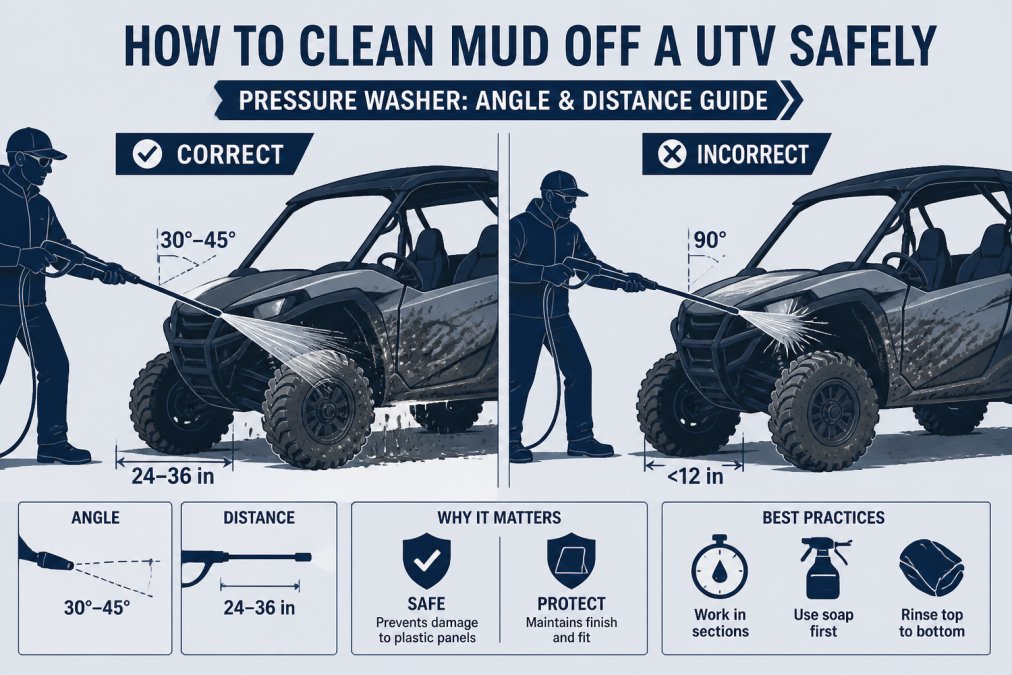
Apply your UTV wash soap to the dirtiest areas first and let it sit 30 seconds to a minute before scrubbing. That dwell time lets surfactants break down mud without aggressive brush pressure that might scratch finishes.
Use a soft-bristle brush or microfiber wash mitt for most surfaces. Hard-bristle brushes work on tires and undercarriage components but can damage body panels and plastic trim.
Pressure-Washing by Component
Pressure washers speed up cleaning but require careful technique, since different components tolerate different PSI levels.
Start below 1500 PSI for body panels and plastics. Plastics are surprisingly fragile under high-pressure spray, a nozzle held too close can crack trim or force water into sealed areas, causing rust and electrical problems.
Increase pressure to 1500-2000 PSI for metal undercarriage components and tires, where the extra force helps dislodge packed mud.
Avoid directing high-pressure spray at electrical connectors, air intakes, or sealed bearings. Water forced into these areas causes corrosion and component failure.
Hot water pressure washers break down oily residue and mud faster, but they're not essential. Use hot water on the chassis and undercarriage if you have it; cold water works fine for body panels and tires.
Foam Cannons and Sprayers
Foam cannons apply cleaning solution more efficiently than hand-spraying, especially across large areas. A foam cannon attaches to your pressure washer and mixes soap with water as it sprays, creating thick foam that clings to vertical surfaces and stays in contact with dirt longer.
Fill the reservoir with diluted UTV wash soap per the product label and adjust the cannon's dial to control foam thickness. Thicker foam stays on longer but uses more soap.
Spray foam from top to bottom, allowing it to run down and loosen mud as it goes. Let the foam sit for 30-60 seconds before rinsing.
Standard spray bottles work well for targeted soap application on heavily soiled areas. They're slower than foam cannons but give precise control and use less water, often enough for trailside quick cleaning.
Choosing a UTV Plastic Cleaner for Body Panels
Plastics degrade differently than metal. UV exposure, dirt buildup, and harsh chemicals fade and crack body panels over time, so a dedicated plastic cleaner restores appearance and protects against future degradation.
Look for plastic cleaners with UV protectants, they clean while laying down a protective layer that resists fading and brittleness. Avoid all-purpose metal cleaners, which streak on plastics and lack UV protection.
Apply plastic cleaner with a soft cloth or microfiber towel after the main wash and rinse. Work in small sections, buffing to a shine as you go.
For heavily oxidized or faded plastics, a light abrasive plastic restorer might be necessary before applying protectant. These products gently remove the oxidized layer to reveal fresher plastic underneath. Use them sparingly and follow up with protectant to prevent rapid re-oxidation.
Essential Tools: Brushes, Sponges, and Microfiber Towels
The right tools prevent damage while improving efficiency. Your brush choice directly determines whether you protect or scratch your UTV's finish.
Soft-bristle brushes work best for body panels and painted surfaces. Natural bristles or quality synthetic bristles rated for delicate surfaces won't scratch clear coat or paint.
Microfiber wash mitts combine the benefits of a sponge and brush: they hold more water, need less pressure to clean, and are gentler on finishes.
Hard-bristle brushes have their place on tires, wheels, and undercarriage components where durability matters more than finish protection.
Microfiber drying towels are essential after rinsing. They absorb water faster than cotton towels and prevent water spots that are hard to remove later.
Choose the right tool for each surface to protect your UTV's finish while cleaning effectively.
| Tool | Best For | Key Benefit |
|---|---|---|
| Soft-bristle brush | Body panels and painted surfaces | Won't scratch clear coat or paint |
| Microfiber wash mitt | General cleaning | Holds more water, needs less pressure |
| Hard-bristle brush | Tires, wheels, undercarriage | Durable for tough jobs without finish |
| Microfiber drying towel | Final drying | Absorbs water faster, prevents water spots |
Building Your UTV Cleaning Kit for Trail Rides
A complete UTV cleaning kit starts with the core supplies you'll actually use regularly, then expands based on your cleaning frequency and trail conditions. Compare UTV and Jeep options to choose the right vehicle for your trail adventures.
The foundation includes off-road wash soap, a soft brush or microfiber mitt, microfiber drying towels, and plastic cleaner. These four items handle 90% of routine trail cleanup. Add a spray bottle for targeted soap application and a bucket for rinsing your brush between sections.
If you invest in a pressure washer, store it at home rather than carrying it on trail rides. A portable pressure washer is heavy and bulky, impractical for most trail situations. Reserve pressure washing for home cleanup after major trail days.
Packable Trailside Quick-Clean Essentials
Trail rides don't always end at home. Trailside quick cleaning extends your UTV's life and prevents mud from hardening into concrete-like buildup that demands aggressive scrubbing later.
A compact trailside kit includes a collapsible bucket, a microfiber cloth, a small bottle of concentrate soap, and water. This setup weighs less than five pounds and fits in a storage compartment on most side-by-sides.
Focus on cooling components and electrical areas during trailside cleaning. Mud buildup on radiators reduces cooling efficiency. Dried mud on connectors increases corrosion risk. A quick five-minute cleanup at the trail prevents problems that cost hours of work later.
Don't attempt deep cleaning trailside. The goal is removing the heaviest mud and preventing damage during transport home. Save detailed cleaning and detailing for your driveway.
Surface Protection and Detailing for Lasting Shine
After cleaning, protection extends time between washes and keeps your UTV looking fresh. Coatings reduce UV damage, repel water, and make future cleaning easier.
Silicone-based detailers work well on plastic body panels and trim. They restore color, add shine, and protect against fading. Apply with a microfiber cloth in light coats, buffing to avoid streaking.
Wax-based protectants suit painted surfaces and metal components. They provide longer-lasting protection than silicone but require more effort to apply and remove.
For metal undercarriage components exposed to moisture and salt, consider a light coating of rust preventative. These products displace water and create a barrier against corrosion.
Common Mistakes to Avoid When Cleaning Your UTV
The most expensive mistake is using high-pressure spray on plastic body panels or electrical components. Water forced into sealed areas causes rust and component failure that can cost hundreds to repair.
Skipping the rinse before soap wastes cleaning solution and forces your brush to work harder.
Over-scrubbing with hard brushes scratches finishes permanently. The scratches are invisible until sunlight hits them at an angle, then they're obvious and impossible to hide.
Leaving soap residue on plastics causes streaking and buildup that looks worse than the original dirt. Always rinse thoroughly after applying any cleaning product.
Cleaning in direct sunlight dries soap and water too quickly, leaving streaks and spots.
Neglecting undercarriage cleaning allows mud to pack into crevices where it traps moisture and accelerates corrosion. Spend time on the bottom and hidden areas where damage happens first.
Keeping your UTV clean protects your investment and keeps you safer on the trail. Clean your UTV with the same care you put into selecting quality apparel for your adventures. Learn proper washing techniques that apply to your off-road gear to keep your clothing and your vehicle looking great season after season.
Frequently Asked Questions
What soap is safe for washing a UTV?
Use off-road-specific soaps or pH-balanced automotive detergents designed for powersports vehicles. Avoid household dish soap, which strips protective coatings and can damage rubber seals. Off-road soaps are formulated to cut through caked-on mud and dirt while being gentle on plastic, paint, and metal. Always dilute according to the product label and test on a small area first.
Can you use a pressure washer to clean a UTV?
Yes, but with caution. Use a pressure washer at 1,500-2,000 PSI maximum to avoid damaging plastic panels, seals, and electrical components. Keep the nozzle at least 12 inches away from surfaces and never spray directly at air intakes, vents, or bearing points. For delicate areas, switch to a foam cannon or low-pressure sprayer instead of a direct stream.
How often should you wash a UTV after riding trails?
Wash your UTV within 24 hours after heavy trail riding, especially after mud exposure. Caked-on mud traps moisture against metal and plastic, accelerating corrosion and material breakdown. Light dust rides may need only a quick rinse, but deep mud requires full cleaning with soap and detailing. Regular washing extends component life and keeps your side-by-side performing reliably.
What supplies do you need to detail a UTV?
Beyond soap and water, you'll need microfiber towels for drying, a plastic cleaner for body panels, brushes for tight spots, and a silicone-based protectant or detailer for shine and UV protection. A foam cannon speeds up the wash phase, and a pressure washer (1,500-2,000 PSI) handles heavy mud. For trailside touch-ups, pack a compact cleaning kit with concentrated soap, a spray bottle, and a microfiber cloth.
