

Table of Contents
- Check Care Labels and Manufacturer Instructions First
- Remove Loose Dirt and Mud Before Washing
- Pre-Rinse and Soak Heavily Soiled Riding Gear
- How to Wash Motocross Gear in a Machine
- Best Detergent for Outdoor Clothing and Technical Fabrics
- How to Remove Mud Stains from Clothes and Grease
- How to Dry Technical Clothing Without Damage
- Restore Water Repellency and Check Garment Performance
- Frequently Asked Questions
Last Updated: October 17, 2026
Check Care Labels and Manufacturer Instructions First
Before you wash offroad apparel, read the care label: it lists the fabric, safe water temperature, and handling requirements for those materials.
Check for these key details on the label:
- Recommended water temperature (cold, warm, or hot)
- Machine wash or hand wash only
- Bleach restrictions
- Drying instructions
- Any special fabric warnings
A heavy cotton blend handles heat differently than a polyester mesh jersey, and ignoring the label is how quality apparel gets damaged within a few washes.
We recommend photographing your care labels so the information stays handy even after the label fades.
Remove Loose Dirt and Mud Before Washing
Washing mud-caked apparel directly in the machine forces the washer to work overtime and traps grit in the fibers.
Start by removing as much loose dirt as possible:
- Shake out the garment vigorously over a trash bin or outside
- Use a soft brush to gently remove dried mud from seams and cuffs
- For stubborn caked-on mud, let it dry completely first, then brush it off
- Avoid scraping or rubbing hard, which can damage the fabric
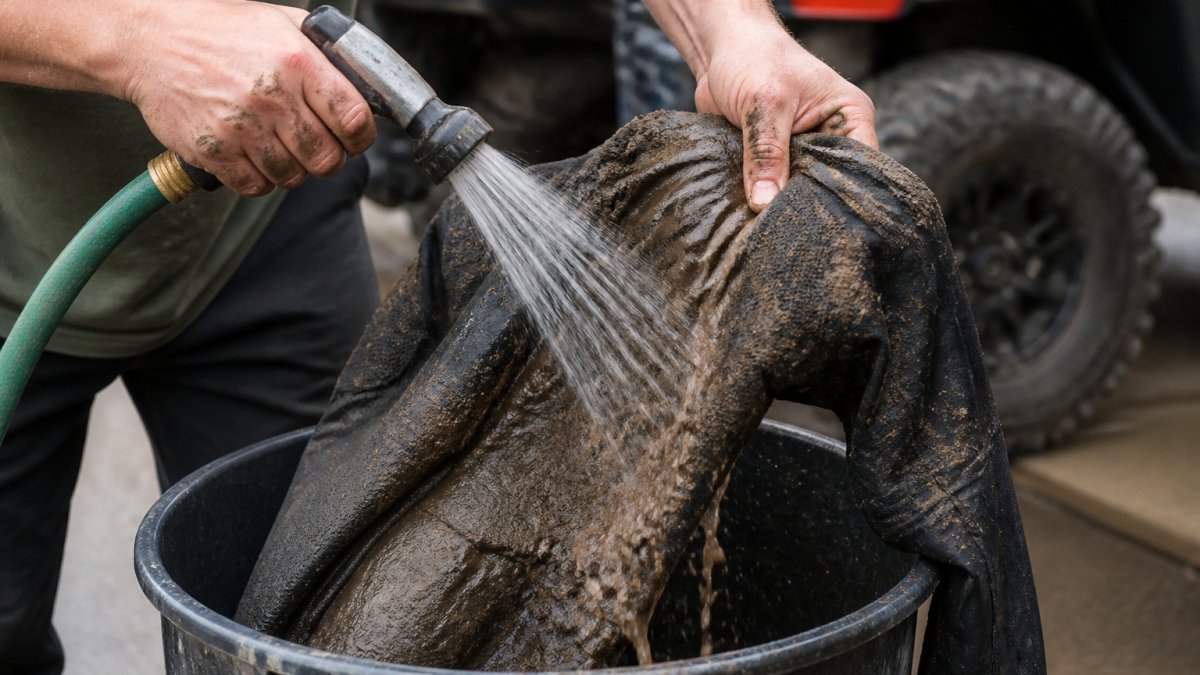
Once the loose debris is gone, rinse with a low-pressure hose or under running water, a high-pressure washer damages technical fabrics and strips water-repellent coatings. This pre-rinse protects your machine and keeps dirt from redepositing on clean gear.
Pre-Rinse and Soak Heavily Soiled Riding Gear
Heavily soiled motocross gear or riding clothes with ground-in stains benefit from a soak before the main wash.
Fill a bucket or sink with cool water and soak the garment 15 to 30 minutes so water penetrates the fabric and breaks down stubborn dirt.
For grease or oily residue from bike maintenance, add a small amount of non-bio detergent to the soak water, it's gentler on technical fabrics and less likely to leave residue than standard detergent.
After soaking, drain, agitate gently by hand, and rinse until the water runs clear.
How to Wash Motocross Gear in a Machine
Use the garment-by-garment guide below, then run the machine steps that apply to the fabric shells.
Garment-by-Garment Washing Guide
Jerseys (polyester mesh, sublimated graphics). Turn inside out, place in a mesh laundry bag if the jersey has a fragile collar or vent panels, and wash on a gentle/delicate cycle in cold water.

Riding pants (600D polyester or nylon shells with leather or synthetic knee panels). Remove any hip pads or knee armor first (see the armor section below).
Base layers and compression liners. These hold the most body oil and sweat: wash on a gentle cold cycle with technical/non-bio detergent and run an extra rinse.
Gloves. Hand-wash in cool water with a drop of non-bio detergent, work the fingers gently, and rinse until clear.
Protective shells and roost deflectors (hard plastic over foam). Usually not machine-washable: wipe the shell with a damp cloth and mild soap, then wipe again.
Machine Steps for Fabric Shells
- Empty every pocket and remove all removable armor, liners, and hydration bladders. A forgotten knee pad will bang around the drum and can crack; a gel pack or bladder can burst.
- Close zippers, snaps, and hook-and-loop straps. Open hook-and-loop tape is the single most common cause of pilling and snags in a mixed load.
- Turn each garment inside out. This protects sublimated graphics and the outer face fabric where the DWR (durable water repellent) finish lives.
- Use a front-loading machine on a gentle or delicate cycle. If you only have a top-loader, use the lowest agitation setting and a mesh bag; a center agitator is hard on armor pockets and mesh panels.
- Wash in cold water (typically 60-85°F on most machine settings). Cold water is safer for synthetic fibers and for any DWR finish. Hot water can shrink some blends and set protein-based stains.
- Do not overload. Leave the drum roughly half full so garments can circulate. A crowded load means poor soil removal and more abrasion between pieces.
- Skip fabric softener and dryer sheets. Both coat technical fibers, reduce breathability, and interfere with water repellency.
- Run an extra rinse if you used any detergent at all on mesh or base layers. Residual detergent is what makes gear feel stiff and clammy.
Hand-Washing vs. Machine-Washing: When to Choose Each
Use the machine for jersey mesh, synthetic pants shells, and base layers with no hard armor whose label permits machine washing. Use hand-washing for gloves, glued seams or leather panels, hard-shell protectors, and anything labeled hand wash only. When in doubt, hand-wash, it is the lower-risk choice for expensive technical gear.
Best Detergent for Outdoor Clothing and Technical Fabrics
Standard laundry detergent leaves residue on technical fabrics and can damage specialized coatings, so your detergent choice affects how long your gear lasts and how well it performs.
The best detergent for outdoor clothing is a non-bio or technical-garment formula, designed to clean without leaving buildup.
Look for detergents labeled:
- Non-bio or enzyme-free
- Technical-garment or sports-specific
- Designed for synthetic fabrics
- Free from optical brighteners
Avoid regular detergent, whose additives coat fabric and reduce breathability, and avoid bleach entirely, it fades colors, weakens synthetics, and destroys water-repellent finishes.
Unisex Columbia fleece jacket The Trail Explorer →
For the best detergent for outdoor clothing, check the product label to confirm it's safe for your apparel's specific fabric blend.
How to Remove Mud Stains from Clothes and Grease
Offroad apparel picks up more than mud: chain lube, two-stroke oil, hydraulic fluid, fuel drips, sunscreen, and dried sweat each respond to a different treatment. The table below is the practical reference; the notes after it explain the limits.
| Soil type | First move | Pretreatment | Wash setting |
|---|---|---|---|
| Fresh mud | Rinse with low-pressure hose before it dries | None needed if rinsed promptly | Gentle, cold |
| Dried mud | Let it dry fully, then brush off | Soak 15-30 min in cool water | Gentle, cold |
| Chain lube / grease | Blot, do not rub | Non-bio detergent directly on stain, 10 min | Gentle, cold, extra rinse |
| Fuel or solvent drip | Air-dry outdoors away from ignition sources | Do not machine-wash until odor is gone | Hand-wash only if label allows |
| Hydraulic fluid | Blot, then flush with cool water | Non-bio detergent, 10 min | Gentle, cold, extra rinse |
| Sunscreen / body oil | Pretreat collar and cuffs | Non-bio detergent, 10 min | Gentle, cold |
| Dried sweat / salt | Soak in cool water | None needed | Gentle, cold |
Fresh Mud vs. Dried Mud
Fresh mud is easier to remove than dried mud, but only if you rinse before it sets. Rinse with a low-pressure hose, working top down so you don't push mud into clean fabric. Never use a pressure washer, high pressure drives grit into the weave and strips DWR.
Dried mud is abrasive and clogs the washer. Let the garment dry completely, brush it off over a trash bin, then soak 15 to 30 minutes in cool water and wash on a gentle cycle.
Grease, Chain Lube, and Hydraulic Fluid
Grease and chain lube are oil-based, so water alone won't lift them. Blot (rubbing spreads it), apply a small amount of non-bio or technical-garment detergent directly, and let it sit about 10 minutes.
Hydraulic fluid and fuel are different: they are solvents, not oils, and they can be flammable. If a garment has soaked up fuel or solvent, air it outdoors away from any ignition source until the odor is gone before it goes anywhere near a washer or dryer.
Armor, Pads, and Removable Liners
Hard shells and foam don't absorb mud like fabric, but they trap grit in padding and hook-and-loop straps. Remove all armor, foam inserts, and liners before washing the shell. Wipe hard shells with a damp cloth and mild soap, then wipe again. Hand-wash foam in cool water with a drop of non-bio detergent, squeeze (don't wring) out the water, and air-dry fully, damp foam grows odor and breaks down faster. Reassemble only when every component is completely dry.
When to Stop Treating and Replace
Some stains aren't worth chasing. If a grease or hydraulic-fluid stain survives two pretreatment-and-wash cycles, the fabric is likely permanently marked, and aggressive retreatment does more harm than the stain, retire that piece to practice duty. Likewise, replace armor foam that has compressed, cracked, or lost its shape: a stained but intact pad is fine; a degraded pad is a safety issue.
How to Dry Technical Clothing Without Damage
High heat and fast drying damage synthetic fabrics and destroy water-repellent coatings, so dry slow and cool. After washing, gently squeeze out excess water, don't wring or twist the garment.
Air-dry your apparel:
- Hang on a clothesline or drying rack in a shaded area
- Avoid direct sunlight, which can fade colors
- Ensure good air circulation around the garment
- Allow 4 to 8 hours for most pieces to dry completely
If you must use a dryer, use the lowest heat setting or air-dry setting. Remove the garment while it's still slightly damp to prevent over-drying and shrinkage.
Never use a high-heat dryer on technical clothing, it damages synthetic fibers, can shrink garments, and destroys the water-repellent finish. Air-drying takes longer, but your gear will look and perform better for years.
Restore Water Repellency and Check Garment Performance
After several washes, your wash offroad apparel may lose its water-repellent finish. This is normal. The good news is you can restore it.
Water-repellent coatings wear away with washing and use, you'll notice when water no longer beads and rolls off the surface.
To restore water repellency:
- Purchase a wash-in or spray-on water-repellent product designed for technical fabrics
- Follow the product instructions carefully
- Wash-in treatments go in the rinse cycle
- Spray-on treatments are applied after drying
- Allow the coating to cure for 24 hours before wearing
Check your garment's performance regularly:
- Pour a small amount of water on a clean section of fabric
- Watch whether it beads up or soaks in
- If water soaks in immediately, it's time to reapply the coating
- Test seams and high-stress areas, which lose coating first
Regular maintenance of your offroad apparel keeps it comfortable and looking good, an investment in your riding experience and the durability of your collection.
Frequently Asked Questions
Can you wash motocross gear in a regular washing machine?
Yes, most apparel can be machine washed on a gentle cycle with cold water, but always check the care label first. Use a mesh laundry bag to protect the garment, and avoid the spin cycle or use a low-speed option. Skip the dryer entirely, air-dry your apparel to prevent heat damage to technical fabrics and protective coatings.
What's the best detergent for technical outdoor clothing?
Use a non-bio or technical-garment detergent specifically formulated for outdoor apparel. Avoid regular laundry detergent, which leaves residue and can degrade waterproofing and breathability. Technical detergents clean effectively without harsh chemicals that wear down fabric protection. Look for products labeled for technical fabrics or outdoor gear.
How do you remove mud and grease stains from riding clothes?
Let mud dry completely, then brush or shake it off before washing. For fresh grease stains, apply a small amount of non-bio detergent directly to the stain and gently work it in with a soft brush. Soak the garment in cold water for 30 minutes, then machine wash on a gentle cycle. Avoid hot water, which can set grease stains permanently.
How should you dry offroad apparel after washing?
Air-dry your offroad apparel by hanging it in a well-ventilated area away from direct sunlight and heat sources. Never use a hot dryer, high heat damages technical fabrics. Allow 24-48 hours for complete drying depending on fabric weight and humidity.
Your offroad apparel is built to handle tough conditions. Washing it properly ensures it stays ready for your next adventure. At The Trail Explorer, we've seen how proper care transforms gear longevity. Start with our Unisex Columbia fleece jacket for layering on cooler rides, and follow these washing steps to keep it performing. Get started with quality gear and quality care today.
