

Table of Contents
- What Makes a Shirt Right for Side-by-Side Riding?
- Quick Comparison: Top Picks for Every Rider
- 1. Men's Premium Heavyweight Tee Moab Side By Side: Built for the Trail
- 2. Unisex Long Sleeve Tee Polaris Pro R: Versatile Coverage
- 3. Under Armour Athletic Tee Cliffhanger: Performance When It Counts
- Why Durable Heavyweight T-Shirts for Off-Roading Beat Thin Cotton
- What to Wear for UTV Trail Riding: A Layering Strategy
- How to Clean Mud-Stained Riding Gear Without Ruining It
- Frequently Asked Questions
Last Updated: September 8, 2026
The right shirt for side-by-side riding does more than broadcast your brand loyalty. It protects your skin from sun exposure, stands up to trail debris, and keeps you comfortable when the dust settles. Most riders grab whatever cotton tee is cleanest, then wonder why it disintegrates after a season of mudding and rock crawling. Below, we break down the best shirts for side-by-side riding based on fabric weight, durability, and real-world trail conditions.
The best shirts for side-by-side riding share a few non-negotiable traits: heavyweight fabric, reinforced stitching, and a fit that allows full range of motion when you're grabbing the wheel or reaching for gear. A standard 4.2 oz cotton tee might feel fine at the trailhead, but it won't hold up against branches, brush, and the constant friction of a harness. You need something with substance.
What Makes a Shirt Right for Side-by-Side Riding?
Side-by-side riding is a unique blend of exposure and protection. You're open to the elements, but you're also seated in a machine that throws dust, mud, and debris. The ideal shirt balances breathability with abrasion resistance, which means synthetic fabrics or heavyweight cotton blends outperform thin, flimsy material.
A common mistake is treating UTV riding like a casual drive. You're not in a climate-controlled cab. Dust management and ventilation matter because you're constantly moving between sun-baked trails and shaded forest sections. Look for shirts with a regular or relaxed fit that won't bind when you're twisting to check your blind spot or reaching for a cooler in the back seat.
Quick Comparison: Top Picks for Every Rider
Here are some top picks:
| Shirt | Weight | Fabric | Price | Best For |
|---|---|---|---|---|
| Moab Side By Side Tee | 6.5 oz/yd² | 100% combed ring-spun cotton | $35.00 | All-day durability and classic fit |
| Polaris Pro R Long Sleeve | 4.2 oz/yd² | Airlume combed ring-spun cotton | $28.00 | Sun protection and layering |
| Under Armour Cliffhanger | 7.41 oz/yd² | 60% cotton, 40% polyester | $42.50 | Performance and moisture-wicking |
1. Men's Premium Heavyweight Tee Moab Side By Side: Built for the Trail
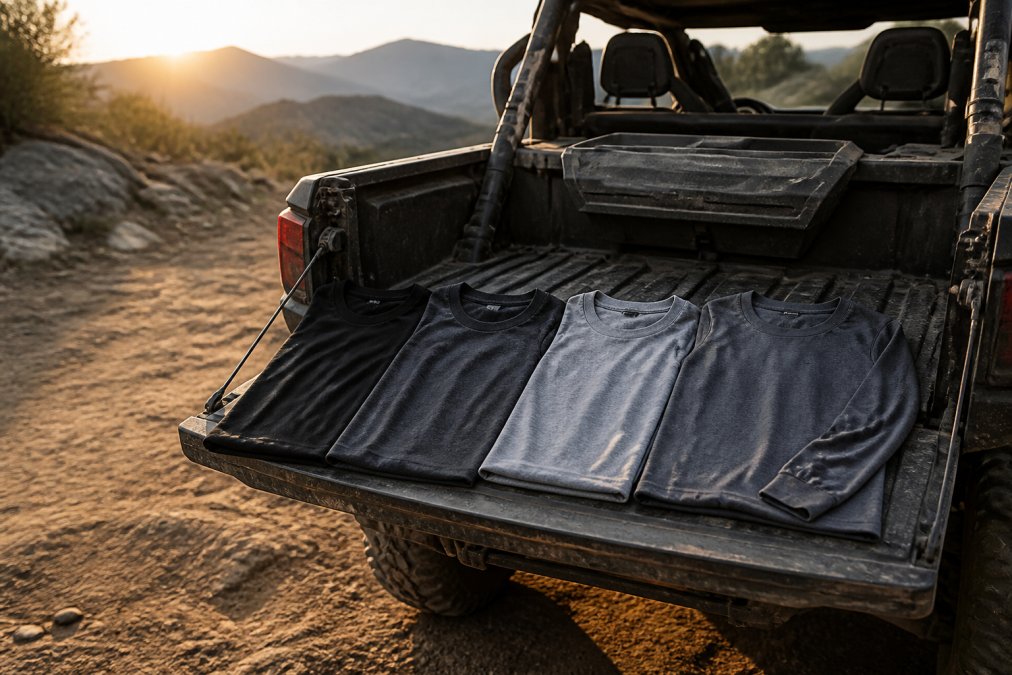
Our top pick for durability is the Men's Premium Heavyweight Tee Moab Side By Side. At 6.5 oz/yd², this is a true heavyweight tee that shrugs off trail debris and maintains its shape ride after ride. The 100% combed ring-spun cotton delivers a soft hand feel, while the side-seamed construction helps prevent twisting.

What sets this apart is the structured, regular fit. It's cut to move with you, not cling to you. Whether you're leaning into a tight switchback or standing on the pegs to scout the next obstacle, the shirt stays put without riding up. The reinforced collar and single-needle edge stitch are designed to hold up to repeated use, and the design pays homage to the Moab trails.
2. Unisex Long Sleeve Tee Polaris Pro R: Versatile Coverage
When sun exposure becomes a real concern on open trails, the Unisex Long Sleeve Tee Polaris Pro R earns its place in your rotation. Long sleeves provide a barrier against UV rays and brush, while the lighter 4.2 oz/yd² fabric keeps you from overheating when the mercury climbs. The 100% airlume combed ring-spun cotton is noticeably softer than standard cotton, making it comfortable for hours in the saddle.

The 2-inch ribbed cuffs are a thoughtful touch. They stay put when you push your sleeves up for cooler sections, and they seal out dust when you drop them for sun protection. This shirt layers cleanly under a mid-layer or jacket, which makes it a smart pick for early morning rides that warm up fast. If you're a Polaris Pro R owner, the design lets you rep your machine without shouting.
3. Under Armour Athletic Tee Cliffhanger: Performance When It Counts
For riders who prioritize moisture-wicking and quick-dry performance, the Under Armour Athletic Tee Cliffhanger delivers where cotton falls short. The 60% cotton, 40% polyester blend hits a sweet spot: it feels substantial at 7.41 oz/yd², yet it pulls sweat away from your skin and dries noticeably faster than pure cotton. The relaxed, fuller cut gives you unrestricted mobility, and the split hem adds coverage when you're leaning forward over the wheel.

This is the shirt you grab for high-exertion days, technical trails that demand concentration, or summer rides where heat management is the difference between a great day and a miserable one. The heatseal logo is designed to withstand repeated washes.
Why Durable Heavyweight T-Shirts for Off-Roading Beat Thin Cotton
The case for heavyweight fabric isn't just about feel, it's about measurable performance. When you're seated in a side-by-side, your shirt is constantly abrading against the seatbelt webbing, the harness straps, and the edge of the door panel. Every time you shift position to check a blind spot or reach for a map, you're grinding fabric against these surfaces. Thin cotton, typically 4 oz/yd² or lighter, has a thread count and fiber density that simply cannot withstand that friction.
Here's what the numbers actually look like in practice:
- Abrasion resistance: Heavyweight fabrics (6 oz/yd² and up) have a tighter weave and denser fiber structure. This means the yarns are packed closer together, creating a physical barrier that resists snagging and pilling. A standard 4.2 oz cotton tee may develop visible wear at the shoulder seam and along the hem after a few rides. A 6.5 oz shirt is designed for greater durability.
- Tear strength: The longer fibers in ring-spun cotton create a stronger yarn. When a branch or sharp edge catches the fabric, a ring-spun shirt is designed to be more resistant to tearing.
- UV blockage: Fabric weight directly correlates with ultraviolet protection factor (UPF). A lightweight white cotton tee might offer UPF 5-8 (peer-reviewed research). A heavyweight dark-colored shirt can offer greater UV protection, though the exact rating depends on dye and weave. For open-cockpit riding, this difference can be important over a full day of exposure.
But there's a trade-off that most product listings don't mention: breathability. A 7.5 oz shirt will block more sun and resist more abrasion, but it will also trap more heat. This is where the gap between generic advice and real-world riding conditions becomes clear. The solution isn't to pick the heaviest fabric possible, it's to match fabric weight to your specific environment.
For dusty desert trails where temperatures routinely exceed 90°F, a 6.5 oz shirt with a cotton-polyester blend offers the best compromise. The polyester content wicks moisture and dries faster, while the cotton provides the density you need for abrasion resistance. For cooler mountain trails or evening rides, a 7.5 oz pure cotton shirt gives you maximum protection and warmth retention.
What about the stitching? A heavyweight fabric is only as good as the seams that hold it together. Look for flatlock or reinforced stitching at the shoulder and side seams. These are the points where stress concentrates when you twist and reach. A shirt with single-needle stitching on the hem and collar may show wear before the fabric itself. Double-needle stitching at stress points can contribute to durability.
One final consideration: how the shirt interacts with your safety gear. A heavyweight shirt adds a thin layer of padding between your skin and the harness straps. This can help reduce friction and provide a small amount of insulation. These are benefits that can be noticed after a full day on the trail.
What to Wear for UTV Trail Riding: A Layering Strategy
The standard advice, start with a base layer, add insulation, top with a shell, works for hiking, but side-by-side riding has its own unique demands. You're not generating body heat through sustained exertion; you're sitting in a machine that creates its own microclimate. The wind from forward motion cools you, the engine radiates heat, and the open cockpit exposes you to whatever the sky is doing. Your layering strategy needs to account for these specific conditions.
Desert and Dusty Conditions
If you ride in the Southwest or any arid environment, dust is your primary enemy. Fine particulate matter gets into everything, including your clothing. In these conditions, your layering strategy should prioritize:
- A snug-fitting base layer that doesn't flap in the wind. Loose fabric acts like a sail, catching dust and funneling it down your collar. A fitted synthetic shirt or a lightweight merino wool layer works best because it sits close to the skin without restricting movement.
- A mid-layer with a tight weave. The Moab Heavyweight Tee in the Charcoal Heather variant (60% cotton, 40% polyester) is a solid choice here. The polyester content helps wick sweat, while the tight weave blocks a significant amount of airborne dust from reaching your skin.
- A neck gaiter or bandana rather than a collar. The gap between your collar and your neck is a major entry point for dust. A gaiter seals this gap and can be pulled up over your mouth and nose when you're following another vehicle.
Mud and Wet Conditions
Wet conditions require a completely different approach. Humidity and rain change how fabrics perform, and the mud itself becomes an abrasive agent that grinds into your clothing.
- Skip pure cotton for the base layer. When cotton gets wet, it loses all insulating value and takes hours to dry (the CDC). This is dangerous in cool weather because it accelerates heat loss. A synthetic base layer or a polyester-cotton blend like the Under Armour Cliffhanger (60% cotton, 40% polyester) will dry significantly faster.
- Add a waterproof shell only when it's actively raining. A breathable rain jacket that packs small is worth carrying, but wearing it in humid conditions when it's not raining will cause you to overheat quickly. Look for pit zips or venting options that let you dump heat without removing the jacket.
- Consider a mud-resistant outer layer. Some riders use a lightweight waxed canvas overshirt or a nylon windbreaker as a sacrificial layer. It takes the brunt of the mud spray and can be hosed off at the end of the day, protecting your base layers from the worst of the grime.
Temperature Swings
The biggest challenge in most riding areas is the temperature swing between morning and afternoon. A common pattern is a 30-40°F difference between dawn and midday (noaa.gov). Here's a practical system that handles this range:
- Morning (cold): Start with a long sleeve shirt as your base, add a heavyweight tee over it, and top with a windbreaker. The windbreaker traps heat effectively at speed, and you can remove it once the sun gets high.
- Midday (warm): Shed the windbreaker and the outer tee. The long sleeve shirt alone provides sun protection while the lighter fabric keeps you cool.
- Afternoon (variable): Keep the long sleeve shirt on. If the temperature drops or clouds roll in, you can add the heavyweight tee back without needing to stop and change completely.
Integration with Safety Equipment
Your layering choices need to work with your safety gear, not against it. If you wear a chest protector or neck brace, consider how the layers will fit underneath. A bulky mid-layer can shift the fit of a chest protector, reducing its effectiveness in a crash. Test your full gear setup before a long ride to ensure everything sits correctly.
For hydration packs, look for shirts with a collar that doesn't bunch up against the sternum strap. A clean, low-profile collar prevents chafing where the strap crosses your chest. The ribbed cuffs on the Polaris Pro R Long Sleeve are particularly useful here, they seal out wind and dust without adding bulk under a jacket or protector.
The key to effective layering for side-by-side riding is adaptability. You need pieces that can be added or removed quickly without a full stop. Choose shirts with simple designs and no complicated closures. A standard crew neck or a quarter-zip pullover is easier to manage than a button-up, which can snag on harness straps and gear. And always test your full layering system while seated in your vehicle, what works standing at the trailhead might not work when you're buckled in with limited room to move.
How to Clean Mud-Stained Riding Gear Without Ruining It
How to clean mud-stained riding gear starts with acting fast. Let mud dry completely, then knock off the loose dirt before washing. Pretreat stubborn stains with a small amount of laundry detergent directly on the spot, and let it sit for 15 minutes. Wash in cold water on a gentle cycle, and never use fabric softener, which breaks down cotton fibers and reduces moisture-wicking performance.
Air dry your gear whenever possible. High heat in a dryer shrinks cotton and degrades elastic in blends, which explains why many "premium" shirts don't survive their first season. If you must use a dryer, choose the lowest heat setting and remove shirts while slightly damp. For heavy mud buildup, consider a pre-soak with oxygen-based cleaner to lift ground-in dirt without harsh bleach.
| Problem | Fix | Impact |
|---|---|---|
| Dried mud crust | Knock off, then pretreat with detergent | Prevents fibers from grinding into fabric |
| Sweat stains | Cold water wash, oxygen-based cleaner | Removes odor without breaking down fibers |
| Shrinkage | Air dry or low heat | Preserves fit and fabric integrity |
The Trail Explorer offers shirts designed to handle the demands of trail riding, from the 6.5 oz/yd² heavyweight cotton in the Moab tee to the quick-dry performance of the Under Armour Cliffhanger. Our designs celebrate rock crawling and trail exploration, so you can express what drives you every time you gear up. Check the size guides on each product page to find your fit, and subscribe to our emails for early access to new drops and trail-inspired designs.
Finding the best shirts for side-by-side riding comes down to matching fabric weight and features to your riding conditions. Heavyweight cotton protects against abrasion and sun, while performance blends manage sweat and heat. The Trail Explorer offers premium options across both categories, with designs that capture the off-road lifestyle and construction that survives the abuse. Get started with a Men's Premium Heavyweight Tee Moab Side By Side or the Unisex Long Sleeve Tee Polaris Pro R, and ride with gear that keeps up.
Frequently Asked Questions
What should you wear when riding a side-by-side?
For side-by-side riding, wear a shirt made from moisture-wicking synthetic fabrics or a durable heavyweight cotton blend. These materials manage sweat better than standard thin cotton and hold up to abrasion from seat belts and trail debris. A long-sleeve option adds sun protection and defense against branches. Pair your shirt with gloves, over-the-ankle boots, and eye protection. Avoid loose-fitting clothes that can snag on the machine or catch dust.
Are cotton shirts good for side-by-side riding?
Standard thin cotton shirts are a poor choice for side-by-side riding because they absorb sweat, stay wet, and chafe. However, heavyweight ring-spun cotton shirts, like the 6.5 oz/yd² tees from The Trail Explorer, are designed for durability. For hot days, look for cotton blends with polyester, which dry faster and offer better moisture management during intense trail riding.
What features should you look for in off-road riding shirts?
Prioritize durability first. Look for a high fabric weight, ideally 6 oz/yd² or more, and side-seamed construction for shape retention. A regular or relaxed fit is crucial for mobility when reaching for the steering wheel. For warm weather, choose breathable materials or blends with polyester for moisture-wicking. If you ride in dusty conditions, a collar helps keep dirt out. For sun exposure, a long-sleeve shirt with a snug cuff provides better protection.
Why is fabric durability important for off-road riding apparel?
Durability matters because side-by-side riding is tough on clothes. You are constantly rubbing against seat belts, sliding across seats, and brushing against branches and trail debris. High-quality durable heavyweight t-shirts for off-roading are designed to resist abrasion and hold their shape. This means the shirt can offer protection and last for many seasons.
How do you clean mud-stained riding gear?
Start by letting the mud dry completely, then brush off the loose dirt. Treat any remaining stains with a sports detergent or a paste of baking soda and water. Wash your gear in cold water to prevent stains from setting, and turn the shirts inside out to protect the design. Avoid fabric softeners as they break down performance fibers. Always air dry heavyweight shirts to prevent shrinkage and maintain their fit.