

Table of Contents
- The Real Cost of Cheap Gear vs. Premium Trail Apparel
- What Actually Justifies the Price of Technical Trail Clothing?
- The Hidden Benefits of Technical Trail Clothing for Off-Road Riders
- Durability and Fabric Science: Why Stitching and Fibers Matter
- Best Shirts for Outdoor Adventure: A Feature Hierarchy
- Cost-Per-Wear: The Financial Case for Quality
- Warranties, Repairability, and Ethical Manufacturing
- When It's Smart to Save and When to Splurge
- Frequently Asked Questions
Last Updated: September 9, 2026
The Real Cost of Cheap Gear vs. Premium Trail Apparel
That $15 t-shirt from the big-box store feels like a win at the register, but the math changes after a season of brush, sweat, and repeated washings. Trail apparel is where the gap between cheap and quality shows up fastest, and the difference usually comes down to what you can't see in the aisle: fiber quality, seam construction, and how the garment holds up to actual abuse. Trail apparel is where the gap between cheap and quality shows up fastest, and the difference usually comes down to what you can't see in the aisle: fiber quality, seam construction, and how the garment holds up to actual abuse.
The real question isn't whether you can afford better gear. It's whether you can afford to keep replacing the cheap stuff. A budget shirt that pills after three washes, loses its shape, or tears on a branch isn't a bargain; it's a recurring expense disguised as a deal.
Below, we'll break down exactly what separates technical trail clothing from generic cotton, when the premium price is justified, and where you can safely save without sacrificing performance.
What Actually Justifies the Price of Technical Trail Clothing?
Technical trail clothing earns its higher price tag through engineered fabrics and construction methods designed for movement and exposure. Unlike casual wear, these garments use synthetic fibers or merino wool blends that manage moisture, regulate temperature, and resist abrasion from brush and pack straps.
The core value comes from the fabric itself. Moisture-wicking materials pull sweat away from your skin and spread it across the surface where it can evaporate, keeping you dry during high-output climbs or humid trail rides. This isn't a marketing gimmick; it's a measurable difference in how your body manages heat and wetness during exertion.
Breathability and thermal regulation work together to keep you comfortable across temperature swings. A quality base layer or mid-layer lets you shed heat on the ascent and retain it when you stop for lunch. That versatility means carrying fewer layers and staying comfortable longer, which matters on a full day of riding.
The Hidden Benefits of Technical Trail Clothing for Off-Road Riders
The benefits of technical trail clothing extend beyond comfort into actual ride performance. When your shirt isn't bunching, clinging, or chafing, you spend less energy adjusting and more time focused on the trail ahead.
Chafing prevention is a major factor that cheap cotton ignores. Wet cotton rubs against skin, creating friction that leads to raw spots under pack straps and at the collar. Technical fabrics stay smooth when wet, and flatlock stitching lies flush against the skin instead of digging in with every movement.
Freedom of movement comes from the cut and ergonomic fit of purpose-built trail apparel. A properly designed shirt uses stretchability and articulated seams that move with your body when you reach for a grab handle or lean into a turn. Generic shirts cut for standing upright restrict your range when you're actually working.
Quick-dry performance is another hidden win. A technical shirt that dries in an hour instead of a day means you can wash it in a stream or at camp and wear it again tomorrow. For multi-day trips, that cuts your pack weight and laundry load significantly.
Durability and Fabric Science: Why Stitching and Fibers Matter
Durability comes down to two things: the fiber and the seam. A premium shirt uses longer-staple fibers that resist pilling and hold their shape, while budget options use shorter fibers that break down quickly under friction and washing.
Seam construction separates trail-ready gear from everyday wear. Flatlock stitching creates a flat, strong seam that won't unravel under stress or rub against your skin. Reinforced stitching at stress points, like the shoulders and side seams, prevents the blowouts that plague cheap shirts when you reach or stretch.
Abrasion resistance matters when you're brushing against branches, leaning over rock ledges, or wearing a pack all day. Quality fabrics are woven or knit to withstand this punishment without developing thin spots or holes. The American Hiking Society's gear maintenance guidance emphasizes that proper care extends the life of technical garments, but the foundation has to be there from the start.
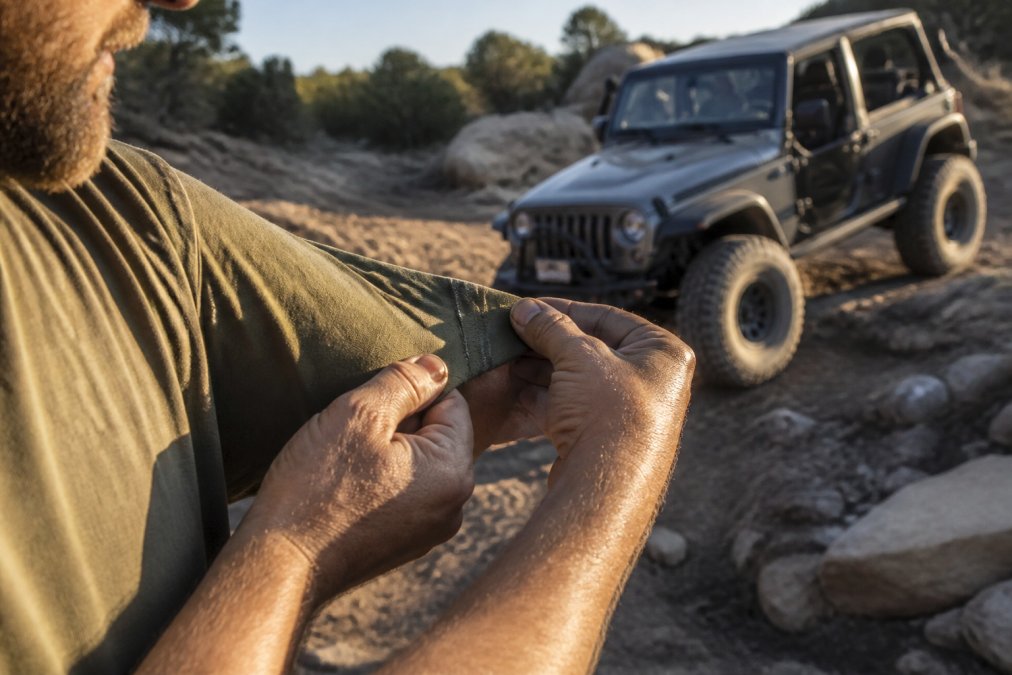
Weather protection is the final layer of fabric science. Many technical pieces feature a water-repellent finish that sheds light rain and morning dew, keeping you dry during unexpected showers. This treatment wears off over time, but the underlying fabric still performs better than untreated cotton in damp conditions.
Best Shirts for Outdoor Adventure: A Feature Hierarchy
When you're choosing the best shirts for outdoor adventure, not all features carry equal weight. Here's a practical hierarchy based on what actually matters on the trail:
- Fabric type and weight, Synthetic blends or merino wool at 6 oz/yd² or heavier for durability
- Moisture management, Look for explicit moisture-wicking properties, not just "athletic" branding
- Seam construction, Flatlock stitching and reinforced stress points
- Fit and cut, Ergonomic design that allows full range of motion without excess fabric
- Drying speed, Quick-dry performance for multi-day trips
- Style and graphics, Last on the list, but still important for expressing your trail identity
The Trail Explorer's Unisex Premium Sweatshirt checks the top boxes with a 100% cotton face, fleece interior, and 8.5 oz/yd² fabric weight that stands up to repeated wear. For warmer conditions, the Under Armour athletic t-shirt Cliffhanger pairs a 60/40 cotton-polyester blend with quick-drying performance at a 7.41 oz/yd² weight.

| Feature | Why It Matters | What to Look For |
|---|---|---|
| Fabric weight | Heavier fabric resists abrasion and lasts longer | 6 oz/yd² minimum for trail use |
| Moisture-wicking | Keeps you dry during exertion | Synthetic or merino fibers, not pure cotton |
| Seam construction | Prevents blowouts and chafing | Flatlock stitching at stress points |
| Fit | Allows full movement without excess | Ergonomic cut, articulated seams |
| Drying speed | Enables multi-day use | Quick-dry synthetic performance |
Cost-Per-Wear: The Financial Case for Quality
The most honest way to evaluate trail apparel is cost-per-wear, not the sticker price. A $50 technical shirt that lasts 100 wears costs 50 cents per wear. A $15 budget shirt that falls apart after 10 wears costs $1.50 per wear, and that's before you factor in the hassle of replacing it.
Gear longevity is where premium apparel wins decisively. Quality fabrics and construction hold up to the washing, drying, and abrasion that trail use demands. A well-made shirt can realistically deliver 100-plus wears over several seasons, while budget alternatives often show visible wear within a month of regular use.
This framework also applies to layering systems. A quality base layer that lasts three seasons beats three cheap replacements that each last one season, and the premium option performs better the entire time.
Warranties, Repairability, and Ethical Manufacturing
Premium trail apparel brands back their products with warranties and repair programs that budget brands can't offer. A lifetime warranty or a reasonable repair policy changes the ownership calculus entirely, because it extends the usable life of the garment well beyond what the initial price suggests.
Repairability matters more than most buyers realize. A tear in a quality garment can often be repaired by a seamstress or through a brand's repair service, while a cheap shirt is simply done. This aligns with the broader shift toward sustainability in outdoor gear, where the Outdoor Industry Association's sustainability resources highlight that extending product life is the most effective way to reduce environmental impact.
Ethical labor and manufacturing transparency are increasingly part of the premium value proposition. Brands that pay fair wages and maintain safe working conditions build that cost into the price. For many riders, knowing their gear was made responsibly justifies a higher price point, especially when compared to the hidden costs of fast fashion trail gear that relies on underpaid labor and disposable materials.
When It's Smart to Save and When to Splurge
You don't need premium everything. Smart riders allocate their budget to the pieces that matter most and save on the rest.
Splurge on: base layers, mid-layers, and anything that touches your skin during high-output activity. These pieces handle the most moisture, friction, and washing, so durability and performance pay off fastest here. Outer layers that face brush and abrasion also justify premium construction.
Save on: casual pieces, backup items, and gear you wear occasionally. A simple cotton tee for camp or a light layer for town doesn't need technical features. This is where budget options make sense.
The REI's expert advice on layering basics reinforces that a functional layering system matters more than any single expensive piece. Start with a quality base layer and build outward based on your actual conditions.
For riders who want the durability and comfort of premium trail apparel without the flashy graphics, The Trail Explorer offers designs that range from bold to understated. The Unisex Columbia fleece jacket provides maximum thermal retention in a clean, versatile style that works on the trail and in town, while the Unisex sports jersey delivers breathable performance for warmer days.


Choosing trail apparel comes down to honest math about how you ride and how often. Quality technical pieces justify their price through durability, performance, and comfort that budget gear simply can't match, and the cost-per-wear calculation usually favors the premium option for regular trail users. Quality technical pieces justify their price through durability, performance, and comfort that budget gear simply can't match, and the cost-per-wear calculation usually favors the premium option for regular trail users. Explore the collection and find pieces that match your riding style and your standards.
Frequently Asked Questions
Why is technical outdoor gear more expensive than standard apparel?
Technical outdoor gear costs more because of the materials and construction. Premium trail apparel uses performance fabrics like merino wool or specialized polyester blends that manage moisture, resist abrasion, and dry quickly. The manufacturing process also uses reinforced seams, like flatlock stitching, to prevent chafing and extend the garment's life. You are paying for a higher cost-per-wear value, as these pieces are designed to endure harsh conditions for years, unlike standard cotton tees that break down after a few seasons.
Do expensive hiking clothes actually perform better on the trail?
Yes, in specific conditions. A premium shirt made with moisture-wicking synthetic fibers will keep you drier and prevent chafing during a long hike, while a cheap cotton shirt will soak through and weigh you down. Expensive gear often includes features like ergonomic design for freedom of movement, ventilation panels, and water-repellent coatings. The difference is most noticeable during multi-day trips or extreme weather. For casual wear, the performance gap narrows, which is why your activity level should guide your spending.
What is the 3-3-3 rule for clothes?
The 3-3-3 rule is a budgeting trick for evaluating clothing purchases. Before you buy an item, you ask yourself if you will wear it at least three times in the next three months, and if you can style it three different ways. For trail apparel, this translates to assessing cost-per-wear. A premium sweatshirt worn on 20 trail rides and campsites a year can be a better investment than a generic hoodie that falls apart after a few washes and gets retired quickly.
Why are hiking pants so expensive?
Hiking pants require complex construction to balance durability with stretchability. They use woven nylon or polyester fabrics that offer abrasion resistance without restricting leg movement. Features like articulated knees, gusseted crotches, and reinforced seat areas add to the manufacturing cost. Additionally, treatments like DWR (durable water repellent) and UPF sun protection add value. These technical features are difficult to produce cheaply, so the higher price tag reflects the fabric engineering and specialized seam construction needed for gear longevity on the trail.