

Table of Contents
- Understanding Rock Crawling Events and What They Involve
- Rock Crawling Event Checklist: Everything You Need Before You Go
- Rock Crawling Event Rules and How Scoring Works
- Rock Crawling Trail Etiquette: How to Act at the Course
- First-Time Rock Crawling Tips for a Smooth First Outing
- Your Event-Day Timeline: From Arrival to Final Course Run
- RC Rock Crawlers vs. Full-Size Vehicle Events: Key Differences
- Frequently Asked Questions
Last Updated: October 12, 2026
Understanding Rock Crawling Events and What They Involve
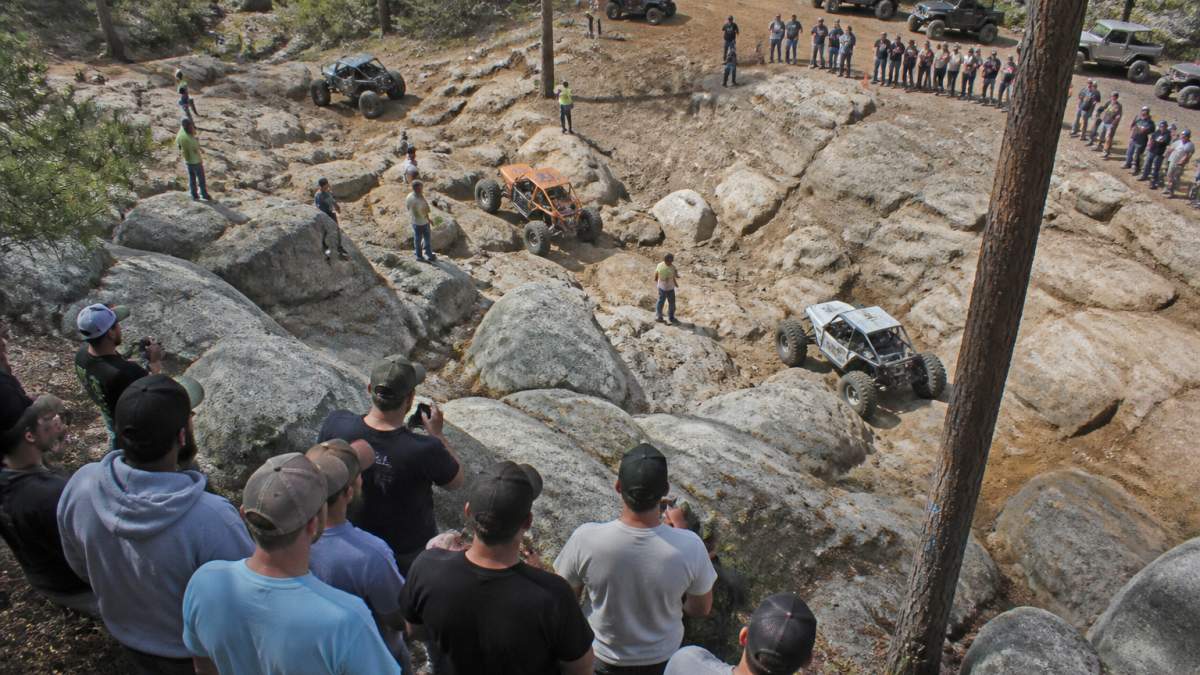
Rock crawling is an off-road motorsport where drivers navigate vehicles over extremely rocky, uneven terrain with steep inclines, tight obstacles, and challenging natural features. Unlike traditional off-road racing, it prioritizes precision, vehicle control, and tackling technical terrain slowly.
Your first rock crawling event will feel different than you might expect. Instead of high speeds and dust clouds, drivers make calculated moves, sometimes taking several minutes on a single obstacle. The focus is on line choice, approach angle, and vehicle response to extreme terrain.
Most events fall into two categories: full-size vehicle crawling (Jeeps, trucks, UTVs) and RC rock crawler competitions (miniature scale vehicles). Both share the same core principles, though scale and logistics differ significantly.
Rock Crawling Event Checklist: Everything You Need Before You Go
Preparation makes the difference between a smooth day and a frustrating one. Plan for your vehicle, your safety, and comfort during hours at the course.
Vehicle and Equipment Essentials
Your setup depends on whether you're competing or observing. If you're driving, ensure proper ground clearance, functional suspension, and reliable brakes. Check tire pressure before arriving, most events require specific PSI ranges.
Bring these vehicle essentials:
- Spare tires and a working jack
- Basic tool kit (wrenches, screwdrivers, pliers)
- Jumper cables or portable battery pack
- Fluids (oil, coolant, brake fluid)
- Tow strap or recovery rope
- Flashlight with extra batteries
- Fire extinguisher rated for vehicle fires
Spectators should still bring a chair and shade, many courses lack covered viewing areas.
Safety Gear and Personal Items
Safety gear is non-negotiable. Helmets are mandatory for drivers at most organized events, wear a DOT-approved full-face or open-face helmet depending on vehicle type. Eye protection, gloves, and closed-toe boots are standard.
Pack these personal items:
- Helmet (if driving)
- Safety glasses or goggles
- Work gloves
- Sturdy boots with ankle support
- Long pants and long sleeves
- Sun protection (sunscreen, hat, sunglasses)
- First aid kit
- Plenty of water (at least 3 liters per person)
- Snacks or light meals
- Medications you use regularly
- Phone charger or portable battery
- Cash for registration or parking fees
Weather can change quickly. Bring layers even if the forecast looks clear, desert temperatures drop at night, and unexpected rain makes terrain slippery and dangerous.
Rock Crawling Event Rules and How Scoring Works
Scoring is where first-timers get surprised. The format depends on the sanctioning body or club, and the two common frameworks behave very differently.
Points-based (penalty) scoring. Most organized events use this format. A course is divided into gates or stages marked by cones, ribbon, or painted lines. You start clean and accumulate penalties:
- Backing up or stopping to reposition: 1 point per occurrence (some clubs cap this per stage)
- Touching a boundary marker, cone, or gate with a tire: 1-2 points
- Touching a marker with the vehicle body or bumper: 2-5 points
- Going out of bounds with any tire: 5-10 points, or a stage maximum
- Using a winch or requiring a strap from another vehicle: 5-10 points, or a fixed penalty
- Needing a tow or outside mechanical assistance to finish: stage maximum or disqualification
- Exceeding the stage time limit: time-based penalty, often 1 point per minute over
Lower score wins, and a perfect run is a zero.
Time-based scoring. Less common at pure rock crawling events but used at some UTV and trail-style competitions.

Class structure. You will almost never compete against fully built buggies on your first outing.
Tech inspection. Before you run, your vehicle usually goes through a safety check.
The driver's meeting is not optional. Officials explain the course layout, exact penalty values, time limits, and weather-related changes.
Spectator rules are simpler but enforced. Stay behind marked lines and never walk onto an active course.
Rock Crawling Trail Etiquette: How to Act at the Course
Rock crawling communities are built on respect and safety. Your behavior determines whether you'll be welcomed back.
Follow these etiquette guidelines:
Make Rock Crawling Great Again →
- Arrive on time and stay for the entire event (drivers depend on consistent participation)
- Follow all course marshals' instructions immediately
- Never enter the course without explicit permission
- Keep spectators behind marked boundaries
- Don't distract drivers during their runs
- Support other competitors with encouragement
- Help with course maintenance if asked
- Pack out all trash
- Respect private property surrounding the course
Spotters play a crucial role. If you're spotting, communicate clearly via hand signals or radio, stand where the driver can see you, and guide line choice and obstacle approach. Never stand where a vehicle could hit you.
Media and photographers should check in with organizers before taking photos. Some events restrict photography in certain areas for safety. Always ask permission before photographing other competitors or their vehicles.
First-Time Rock Crawling Tips for a Smooth First Outing
Your mindset going into your first event matters more than your experience level. Rock crawling rewards patience and precision over speed.
Start with these core tips:
- Slow down your thinking. Observe the course before attempting it. Watch how other drivers approach obstacles. Notice which lines work and which don't.
- Trust your spotter. If someone is guiding you, listen to their directions. They can see angles and obstacles you can't from inside the vehicle.
- Don't rush recovery. If you get stuck, ask for help. Getting unstuck quickly prevents damage and keeps the event moving.
- Learn from mistakes. Every driver gets stuck or takes a wrong line. That's how you improve.
- Stay hydrated. Concentration drops when you're dehydrated. Drink water regularly throughout the day.
- Take breaks. If you're driving multiple courses, step out between runs. Let your mind reset.
Common first-timer mistakes include approaching obstacles too fast, misreading terrain, and panicking when the vehicle slides. Rock crawling requires a calm, deliberate approach, speed comes later, after you understand your vehicle on extreme terrain.
Your Event-Day Timeline: From Arrival to Final Course Run
Understanding the typical flow of your first rock crawling event helps you prepare mentally and logistically.
Driver's Meeting (30-45 minutes before first run): Attend the mandatory safety briefing covering course layout, scoring rules, and weather-related adjustments.
Practice or Seeding Runs (if offered): Some events allow practice runs before official scoring.
Lunch Break (usually midday): Most events include a 1-2 hour break. Eat, rest, and discuss the morning's results with other competitors.
Afternoon Rounds: Additional runs continue through the afternoon. Some events have multiple courses; others repeat the same course at different difficulty levels.
Awards and Wrap-Up (late afternoon): Results are announced, winners recognized. Pack up your pit area and depart.
Total event duration typically runs 8-10 hours from arrival to departure.
RC Rock Crawlers vs. Full-Size Vehicle Events: Key Differences
The biggest question a first-timer has is not "what is rock crawling" but "which kind of event am I going to, and what does it cost to show up?" Here is the practical breakdown.
Full-Size Vehicle Events
These feature real Jeeps, trucks, buggies, and UTVs driven by people sitting in them. Courses use real boulders, dirt, water, and natural terrain, often on private off-road parks or leased land.
- Do you need your own vehicle? To compete, yes. To attend, no. Most events welcome spectators, and many offer ride-alongs with competitors if you ask politely and sign any required waiver. A ride-along is the best way to decide if you want to build a rig.
- Registration and cost. Entry fees vary widely by event and class, and organizers usually publish them on the event page. Spectator admission is often free or a small gate fee. Budget for fuel, food, and any park day-use fee.
- Spectator access. You can typically get within 20-50 feet of the action from designated viewing areas. Some parks have elevated mounds or shaded pavilions; many do not, so bring a chair and shade.
- Field size. A typical club event runs 20-50 competitors. Larger regional events can run well over 100 across multiple classes.
- Time commitment. Plan on a full day, often 8-10 hours from arrival to awards.
RC Rock Crawler Events
These feature miniature scale vehicles, commonly 1/10, 1/18, or 1/24 scale, driven by remote control. Courses are built from scaled obstacles: small boulders, wooden ramps, pipe gates, and sometimes indoor rock formations.
- Do you need your own vehicle? To compete, yes, but the barrier is far lower. A capable entry-level 1/10 scale crawler costs a fraction of a built full-size rig, and many clubs have loaner vehicles or a novice class. Ask before you buy.
- Registration and cost. Entry fees are typically modest, and many club meets are free or charge a small per-class fee. Because events are often indoors or in small outdoor pits, there is rarely a park day-use fee.
- Spectator access. You are much closer to the action, often within a few feet, sometimes leaning over the course, making RC events excellent for kids and anyone who wants to study line choice up close.
- Field size. A club meet can run 20-60 drivers in a space the size of a basketball court. Larger RC competitions run multiple classes across a weekend.
- Time commitment. Club meets often wrap in 3-5 hours. Multi-class competitions can run a full day or two.
How to Choose Your First Event
If you own a full-size 4x4 and want to see what it can do, find a club event with a stock or novice class and sign up as a spectator first. If you don't own a rig, or want to learn line choice and throttle control without the cost and risk of a full-size build, an RC event is the lower-stakes on-ramp. The skills transfer, reading terrain, picking a line, feathering throttle, and many full-size drivers started in RC.
Find sanctioned off-road events and club listings
Frequently Asked Questions
What should I bring to my first rock crawling event?
Bring your vehicle, safety gear (helmet, gloves, eye protection), basic tools (jack, tow strap, tire repair kit), plenty of water and snacks, sunscreen, a first aid kit, and comfortable work clothes. If you're spectating, bring sunscreen, water, a chair, and weather-appropriate clothing. Check with the event organizer for a complete rock crawling event checklist specific to their course and rules.
Do I need experience to enter a rock crawling event as a first-time driver?
Most beginner-friendly events welcome first-time drivers, especially in RC crawler competitions and amateur full-size classes. However, check the event's registration requirements beforehand. Many organizers offer practice runs or have a beginner class. Starting with a smaller local event rather than a major competition helps you build confidence with rock crawling terrain and obstacle navigation before tackling advanced courses.
What are the main rock crawling event rules I should know?
Rules vary by event, but typically include staying within course boundaries, following spotters' directions, not damaging obstacles, and completing obstacles within a time limit. Most events use a scoring system based on how cleanly you navigate each obstacle, fewer touch-downs and retries earn better scores. Safety rules always apply: wear your helmet, follow the safety briefing, and respect other drivers and spectators. Ask the organizer for a complete rock crawling event rules sheet before you attend.
What's the best way to prepare for rock crawling trail etiquette at my first event?
Listen carefully to the safety briefing, communicate with your spotter using clear hand signals or radio, stay off other drivers' lines, and help others when they're stuck if asked. Never block spectators' views, keep your vehicle on the designated course, and be respectful to event staff. Most importantly, remember that rock crawling trail etiquette is about safety and fun, everyone's there to challenge themselves and enjoy the sport, so maintain a positive attitude and support fellow crawlers.