

Table of Contents
- Subtle Off-Road Apparel for Older Riders: Where Loud Graphics End and Comfort Begins
- What Older Trail Riders Actually Need From Apparel
- Durable Off-Road Trail Gear That Skips the Race-Replica Look
- Protective Gear for Senior Motorcyclists: Armor That Works Under Quiet Layers
- Heavyweight Trail Tees for Comfort on Long Rides
- Building a Layering System for Backcountry and All-Weather Riding
- How to Check Quality Before You Buy
- Conclusion
- Frequently Asked Questions
Last Updated: September 11, 2026
Subtle Off-Road Apparel for Older Riders: Where Loud Graphics End and Comfort Begins
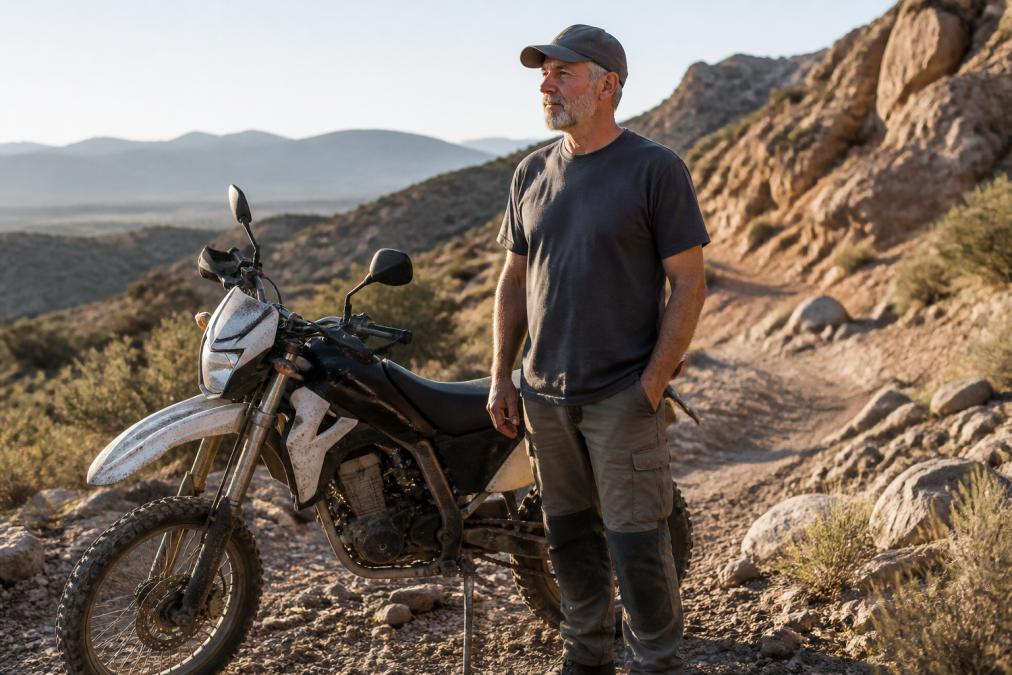
Walk through any trailhead parking area and you will see two crowds. One wears factory race-replica jerseys plastered with energy drink logos. The other, usually riders who have been doing this for twenty years, wears something quieter: plain colors, clean lines, no sponsor clutter. That second group is who this guide is for.
Subtle off-road apparel for older riders is trail clothing built around muted colors, low-profile branding, and comfort-first construction rather than race-team graphics. Riders over 50 still want to look and feel like riders without wearing a billboard. At The Trail Explorer, we craft custom clothing and apparel specifically for off-road enthusiasts and trail lovers, offering premium heavyweight tees and headwear that capture the spirit of adventure.

Below, we break down what matters when shopping for trail layers after 50, from fit and armor integration to a realistic 2026 price snapshot.
What Older Trail Riders Actually Need From Apparel
The core need is straightforward: protection and durability in a package that does not scream for attention. Most trail apparel is designed for a 22-year-old racer, aggressive graphics, tight cuts, materials chosen for a single race weekend. Riders in their 50s and 60s log long trail days and want gear that survives years of that, not one season.

Fit Priorities That Change After 50
Fit is where generic motocross gear fails older riders fastest. Race-cut jerseys assume a lean, young frame and a tight, aerodynamic silhouette, the opposite of what most riders over 50 want.
Three fit priorities shift as you age:
- Torso length over chest tightness. A shirt that rides up when you reach for the bars is useless. Look for extended body length and a regular or relaxed cut.
- Shoulder and arm mobility. Stiff, narrow shoulders restrict reach and make long days miserable. Side-seamed construction and a proper rib collar help here.
- Room to layer. You will almost always be wearing a base layer, a mid layer, and a shell in shoulder seasons. Buy for the layer underneath, not for a skin-tight look.
A common mistake is sizing down because a shirt "looks big" on the hanger. Heavyweight cotton relaxes with wear, and a roomier cut is the point.
A 2026 Price Snapshot of Low-Profile Trail Layers
Pricing for subtle trail apparel splits into three tiers, so knowing where you shop helps you avoid overpaying for branding you do not want.
| Tier | Typical Item | Price Range | What You Get |
|---|---|---|---|
| Base layer | Heavyweight tee | $25-$40 | Durable cotton, muted design, everyday wear |
| Mid layer | Sweatshirt or fleece | $44-$96 | Warmth, layering versatility, low-profile look |
| Accessory | Cap, gaiter, or headwear | $25 | Sun and wind coverage, understated styling |
Heavyweight tees sit at the bottom because they are the workhorse of a trail kit. Fleece and mid layers cost more because they carry more material and construction. Accessories are cheap and easy to swap as conditions change.
Durable Off-Road Trail Gear That Skips the Race-Replica Look
Durability is the biggest complaint older riders raise about apparel, and it is justified. A lot of "premium" trail clothing is thin cotton with a screen print slapped on it, fading or shrinking within a season. Buy on fabric weight and construction, not on the graphic.
Fabric weight is measured in ounces per square yard. A standard promotional tee sits around 4.5 to 5.0 oz/yd²; trail-grade heavyweight cotton starts around 6.5 oz/yd² (textileexchange.org). Heavier fabric resists tearing, holds its shape, and prints more crisply.
Construction details that actually matter:
- Combed ring-spun cotton for a softer hand-feel that does not pill as fast
- Side-seamed construction instead of tubular, so the shirt does not twist in the wash
- Double-needle stitching at stress points like the collar and hem
- Taped neck and shoulders to stop seams from pulling apart
If a listing does not tell you the fabric weight, that is usually a sign the answer is not flattering.
Protective Gear for Senior Motorcyclists: Armor That Works Under Quiet Layers
The best protective setup for an older rider is armor you can wear under normal-looking clothing. Race-style hard-shell armor is visible, bulky, and often unnecessary at moderate trail speeds. What you need is impact protection that stays in place without forcing you into a costume, built around joints that no longer bend the way they did at 25.
Impact protection refers to padding and armor designed to absorb force from a fall or collision, typically rated under the CE standard for motorcycle protective clothing. CE-rated armor is tested against impact energy and marked with a level, so you can compare pieces on something other than marketing copy. Level 1 passes a lower impact threshold; Level 2 passes a higher one, usually at the cost of thickness and weight. For moderate-speed trail and dual-sport riding, Level 1 in the right position beats Level 2 that has rotated out of place.
For trail and dual-sport riding, the practical approach is a base layer with integrated or pocketed armor, then a quiet outer layer over it. That way the protection is real, but the look stays understated.
Ergonomics for Aging Joints: Where Armor Usually Fails Older Riders
Most armor is designed around a rider who can fold into a deep crouch without thinking. That assumption breaks down after 50 in three predictable places.
Knees. A rigid cap that sits proud of the knee is fine when you can flex freely. When your knee does not fully close, that same cap digs into the top of the shin on every foot-plant. Look for a pad with a flexible hinge or articulated shell, the shell slides along the hinge as the knee bends instead of fighting the joint, and it stays put better because the joint is not pushing it out of position.
Shoulders and elbows. Older riders often lose overhead and cross-body range before they lose strength. Hard-shell armor with a soft inner pad restricts that range further. Soft, low-profile pads with segmented or foam construction move with the arm and are the better trade for trail speeds.
Hips and lower back. This is the coverage most older riders add first, because a low-speed tip-over on a rocky trail is the most common fall and the hip takes the hit. Hip pads that sit inside a base layer or dedicated short are far more likely to be worn than a separate belt, armor you leave in the truck protects nothing.
Fit Rules That Keep Armor in Place
Armor only works if it stays where it was designed to sit. Three fit rules matter more than brand:
- Measure, do not guess. Thigh circumference for knee pads, chest circumference for a vest or shirt. A pad that slides down mid-ride offers almost no protection, and a pad that is too tight restricts circulation on a long day.
- Strap systems beat sleeves. A sleeve-only knee pad relies on the fabric staying tight; a strap system with at least one adjustable strap above the knee holds position through a full day of standing and sitting.
- Layer order matters. Armor goes against the base layer, not over it. A pad worn over a loose shirt will shift, and a pad worn under a tight shell will be compressed into the wrong shape.
Heat and Cold for an Older Body
Temperature regulation changes with age. Older riders tend to feel cold faster in the morning and overheat faster in the afternoon, which makes a layered system more valuable than any single garment, and makes armor choice a temperature decision, not just a safety one (peer-reviewed research).
A hard-shell pad traps heat against the skin; a soft, perforated pad breathes. If you run hot in the afternoon, a soft pad with a mesh backing is the difference between finishing comfortable and finishing soaked. If you run cold in the morning, a thin wind-blocking layer over the armor keeps the chill off without adding bulk.
The practical answer is a three-part system: a moisture-wicking base layer, a breathable mid layer, and a wind-resistant shell you can remove without stopping. A neck gaiter is one of the most underrated pieces in this kit, it handles wind and cold with almost no bulk and pulls down the moment you warm up.
Heavyweight Trail Tees for Comfort on Long Rides
A heavyweight trail tee is the piece most riders reach for first, and where subtle design pays off most. You want a shirt that looks fine at the trailhead, in a restaurant afterward, and on the drive home: muted colors, minimal graphics, and a cut that does not advertise a race team.
The Trail Explorer's Men's premium heavyweight tee Old Man is a good example: 100% combed ring-spun cotton at 6.5 oz/yd², a regular fit, side-seamed construction, and a 1x1 rib collar that holds its shape.
For a lower-cost option, the Unisex classic tee Old Man in a Jeep runs $25.00 in 100% cotton with taped neck and shoulders, and it comes in sizes up to 5XL with a longer body length, which matters if you have a longer torso.
Building a Layering System for Backcountry and All-Weather Riding
A layering system means wearing multiple thin garments you add or remove as conditions change, rather than one heavy piece. It gives you far more temperature control than a single jacket, and for riders over 50 that control matters more, because the body's ability to dump and retain heat both change with age.
Most layering guides stop at "base, mid, shell." That is the skeleton, not the system. What decides whether you are comfortable at mile 30 is how each layer moves moisture and how fast you can change the system without stopping.
Why Older Riders Need a Different Layer Plan
Two changes drive the difference. First, older riders sweat less efficiently and feel cold sooner once a layer is damp, so a wet base layer tolerable at 30 becomes genuinely uncomfortable at 55 (the NIH). Second, the perceived swing between a cold morning start and a warm afternoon return is wider, because the body adjusts more slowly.
The practical consequence is that the base layer has to do more work. A heavyweight cotton tee is excellent for durability and everyday wear, but cotton holds moisture against the skin. For a long backcountry day, a moisture-wicking synthetic or merino base under the tee keeps the rest of the system working; the tee then becomes the mid or outer layer for the warm part of the day, which is the role it plays best.
The Four-Part System, Not Three
Treat the kit as four parts, not three:
- Next-to-skin base. Moisture-wicking synthetic or merino. This is the layer that decides whether you stay dry. It should fit close but not tight.
- Insulating mid. Fleece or a light synthetic fill. This is the layer you add when you stop for lunch or when the wind picks up. A cotton-faced fleece feels good against the skin; a synthetic fleece dries faster if you sweat through it.
- Wind and weather shell. A packable shell that blocks wind and light rain. It should be the piece you can pull on and off without removing your helmet or pack.
- Neck and head coverage. A gaiter and a low-profile cap. These are the cheapest temperature controls in the kit and the ones older riders reach for most, because the neck and the top of the head are where cold is felt first.
How to Adjust Through the Day
The system only pays off if you actually change it. A common pattern: start slightly cool, add the mid layer at the first stop, shed the shell on the first climb, and reverse the order on the way back. The mistake is leaving the shell on all day because stopping is a hassle, that is how you end up soaked at the top and freezing on the descent.
Two habits make the adjustments fast:
- Stage the layers you will need. Put the mid layer and gaiter in an accessible pocket or tank bag, not buried at the bottom of a pack.
- Buy each layer one size roomier than you think you need. A layering system only works if the outer layers actually fit over the inner ones. A shell that fits over a tee will not fit over a tee plus a fleece.
A Concrete Kit
Start with a heavyweight tee as the warm-day base or the mid layer on cooler days. The Unisex Premium Sweatshirt The Trail Explorer at $44.00 uses an 8.5 oz/yd² fleece with a cotton face, making it the insulating mid for most shoulder-season days.

For genuinely cold mornings, the Unisex Columbia fleece jacket The Trail Explorer at $96.00 uses 100% polyester MTR filament fleece at 7.4 oz/yd², which traps warmth without the weight of a heavy jacket and dries faster than a cotton-faced fleece if you sweat through it. Finish the system with a Neck Gaiter at $25.00 for wind and sun coverage, and a Garment washed baseball cap at $25.00 for low-profile sun protection.
How to Check Quality Before You Buy
Quality checks take two minutes and save a season of regret. Run through this list before committing to any piece of trail apparel.
- Fabric weight is listed. Anything under 6.0 oz/yd² will not hold up to serious trail use.
- Fiber content is specific. "100% combed ring-spun cotton" tells you something. "Premium cotton blend" tells you nothing.
- Construction is described. Side-seamed, taped neck, double-needle hems. If none of these appear, assume the cheapest possible build.
- Sizing chart includes body length. Chest width alone is not enough. You need length to judge torso fit.
- Care instructions are realistic. If a shirt requires hand washing to survive, it is not trail gear.
- Return policy is stated clearly. Fit problems are common, so you want a straightforward path back.
Conclusion
Finding gear that fits an older body, survives real trail abuse, and does not look like a race sponsorship is harder than it should be. Most of the market still chases the loudest possible aesthetic, leaving experienced riders shopping in the wrong aisle.
The Trail Explorer builds for the other crowd. Our Men's premium heavyweight tee Trail Soda and Men's heavyweight long sleeve t-shirt Take the Trail Less Traveled both start from 6.5 oz/yd² combed ring-spun cotton with side-seamed construction and a regular fit, so they hold up across a full season of trail days. Add the Unisex Premium Sweatshirt The Trail Explorer as your mid layer and you have a complete system that looks quiet and works hard.
Subscribe to our emails and get first access to new trail-ready drops in muted colorways built for riders who have nothing left to prove.
Frequently Asked Questions
What should off-road riders always wear, no matter their age?
At minimum: a helmet, eye protection, gloves, over-the-ankle boots, long pants, and a long-sleeve layer. Underneath, add knee pads and a back protector. For older riders, the smart additions are CE-rated armor at the hips and knees, plus a moisture-wicking base layer so sweat does not sit against your skin on a long, slow trail section. The goal is coverage that stays in place when you go down, not just coverage that looks the part.
How does protective gear differ for senior motorcyclists?
Three things change. First, weight: heavy race armor tires you faster, so lighter CE-rated inserts worn under a quiet jacket work better. Second, warmth: older riders lose heat faster, so a wind-blocking mid layer matters more than vents. Third, recovery: knee and hip padding reduces the impact of a low-speed tip-over, which is the most common off-road fall. Nothing about the gear has to look aggressive. Subtle off-road apparel hides most of it under a plain shell.
Are there minimalist designs for trail riding, or is everything loud?
There are, but you have to look past the motocross side of the market. Subtle off-road apparel for older riders usually means solid or single-color garments with small chest or sleeve graphics instead of full-wrap prints. A good starting point is a heavyweight tee in charcoal or black with one small mark, paired with a washed, low-profile cap. That combination reads as trail culture without turning you into a billboard.
What materials hold up best for long-distance off-road comfort?
Look for combed ring-spun cotton at 6.5 oz/yd² or heavier for tees, because the tighter knit resists abrasion and holds its shape after washing. For outer layers, a fleece around 7.4 oz/yd² blocks wind and traps heat without bulk. For anything against your skin under armor, pick a breathable polyester-spandex blend that stretches two ways and recovers, so it does not bunch at the elbows or knees over a full day in the saddle.