

Table of Contents
- What Makes the Most Durable Clothing Brands Stand Out
- Best Workwear Brands for Durability: Material and Construction
- Most Durable Fabrics for Clothing: What Lasts
- How to Tell if Clothes Are High Quality Before You Buy
- Durable Clothing Options for Trail and Outdoor Use
- Clothing Care Tips to Make Clothes Last Longer
- Cost Per Wear: Value and Long-Term Ownership
- Frequently Asked Questions
Last Updated: October 15, 2026
What Makes the Most Durable Clothing Brands Stand Out
Finding clothing that actually lasts requires understanding what separates brands built for longevity from those designed for quick replacement. The most durable clothing brands share common traits: they prioritize quality materials, invest in construction techniques that withstand wear, and stand behind their products with warranties or repair programs.
Durability starts with material selection. Brands that commit to natural fibers like cotton, hemp, and linen typically offer better longevity than synthetic blends, though the quality of the fiber itself matters enormously. Ring-spun cotton, for example, creates stronger yarn than conventional spinning methods. Heavyweight fabrics, typically 6+ ounces per square yard, resist pilling, tearing, and abrasion better than lightweight alternatives.
Construction quality is equally critical. Reinforced seams, single-needle stitching, and taped seams all extend garment life. Brands that use side-seam construction instead of tube construction allow for better fit retention after repeated washing. The details matter: a reinforced collar with Lycra stays intact longer than a basic ribbed collar, and double-needle stitching on cuffs and hems prevents unraveling.
Best Workwear Brands for Durability: Material and Construction
Workwear brands have built their reputations on durability because their customers demand it. These brands understand that a torn seam or faded print costs money on the job site. The best workwear options combine heavyweight fabrics with reinforced construction and honest care instructions.
Ring-Spun Cotton and Heavyweight Fabrics
Ring-spun cotton is the gold standard for durability in basic apparel. The spinning process creates yarn with fewer loose fibers, resulting in stronger fabric that resists pilling and maintains its shape through dozens of wash cycles. Heavyweight ring-spun cotton garments typically weigh 6.5 ounces per square yard or more, providing natural abrasion resistance that lighter fabrics simply cannot match.
The Men's heavyweight long sleeve t-shirt Take the Trail Less Traveled from The Trail Explorer uses 100% combed ring-spun cotton with a 6.5 oz/yd² fabric weight. The soft-washed finish gives it an ultra-soft feel, while the tightly knit surface delivers crisp, vibrant prints. At $35.00, it represents the baseline investment required for genuine durability.
Garment-dyed options offer another durability advantage. The Utah Desert Edition uses 100% cotton with a garment-dyed finish, creating a vintage-inspired look. At 6.0 oz/yd², it's slightly lighter than ring-spun alternatives but still well above the threshold where durability begins to suffer. The relaxed fit and seamless body construction reduce stress points where seams typically fail first.
Seam Quality and Reinforcement
Seams fail before fabric does in most garments. A shirt with perfect fabric but weak seams becomes unusable long before the cotton itself deteriorates. The strongest seams use single-needle edge stitching, which creates a clean, durable finish. Side-seamed construction (stitching along the sides rather than down the middle of the garment) distributes stress more evenly and allows for better fit retention.
The Men's premium heavyweight tee Trail Soda incorporates side-seamed construction with single-needle edge stitching on a 1×1 collar. These details cost more to produce but extend garment life by years. The 6.5 oz/yd² fabric weight paired with 1x1 rib at collar means the shirt maintains its shape through countless wash cycles.

Double-needle stitching on cuffs, hems, and collar edges prevents unraveling and distributes stress across two threads instead of one. The Unisex Sweatshirt Take the Trail Less Traveled uses double-needle stitching on the collar, shoulders, armholes, cuffs, and hem, exactly where most sweatshirts begin to deteriorate. At $28.50, this represents solid value for a garment designed to last multiple seasons.
Most Durable Fabrics for Clothing: What Lasts
Not all fabrics are created equal, and the fiber content dramatically impacts how long a garment survives. Understanding fabric composition helps you predict durability before purchase.
Natural fibers like cotton, hemp, and linen naturally resist degradation better than synthetics. Cotton fibers actually strengthen when wet, making quality cotton garments more durable through repeated washing than many synthetic alternatives.
Synthetic blends present a trade-off. A 60% cotton, 40% polyester blend (like the Under Armour athletic t-shirt Cliffhanger at $42.50) adds stretch and reduces wrinkles. The polyester component resists moisture but can trap heat and develop odors.
Fabric weight remains the most reliable durability predictor. Garments below 5.5 oz/yd² feel flimsy and typically wear thin within a season. The sweet spot for durable basics sits between 6-7 oz/yd².
Colorfastness matters for long-term appearance. This masks wear and makes older garments look intentionally vintage rather than worn out. The Utah Desert Edition's garment-dyed finish demonstrates this advantage, fading becomes part of the aesthetic rather than a sign of degradation.
How to Tell if Clothes Are High Quality Before You Buy
Durability isn't mysterious. You can assess quality in seconds by knowing what to look for during the buying process.
Start with the fabric weight specification. Reputable brands list this in ounces per square yard (oz/yd²). If it's not listed, the brand likely doesn't emphasize durability. Anything 6+ oz/yd² indicates serious construction.
Examine seam construction in photos or in person. Look for single-needle edge stitching, side-seamed construction, and reinforced collars. Cheap garments use tube construction (stitching straight up the middle) and basic ribbed collars.
Check the care label. Brands confident in their durability include specific washing instructions designed to preserve the garment. Instructions mentioning cold water, gentle cycles, or air drying indicate the brand expects the garment to survive many washes.
Look for reinforcement details: taped seams, double-stitched hems, Lycra-reinforced collars, and split hems all indicate durability focus. The Unisex Sweatshirt Take the Trail Less Traveled's double-needle stitching throughout signals a brand prioritizing longevity over cost reduction.

Durable Clothing Options for Trail and Outdoor Use
Off-road enthusiasts and trail riders need apparel that survives genuine abuse. Regular outdoor wear demands different durability standards than office clothing, you're dealing with abrasion from climbing, exposure to sun and weather, and the physical stress of active use.
Under ArmourⓇ athletic t-shirt Cliffhanger →
Premium Heavyweight Tees for Rock Crawling
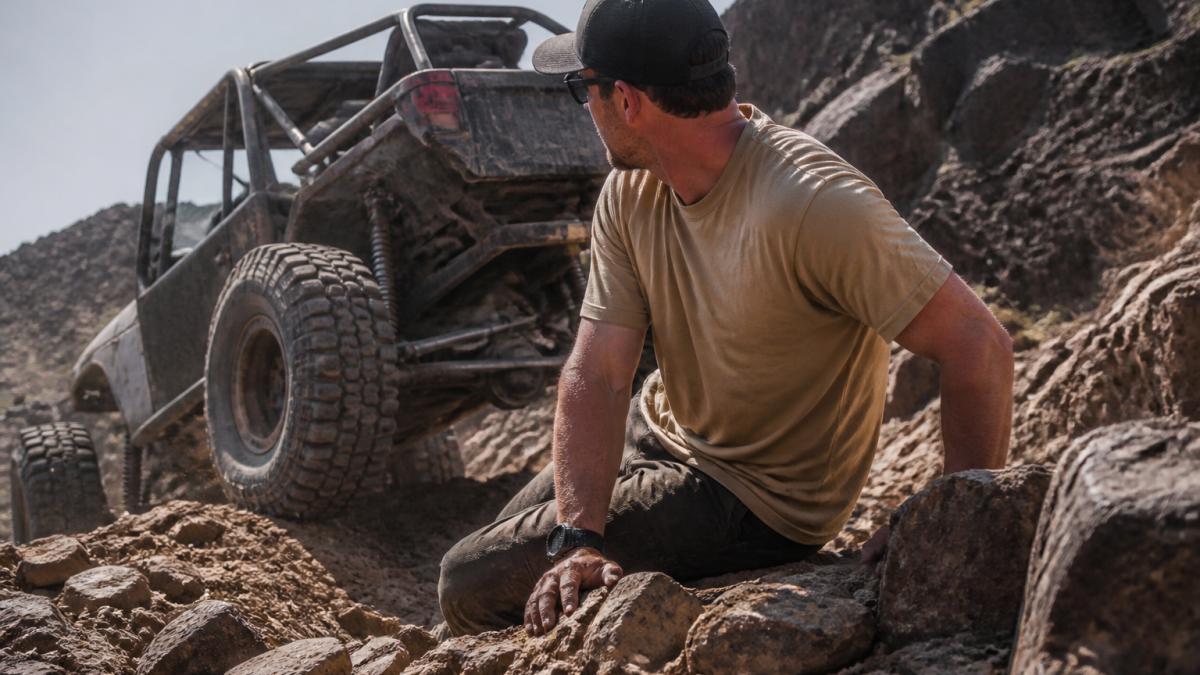
Rock crawling subjects clothing to constant abrasion. Your shirt rubs against rough stone, sharp edges, and your vehicle's interior. Standard tees shred within weeks. Heavyweight options designed for this environment use 6.5+ oz/yd² fabric with reinforced seams to withstand the punishment.
The Men's premium heavyweight tee Trail Soda delivers exactly what rock crawlers need. At 6.5 oz/yd² with 100% combed ring-spun cotton, it resists abrasion far better than lighter alternatives. The side-seamed construction distributes stress evenly, preventing the common failure point where standard shirts split along the sides. The regular fit allows for layering and movement without excess fabric catching on obstacles.
The Men's heavyweight long sleeve t-shirt Take the Trail Less Traveled offers additional protection for longer sessions. The long sleeves provide sun protection and abrasion resistance on the forearms, a common wear point during rock crawling. At $35.00, it costs the same as the short-sleeve option while adding functional coverage.
Long-Sleeve and Layering Options
Long-sleeve options extend garment life by distributing stress across more fabric. Your forearms experience constant abrasion during trail work, and long sleeves protect this high-wear area. The 6.5 oz/yd² weight ensures the sleeves themselves won't thin out or tear.
Layering capability matters for durability too. A quality base layer under a heavier shirt distributes friction and reduces direct contact between your skin and rough surfaces. The Trail Explorer's long-sleeve options work as standalone pieces or as layering bases, extending their utility and justifying their durability investment.
Cold-Weather Durability
Cold weather tests durability differently than summer use. Repeated stretching from layering, exposure to moisture and freezing, and the physical stress of heavy clothing all accelerate wear. The Unisex Sweatshirt Take the Trail Less Traveled addresses these demands with pre-shrunk fabric and double-needle stitching that prevents the common failure point of stretched-out cuffs and hems.

At $28.50, the sweatshirt represents solid value for cold-weather layering. The 50% cotton, 50% polyester blend resists moisture better than pure cotton while maintaining breathability. The air-jet spun yarn provides a soft feel. Double-needle stitching on every stress point, collar, shoulders, armholes, cuffs, and hem, means the garment survives years of active use.
Clothing Care Tips to Make Clothes Last Longer
Quality construction extends garment life, but proper care multiplies that advantage. A durable shirt cared for poorly wears out faster than a basic shirt treated carefully.
Wash in cold water whenever possible. Hot water weakens cotton fibers and accelerates fading, particularly in garment-dyed options like the Utah Desert Edition. Cold water preserves both durability and appearance.
Use gentle cycles for heavyweight items. The heavier the garment, the more stress washing creates. Heavyweight tees at 6.5+ oz/yd² can handle regular cycles, but even these benefit from gentle treatment.
Turn garments inside-out before washing. This protects prints and reduces fading on the visible side. It also reduces pilling on the outer surface by minimizing friction with other garments.
Avoid fabric softener. It coats fibers and reduces absorbency, trapping moisture and creating odors.
Repair small damage immediately. A loose thread takes 30 seconds to fix but becomes a major tear within weeks of wear. Reinforcing seams before they fail extends garment life dramatically.
Cost Per Wear: Value and Long-Term Ownership
Durability ultimately comes down to cost per wear, the total investment divided by the number of times you wear the garment. A $35 shirt worn 200 times costs $0.175 per wear. A $15 shirt worn 50 times costs $0.30 per wear.
Premium heavyweight tees from The Trail Explorer range from $28.50 to $42.50. These price points seem high compared to mass-market alternatives, but the durability math reveals the advantage. A heavyweight tee lasting 300+ wears delivers exceptional value compared to cheaper options failing after 50-75 wears.
Consider total ownership cost, not just purchase price. A garment that lasts five years requires less frequent replacement, reducing your total spending. Factor in the time and hassle of shopping for replacements, and durable options become even more economical.
The most durable clothing brands invest in materials and construction that cost more upfront but deliver years of reliable wear. The Trail Explorer's heavyweight tees use the exact specifications, ring-spun cotton, 6.5 oz/yd² weight, reinforced seams, and taped construction, that separate durable basics from disposable ones.
Frequently Asked Questions
Which clothing brands are considered buy-it-for-life?
Brands offering durable clothing typically combine heavyweight fabrics, reinforced seams, and quality construction. The most durable clothing brands use combed ring-spun cotton, single-needle stitching, and side-seamed construction. Look for brands that emphasize fabric weight (6+ oz per square yard), Lycra-reinforced collars, and taped neck and shoulders. Many off-road enthusiasts find that brands focusing on heavyweight tees and workwear-inspired designs deliver the longest-lasting wear, especially when paired with proper care.
What makes clothes durable and long-lasting?
Durability comes from three factors: fabric quality, construction method, and material composition. Heavyweight fabrics resist pilling, tearing, and abrasion better than lightweight materials. Ring-spun cotton offers superior strength compared to standard cotton. Construction matters equally, single-needle edge stitching, reinforced seams, and taped shoulders prevent unraveling. Garment-dyed finishes and pre-shrunk fabrics reduce shrinkage and fading. For trail use and outdoor activities, look for abrasion-resistant construction and colorfastness in dyes.
What fabrics last the longest?
Combed ring-spun cotton ranks among the most durable fabrics for everyday wear. This material undergoes a combing process that removes short fibers, leaving longer, stronger strands that resist pilling and tearing. Heavyweight cotton blends (6+ oz per square yard) outlast lighter fabrics. Natural fibers like linen and hemp offer excellent durability for specific garments. For outdoor and trail use, 100% combed ring-spun cotton or cotton-polyester blends with proper construction deliver the best longevity. Avoid low-weight fabrics under 5 oz per square yard if durability is your priority.
How should you wash clothes to make them last longer?
Wash heavyweight apparel in cold water to prevent shrinkage and fading, especially for garment-dyed pieces. Turn items inside out before washing to reduce surface abrasion. Use gentle cycles and avoid overloading the machine. Skip the dryer when possible, air drying extends fabric life and prevents heat damage. For trail-worn clothing with dirt or mud, rinse thoroughly before washing. Wash less frequently by spot-cleaning small stains. Store clean, dry garments in cool, dark spaces to prevent color fading and mildew growth.