

Table of Contents
- Step 1: Complete a Jeep Pre-Trip Inspection Checklist
- Step 2: Set Jeep Tire Pressure for Rock Crawling
- Step 3: Prepare Vehicle Setup and Mechanical Adjustments
- Step 4: Choose Trails Matched to Moab Jeep Trail Difficulty for Beginners
- Step 5: Pack Jeep Recovery Gear for Off-Roading
- Step 6: Master Driving Techniques and Throttle Control
- Step 7: Plan for Safety, Conditions, and Emergency Preparedness
- Frequently Asked Questions
Last Updated: October 5, 2026
Step 1: Complete a Jeep Pre-Trip Inspection Checklist
Learning how to prepare your jeep for moab trails starts with a complete pre-trip inspection, the foundation for safe and successful rock crawling. Before you head to the trails, you need to verify that every critical system on your Jeep can handle the demands of off-road driving.
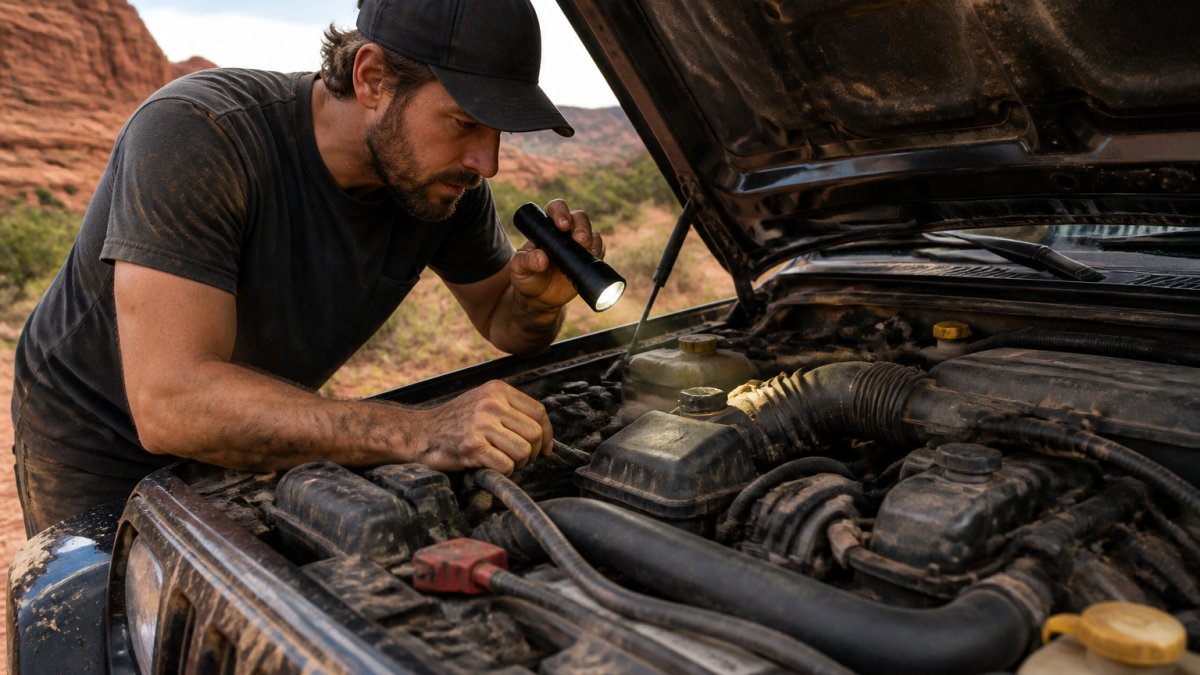
Start with the basics. Check your engine oil, coolant, brake fluid, and power steering fluid. Low levels can cause catastrophic failures mid-trail. Look for leaks under the engine bay. Inspect hoses for cracks or soft spots. A burst hose in the middle of a remote trail means a long walk out.
Engine and Fluids
Your engine needs to run clean and cool during rock crawling. Check the oil level with the dipstick and top off if needed. Verify coolant is at the proper level and has a fresh appearance, brown or rusty coolant means your cooling system needs flushing before you go.
Inspect all hoses for damage:
- Upper and lower radiator hoses
- Heater hoses
- Power steering hoses
- Vacuum lines
Squeeze each hose gently. It should feel firm, not mushy or cracked. Replace any hose that feels compromised. Also check that your battery terminals are clean and tight. Corrosion prevents proper electrical flow, which can strand you on the trail.
Brakes, Suspension, and Steering
Brakes are non-negotiable. Spin each wheel by hand and listen for grinding sounds. Pads should have at least 1/4 inch of material remaining. If you hear metal-on-metal grinding, replace the pads before you go.
Check your suspension next. Grab each wheel at the 3 and 9 o'clock positions and push up and down firmly. Excessive play means worn shocks or struts. Look under the Jeep for leaking shock absorbers, they should be dry. Inspect sway bar links and control arm bushings for cracks or excessive movement.
Test your steering by turning the wheel fully left and right while parked. It should turn smoothly without binding. Listen for clunks or grinding. Check that your steering wheel doesn't have excessive play, more than an inch of movement before the wheels respond means worn steering components.
Undercarriage and Ground Clearance
This is where most Jeep damage happens on the trail. Get your Jeep on a lift or use jack stands to inspect the undercarriage thoroughly. Look for bent skid plates, cracked differential covers, or damaged transfer case housings.
Check for leaks from your transmission, transfer case, and differentials. These fluids should be topped off before you go. Inspect your fuel tank and fuel lines for damage or leaks. Examine your exhaust system for loose hangers or damage.
Look at your tie rods and ball joints. Grab the wheel and try to move it in and out at the 12 and 6 o'clock positions. If it moves, your ball joints or tie rods are worn and need replacement before trail use.
| Component | Check For | Action if Found |
|---|---|---|
| Oil | Low level or dark color | Top off or change |
| Coolant | Low level or discoloration | Top off or flush system |
| Brakes | Pad wear under 1/4 inch | Replace pads |
| Suspension | Leaking shocks or worn bushings | Replace components |
| Steering | Excessive wheel play | Repair steering linkage |
| Undercarriage | Leaks or damage | Repair before trail |
Step 2: Set Jeep Tire Pressure for Rock Crawling
Tire pressure is one of the most important adjustments you'll make for rock crawling. Lower pressure increases your tire's contact patch with the rocks, improving traction and grip.
The right tire pressure depends on your tire size, vehicle weight, and trail difficulty. Most rock crawlers start by reducing pressure from highway levels (around 32 PSI) down to 15-20 PSI for moderate trails. Easier trails may only need 20-25 PSI.
Start conservative. If you're new to off-roading, begin at 20 PSI and see how your Jeep handles. You can always air down more at the trailhead if needed.
Bring a quality air compressor and tire gauge. Airing down takes time, a full-size tire can take 10-15 minutes to drop from 32 to 15 PSI. Plan to spend 30-45 minutes airing down all four tires before you start the trail.
Step 3: Prepare Vehicle Setup and Mechanical Adjustments
Beyond tires and fluids, certain mechanical adjustments make your Jeep safer and more capable on the rocks.
Sway Bar Disconnection
Your sway bar keeps your Jeep stable on pavement by preventing excessive body roll. On the rocks, it limits your suspension travel and can cause one wheel to lift off the ground, reducing traction. Disconnecting your sway bar allows each wheel to move independently, keeping all four tires in contact with the terrain.
Most Jeeps have a sway bar disconnect located near the driver's side front wheel. It's usually a bolt that you remove or a link you disconnect. Some newer models use electronic disconnects that you can toggle from inside the cabin.
If you don't have a disconnect, you can leave the sway bar connected for easier trails. But for more challenging terrain, disconnecting it makes a noticeable difference in traction and handling. Make sure you reconnect it before driving on pavement, an unconnected sway bar will cause severe body roll on turns and highways.
Stock vs. Modified Jeep Considerations
Stock Jeeps have factory suspension, stock tire size, and standard ground clearance. They're capable on moderate trails but have limits. Ground clearance is typically 8-10 inches, which can cause undercarriage scraping on rocky terrain.
Modified Jeeps often have lifted suspension (2-6 inches), larger tires (33-35 inches), and reinforced skid plates. They can tackle more difficult trails with less risk of damage. If you're driving a stock Jeep, stick to easier trails and drive more slowly and carefully. If you've invested in modifications, you can tackle more challenging terrain.
Regardless of your setup, know your Jeep's limits. A stock Jeep can handle many Moab trails if you drive with patience and respect. A heavily modified Jeep can still get damaged if the driver makes poor decisions.
Step 4: Choose Trails Matched to Moab Jeep Trail Difficulty for Beginners
Trail difficulty varies widely. Choosing the right trail for your experience level and vehicle capability is critical.
Beginner trails are typically rated as "easy" or "green." They have minimal obstacles, good traction, and wide clearance for your Jeep.
Unisex classic tee Moab's Okayest Spotter →
Intermediate trails are rated "moderate" or "blue." They have some obstacles, tighter spots, and sections where you need to pick your line carefully. Trails like Fins and Things or Behind the Rocks fall into this category.
Advanced trails are rated "difficult" or "black." These include Hells Revenge, Pritchett Canyon, and Kane Creek Canyon. They have severe obstacles, tight squeezes, steep grades, and sections where one mistake causes significant damage.

Start with an easy trail to get comfortable with your Jeep's handling and your own driving skills. Progress to intermediate trails only after you've completed several easy ones successfully.
Step 5: Pack Jeep Recovery Gear for Off-Roading
Recovery gear keeps you safe if you get stuck or damage your Jeep on the trail. Carry this equipment every time you go out:
- Tow strap or kinetic rope (rated for your vehicle weight)
- D-ring shackles or recovery hooks
- Snatch block (for mechanical advantage)
- Shovel (to dig out stuck tires)
- Hi-lift jack or bottle jack
- Tire plug kit and spare tire (or two)
- Basic tool kit (wrenches, sockets, pliers, screwdrivers)
- Spare belts and hoses
- Extra coolant and oil
- Jumper cables or portable jump starter
- First aid kit
- Flashlight and extra batteries
- Water and snacks
Pack your recovery gear in a storage box that's easily accessible. Don't bury it under camping gear. If you get stuck, you'll need to reach these tools quickly.
Consider carrying a communication device like a satellite messenger or personal locator beacon. Cell service is spotty in remote areas. A satellite device lets you call for help if something goes seriously wrong.
Step 6: Master Driving Techniques and Throttle Control
How you drive matters as much as how well your Jeep is prepared. Aggressive driving causes damage. Smooth, deliberate driving keeps you on the trail and your Jeep intact.
Drive slowly. This is the single most important technique. Most rock crawling happens at 2-5 mph.
Use gentle throttle control. Don't hammer the accelerator. Apply steady, even pressure to maintain traction. Let your tires grip the rocks.
Pick your line before you commit. Look ahead at the terrain. Identify the smoothest path over the rocks. Avoid sharp rocks that can puncture tires or damage undercarriage.
Use your mirrors constantly. Watch your rear tires and undercarriage. If you hear scraping, stop immediately and assess what's happening. Small scrapes are normal.
Warm up your Jeep before starting. Let the engine idle for a few minutes. This ensures all systems are functioning properly before you encounter obstacles.
Step 7: Plan for Safety, Conditions, and Emergency Preparedness
Off-roading carries risks. Planning for emergencies keeps you and your passengers safe.
Check the weather forecast before you go. Summer heat in the area can be extreme, especially mid-August when temperatures exceed 100°F.
Understand altitude effects if you're traveling to higher elevations. Altitude reduces oxygen availability, which can cause fatigue and headaches (the CDC).
Bring enough food and snacks for the entire trip, plus extra. Trail running can take longer than expected.
Never trail alone. Bring at least one other vehicle with you.
Carry a first aid kit and know basic first aid. Injuries happen on the trail. Cuts, scrapes, and sprains are common.
Know local trail rules and regulations. Some trails require permits or have seasonal closures. Respect private property and stay on marked trails.
At The Trail Explorer, we celebrate the spirit of adventure and the culture of rock crawling. Our Unisex Classic Tee Moab's Okayest Spotter captures the humor and heart of trail exploration, while our Garment Washed Baseball Caps featuring Moab trail names, Hells Revenge, Pritchett Canyon, and Behind the Rocks, let you wear your favorite trails with pride.


Frequently Asked Questions
What should I check on my Jeep before heading to Moab trails?
Inspect your engine fluids (oil, coolant, brake fluid), brakes and brake lines, suspension components, steering linkage, tires for damage or wear, undercarriage for leaks or damage, battery connections, and lights. Check ground clearance by looking underneath for any hanging components. Verify your spare tire is properly secured and your jack works. This pre-trip inspection checklist catches issues before they strand you on the trail.
What tire pressure should I use for rock crawling in Moab?
Start at your vehicle's recommended tire pressure from the door jamb (typically 28-35 PSI for Jeeps). For rock crawling, gradually air down to 18-22 PSI to increase tire contact patch and traction on rocks. Lower pressure improves articulation over obstacles. Always carry a portable air compressor to re-inflate after the trail. Monitor pressure during the drive and adjust based on terrain difficulty.
Do I need to modify my Jeep before driving Moab trails?
Stock Jeeps can handle beginner and some intermediate trails in Moab. Modifications like lifted suspensions, larger tires, and electronic disconnects improve capability and clearance but aren't mandatory for easier trails. Upgrading to quality shock absorbers, adding skid plates, and disconnecting your sway bar are practical modifications that reduce damage risk. Start with stock capability, assess trail difficulty honestly, and add modifications based on what you encounter.
What recovery gear should I bring for Moab trails?
Pack a winch-rated recovery strap or kinetic rope, D-ring shackles, a high-lift jack, tire repair kit with plugs and patches, spare fluids (oil, coolant, brake fluid), basic hand tools, jumper cables, and a first-aid kit. Bring a satellite communicator or ensure cell service in your area. Consider a portable air compressor for re-inflating tires. Weight and space matter, so prioritize based on your trail difficulty and how far from help you'll be.