

Table of Contents
- Off-Road Lifestyle Apparel: What Sets Dirtco and Combat Off-Road Apart
- Functional Differences in Outdoor Clothing
- Durability and Material Quality Breakdown
- Weather Resistance and Climate Suitability
- How to Choose Off-Road Gear for Your Needs
- Best Off-Road Clothing Brands and Where They Fit
- Everyday Wear vs. Performance Gear: Mission-Specific Decisions
- Conclusion
- Frequently Asked Questions
Last Updated: September 22, 2026
Off-Road Lifestyle Apparel: What Sets Dirtco and Combat Off-Road Apart
When you're serious about rock crawling, desert racing, or trail riding, your gear matters. An off-road apparel comparison shows that purpose-built options outperform generic outdoor clothing in durability, comfort, and mobility.
This off-road apparel comparison cuts through the marketing noise. The brands you choose impact performance, longevity, and whether you're paying for features you actually need.
Functional Differences in Outdoor Clothing
Off-road lifestyle clothing prioritizes breathability and abrasion resistance for active movement, climbing, reaching, crawling. Tactical apparel emphasizes load-carrying capacity and weather protection for stationary scenarios. A field shirt for rock crawling has reinforced seams and moisture-wicking fibers; a combat shirt prioritizes pockets and weather resistance. Choose off-road apparel for dynamic activity, tactical gear for stationary use with heavy gear carrying.
Durability and Material Quality Breakdown
Durability separates premium off-road apparel from the rest. It's not about looking tough, it's about surviving actual abuse.
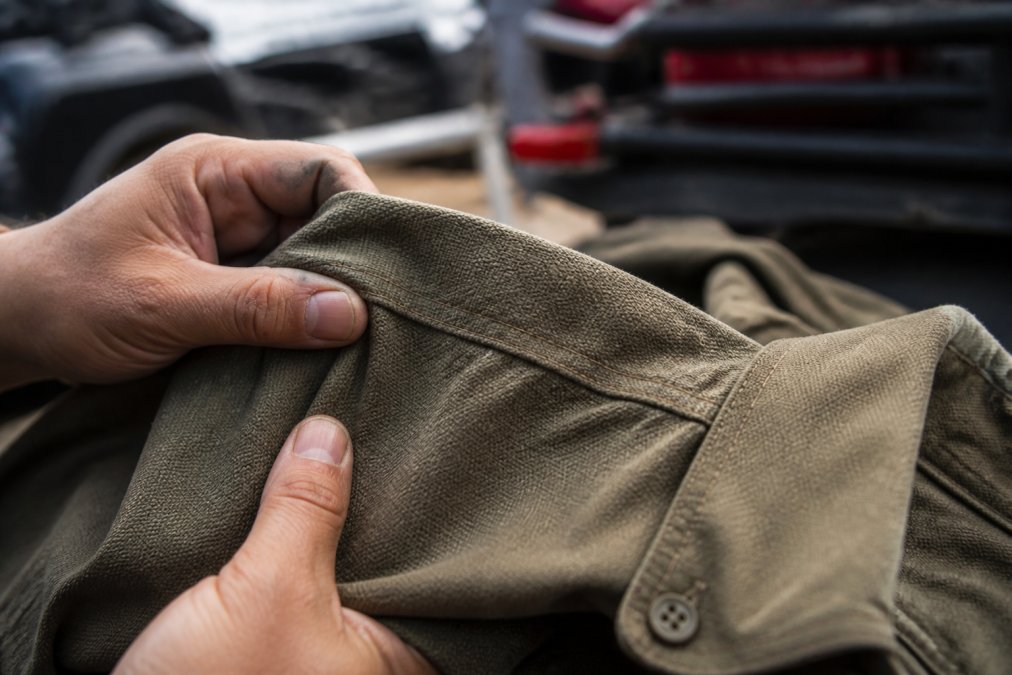
Real durability comes from three factors: fabric weight, fiber composition, and construction method. But understanding these in isolation isn't enough, what matters is how they perform under the specific stresses of off-road riding.
Fabric Weight and Abrasion Resistance
Fabric weight directly correlates to abrasion resistance. A 4-ounce mesh jersey won't survive the same rock contact as a 7-ounce cotton blend. A 7+ oz./yd² fabric outlasts a 4 oz./yd² jersey in high-contact scenarios but retains more heat and moisture.
Fiber Composition and Real-World Performance
Cotton blends offer comfort but absorb sweat. Synthetic blends dry faster and resist fading. Pure polyester mesh ventilates aggressively. In hot, dry conditions, pure polyester or high-synthetic blends are often preferred. In cool or humid environments, cotton-blend construction can provide better moisture management and thermal comfort.
Construction Method and Stress-Point Durability
Double-needle stitching at stress points extends garment life. Side-seamed construction reduces chafing and distributes stress evenly. Seam tape or reinforcement strips can add to garment lifespan.
The Durability-Comfort Trade-Off
The most durable off-road apparel for your specific use matches your activity intensity and climate. A moderately durable shirt you wear every ride outlasts a fragile jersey you abandon after one uncomfortable afternoon.
Weather Resistance and Climate Suitability
Your apparel needs to match the conditions you actually encounter and increasingly, riders are asking where that apparel comes from and what environmental cost it carries.
Weather Resistance: Fiber Choice and Layering Strategy
Weather resistance comes down to fiber choice and layering strategy. For hot, dry conditions, breathability beats water resistance, polyester mesh excels here. For cool or wet conditions, layer a moisture-wicking base under a fleece or hoodie. For unpredictable conditions, a 50/50 cotton-polyester blend offers middle ground. You don't need waterproof apparel for trail riding; you need layering flexibility. A lightweight base, mid-weight insulating layer, and wind-resistant outer shell cover almost any condition.
Sustainability and Ethical Manufacturing: The Hidden Cost of Off-Road Apparel
Where your apparel is made increasingly matters to off-road enthusiasts. Mass-produced apparel often originates from overseas manufacturing with minimal transparency about labor or environmental standards. Cotton production and polyester production have environmental considerations. Some brands now prioritize domestic or near-shore manufacturing, which can reduce shipping emissions. Brands that publish manufacturing locations, labor certifications, or environmental commitments are more transparent about these trade-offs.
When evaluating weather-resistant apparel, consider asking:
- Where is this garment manufactured? Domestic production typically means higher labor standards and lower shipping emissions.
- What certifications does the brand hold? Fair Trade, GOTS (Global Organic Textile Standard), or bluesign® certifications indicate third-party verification of labor and environmental practices.
- Is the brand transparent about material sourcing? Brands that specify where their cotton or polyester comes from are more likely to have vetted their supply chains.
- How durable is the piece? A durable garment has a lower environmental cost per wear than a cheaper piece that fails sooner.
For off-road enthusiasts who ride year-round, choosing apparel from brands with transparent manufacturing practices and proven durability means your gear stays out of landfills longer. This doesn't require premium pricing, it requires brands willing to publish their practices.
Climate-Specific Recommendations
Hot and dry climates demand breathability and UV protection. Lightweight polyester mesh or moisture-wicking synthetics excel here. Look for brands that specify UPF ratings (ultraviolet protection factor) if you're riding in high-altitude or desert environments where sun exposure is intense.
Cool and wet climates need thermal retention and water resistance. Cotton-blend or fleece-lined apparel provides insulation, and layering flexibility becomes essential. Brands that offer both lightweight base layers and insulated mid-layers give you the flexibility to adapt as conditions change.
Multi-season riding requires a modular approach. Build a foundation of lightweight, moisture-wicking pieces, add insulating mid-layers for cooler months, and invest in one quality wind-resistant outer layer. This strategy is more cost-effective and sustainable than buying season-specific apparel you'll only wear for 3 months.
How to Choose Off-Road Gear for Your Needs
Selecting the right off-road apparel starts with honest assessment of your actual use.
Ask yourself three questions:
What's your primary activity? Rock crawling demands abrasion resistance and freedom of motion. Desert racing needs breathability and UV protection. Trail riding in cool weather prioritizes thermal regulation. Your answer shapes every other decision.
What's your climate? Hot and dry apparel looks different than cool and wet. Seasonal variation matters too. If you ride year-round, layering flexibility beats single-piece solutions.
What's your tolerance for discomfort? Premium heavyweight gear is durable but heavier and hotter. Lightweight mesh is comfortable but needs replacement sooner. Neither is objectively "better", it depends on what you'll actually wear consistently.
Once you've answered those questions, use this framework:
| Activity | Best Fabric Weight | Fiber Composition | Key Feature |
|---|---|---|---|
| Rock crawling | 7-8 oz./yd² | Cotton blend or reinforced synthetic | Double-needle stitching at stress points |
| Desert racing | 4-6 oz./yd² | Lightweight polyester or mesh | Breathability and UV protection |
| Cool-weather trail riding | 8+ oz./yd² | Cotton blend with insulation | Thermal retention and moisture management |
| Multi-season riding | Layering approach | Mixed (lightweight base + insulating mid + shell) | Versatility and adaptability |
The Trail Explorer offers a range of apparel. The unisex sports jersey provides optimal ventilation and comfort during intense workouts or leisure activities. The Under Armour athletic t-shirt is light and quick-drying, suitable for running, hiking, or hitting the gym. Our hoodies and fleece jacket address cooler conditions and layering needs.

Best Off-Road Clothing Brands and Where They Fit
The off-road apparel market fragments into lifestyle brands, tactical crossovers, and performance specialists. Each occupies a different space.
Lifestyle off-road brands focus on identity and community. They're designed for riders who want apparel that expresses their passion for trail exploration and rock crawling. The Trail Explorer sits here, custom clothing built specifically for off-road enthusiasts with designs focused on the culture of side-by-side riding and adventure. These brands prioritize comfort and expressive design alongside functional durability.

Tactical-crossover brands emphasize gear organization and weather sealing.
Everyday Wear vs. Performance Gear: Mission-Specific Decisions
The line between everyday off-road apparel and performance gear blurs more than most realize.
Conclusion
Choosing between off-road lifestyle apparel and tactical gear comes down to honest assessment of your actual needs. Off-road apparel prioritizes the movement, breathability, and design expression that matter for trail riding and rock crawling. Tactical gear excels at weather sealing and gear organization for different use cases.
Frequently Asked Questions
What are the key differences between Dirtco and Combat Off-Road apparel?
Dirtco focuses on desert racing and short-course styling with moisture-wicking synthetic blends, while Combat Off-Road emphasizes tactical apparel design rooted in military-grade construction. Dirtco apparel leans toward rally raid aesthetics and breathability for high-heat environments, whereas Combat Off-Road prioritizes abrasion resistance and rugged durability for rock crawling and technical trail work. Both serve off-road enthusiasts but target different mission profiles and lifestyle preferences.
How do I choose off-road gear that will actually hold up to rock crawling?
Look for durable trail apparel with reinforced seams, heavyweight fabric, and multi-weather construction. Check for double-needle stitching on collar, shoulders, and cuffs. Cotton blends can offer better abrasion resistance than pure synthetics, while side-seamed construction reduces stress points. Extended length and ergonomic fit can prevent fabric from riding up during technical movement.
What fabric technology matters most for off-road trail riding?
Moisture-wicking synthetic fibers can help keep you dry during intense activity, while thermal regulation fabrics can manage temperature swings. Breathability can prevent sweat buildup without sacrificing UV protection or abrasion resistance. Air-jet spun yarn can reduce pilling. For rock crawling, abrasion-resistant cotton blends can be preferred.
Is Combat Off-Road apparel designed only for military or tactical use?
No. While Combat Off-Road draws from tactical apparel roots, their field shirts and combat shirts are engineered for off-road lifestyle wear. The tactical design philosophy, reinforced construction, multiple pockets, durable fabric, translates directly to rock crawling, trail riding, and adventure gear needs. Many off-road enthusiasts prefer tactical apparel because it's built for rough conditions and functional movement, not just style.
Why is durable trail apparel more expensive than generic outdoor brands?
Premium off-road apparel costs more because of heavyweight fabric, double-needle stitching, and reinforced seams. You pay for durability that lasts, not just appearance.